Wonderberry
NameWonderberry
Scientific NameSolanum retroflexum
Common NamesWonderberry, Garden Huckleberry, Sunberry, Morelle de Burbank
Plant FamilySolanaceae
Natural HabitatThis plant thrives in disturbed soils, gardens, fields, and waste areas, and is widely cultivated. It is native to Africa but has become naturalized in many temperate and subtropical regions globally.
Parts Usedfruit,leaf
Medicinal Actionsanalgesic, anti-inflammatory, antimicrobial, antioxidant
Traditional UsesTraditionally, the ripe berries are consumed for their nutritional value and high antioxidant content. In some folk medicine systems, particularly those related to the broader *Solanum nigrum* complex, the leaves or whole plant (with extreme caution due to toxicity) have been used topically for skin conditions, boils, and internally for fevers, pain, and inflammation.
Active ConstituentsAnthocyanins, Solanine, Solasodine, Saponins, Flavonoids, Vitamin C
Preparation Methodsinfusion, poultice, powder
Contraindications & WarningsUnripe berries and raw leaves are toxic due to high levels of solanine and other glycoalkaloids, which can cause severe gastrointestinal upset and neurological symptoms. Consumption should be avoided by pregnant or breastfeeding women, and individuals with known nightshade allergies should exercise extreme caution. Only fully ripe berries are considered safe for consumption.
Cultivation NotesWonderberry is an easy-to-grow annual plant that prefers full sun and well-drained soil. It is tolerant of various soil types and can be started from seed indoors 6-8 weeks before the last frost or direct-sown into the garden once soil temperatures have warmed.
Raritycommon
Description
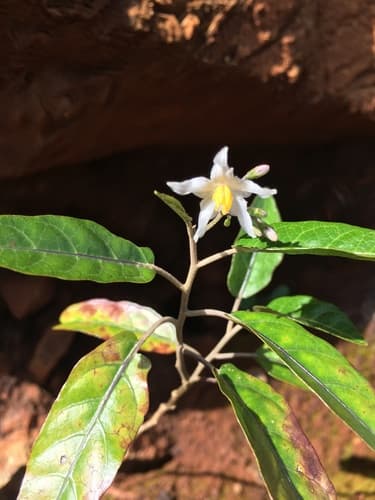
Wonderberry is an herbaceous annual plant, typically growing up to 2 feet tall, characterized by its ovate to triangular leaves with wavy or toothed margins. It produces small white flowers with prominent yellow anthers, which develop into clusters of small, dark purple to black berries.