White Bryony
NameWhite Bryony
Scientific NameBryonia dioica
Common NamesWhite Bryony, English Bryony, Wild Hops, Devil's Turnip
Plant FamilyCucurbitaceae
Natural HabitatNative to central and southern Europe, North Africa, and Western Asia, White Bryony thrives in hedgerows, scrubland, woodlands, and disturbed areas, often scrambling over other vegetation.
Parts Usedroot
Medicinal Actionsanalgesic, anti-inflammatory, diuretic
Traditional UsesHistorically, the fresh root of White Bryony was used externally as a poultice for bruises, sprains, and rheumatic pain due to its irritant properties. Internally, it was employed as a powerful purgative and emetic for severe constipation, dropsy, and certain respiratory conditions. It is also a significant remedy in homeopathy, where it is used in highly diluted forms.
Active ConstituentsBryonin, cucurbitacins, bryonolic acid, phytosterols, triterpenoids
Preparation Methodstincture, poultice, powder, salve
Contraindications & WarningsEXTREMELY TOXIC. All parts of the plant, especially the berries and root, are highly poisonous. Internal use can cause severe gastrointestinal irritation, vomiting, diarrhea, kidney damage, and can be fatal. External use can cause severe skin irritation and blistering. It is strictly contraindicated in pregnancy, lactation, children, and individuals with gastrointestinal or kidney issues. Use only under strict medical supervision, if at all, and primarily in homeopathic dilutions.
Cultivation NotesWhite Bryony is a vigorous climbing plant that prefers fertile, well-drained soil and can tolerate full sun to partial shade. It is often found scrambling over hedges and fences and can be considered invasive in some areas. It is propagated by seed or root division.
Raritycommon
Description
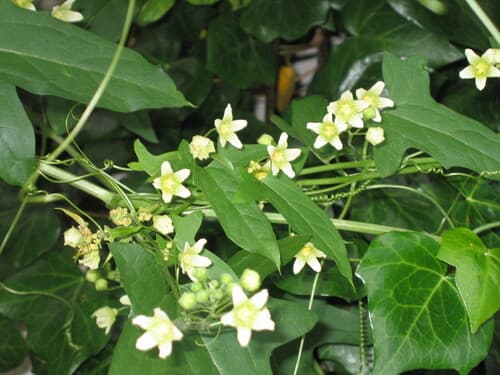
A vigorous perennial climbing vine characterized by its tendrils, palmate-lobed leaves, and small, pale yellowish-green, star-shaped flowers. It produces distinctive red berries in autumn, which are highly poisonous.