Western Ponysfoot
NameWestern Ponysfoot
Scientific NameDichondra occidentalis
Common NamesWestern Ponysfoot, California Ponysfoot
Plant FamilyConvolvulaceae
Natural HabitatNative to California and Baja California, it typically grows in moist, shady to partially shaded areas, often in sandy or loamy soils, within chaparral, coastal sage scrub, and oak woodland communities.
Parts Usedwhole_plant
Medicinal Actionsanti-inflammatory, antimicrobial
Traditional UsesWhile specific traditional medicinal uses for Dichondra occidentalis are not widely documented in mainstream ethnobotanical literature, some related Dichondra species have been traditionally used for minor skin irritations or as a general tonic. If used, it would likely be for similar localized applications to soothe skin or aid in minor wound healing.
Preparation Methodsinfusion, poultice
Contraindications & WarningsSpecific contraindications and drug interactions for Dichondra occidentalis are not well-documented due to its limited traditional medicinal use. As with any plant, allergic reactions are possible.
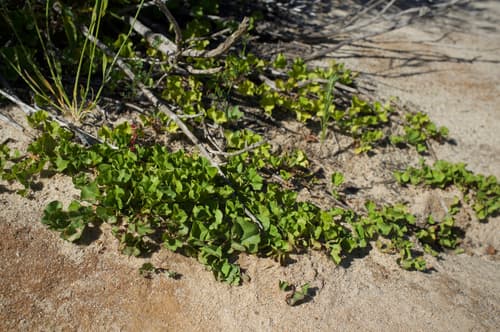
Cultivation NotesWestern Ponysfoot thrives in partial to full shade, preferring moist, well-drained soils. It is often used as a groundcover or lawn substitute, tolerating moderate foot traffic and being relatively drought-tolerant once established.
Raritycommon
Description
Dichondra occidentalis is a low-growing, perennial herbaceous plant that forms dense mats. It features small, kidney-shaped to nearly round, bright green leaves on slender stems that root at the nodes, allowing it to spread extensively.