Western Dodder
NameWestern Dodder
Scientific NameCuscuta occidentalis
Common NamesWestern Dodder, Dodder, Love Vine, Strangleweed
Plant FamilyConvolvulaceae
Natural HabitatFound parasitizing a wide range of herbaceous and woody host plants in various habitats including fields, roadsides, disturbed areas, and riparian zones across western North America.
Parts Usedwhole_plant,seed
Medicinal Actionsdiuretic, astringent, antioxidant, anti-inflammatory
Traditional UsesTraditionally, various Dodder species, including those found in Western regions, have been used as a purgative and diuretic. In some traditional systems, the seeds (Tu Si Zi from related species) are valued as a kidney tonic, for liver support, and to improve vision. The whole plant has also been used for issues related to the urinary tract and as a general tonic.
Active Constituentsflavonoids, lignans, polysaccharides, coumarins
Preparation Methodsinfusion, decoction, powder
Contraindications & WarningsAvoid during pregnancy and lactation. Due to its parasitic nature, it can absorb compounds from its host, so caution is advised regarding its purity and potential interactions. May interact with laxatives or diuretics.
Cultivation NotesWestern Dodder is a parasitic plant and is not typically cultivated for medicinal purposes. It is often considered a noxious weed in agricultural settings due to its detrimental effects on host plants.
Raritycommon
Description
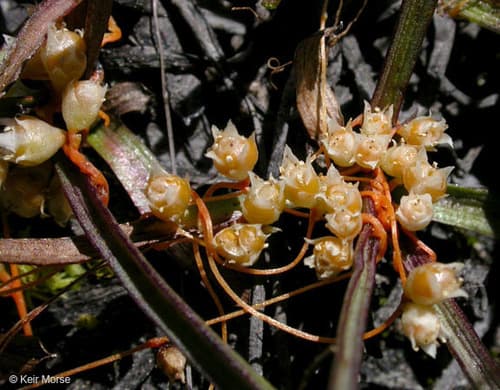
Western Dodder is a parasitic annual vine characterized by its slender, yellowish-orange, leafless stems that twine tightly around host plants. It produces dense clusters of small, bell-shaped, whitish to pale yellow flowers, as seen in the image. The plant lacks chlorophyll and obtains all its nutrients from its host.