Watermelonleaf Horsenettle
NameWatermelonleaf Horsenettle
Scientific NameSolanum citrullifolium
Common NamesWatermelonleaf Horsenettle, Melonleaf Nightshade
Plant FamilySolanaceae
Natural HabitatNative to the southwestern United States and northern Mexico, it commonly grows in disturbed soils, pastures, roadsides, and agricultural fields, often considered a weed.
Parts Usedwhole_plant
Medicinal Actionsanalgesic, sedative
Traditional UsesWhile *Solanum citrullifolium* is generally considered toxic and not safely used in modern herbalism, some *Solanum* species have historically been applied externally as poultices for skin ailments. In highly controlled, dangerous doses, some species were used for their narcotic/sedative effects. Such uses are not recommended due to severe toxicity.
Active Constituentssteroidal glycoalkaloids, solanine, solamargine, solasonine
Preparation Methodspoultice
Contraindications & WarningsAll parts of *Solanum citrullifolium* are considered highly toxic due to the presence of steroidal glycoalkaloids, particularly solanine. Ingestion can cause severe gastrointestinal upset, neurological symptoms, and can be fatal. Internal use is strictly contraindicated. External use, even as a poultice, should be approached with extreme caution due to potential skin irritation and systemic absorption of toxins.
Cultivation NotesOften considered a weed, this plant thrives in full sun and well-drained, often disturbed, soils. It is drought-tolerant and can be invasive in agricultural settings, readily self-seeding.
Raritycommon
Description
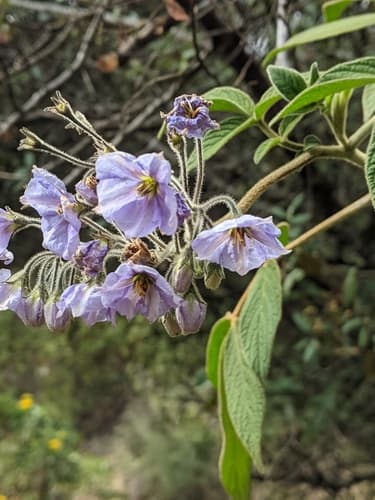
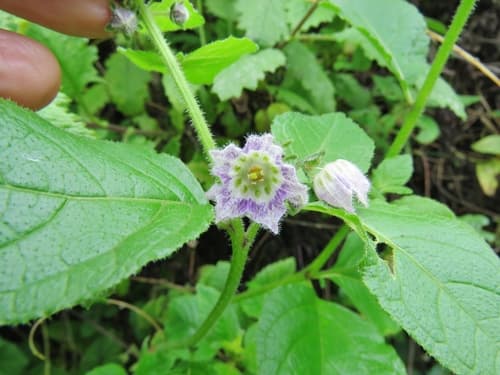
A spiny annual or short-lived perennial herb characterized by deeply lobed leaves resembling watermelon foliage. It produces distinctive star-shaped purple flowers with prominent yellow anthers, followed by spiny fruits.