Solanum taeniotrichum
NameSolanum taeniotrichum
Scientific NameSolanum taeniotrichum
Plant FamilySolanaceae
Natural HabitatNative to the Andean regions of South America, typically found in montane forests and cloud forests at elevations ranging from 1500 to 3000 meters.
Parts Usedleaf
Medicinal Actionsanti-inflammatory, analgesic
Traditional UsesWhile specific traditional medicinal uses for *Solanum taeniotrichum* are not widely documented, other species within the *Solanum* genus have been traditionally used externally for their purported anti-inflammatory and analgesic properties, often applied as poultices for skin conditions or localized pain. However, all *Solanum* species should be treated with extreme caution due to the presence of toxic steroidal glycoalkaloids.
Active ConstituentsSteroidal glycoalkaloids
Preparation Methodspoultice
Contraindications & WarningsAll parts of *Solanum taeniotrichum* should be considered potentially toxic due to the presence of steroidal glycoalkaloids common in the *Solanum* genus. Ingestion can cause severe gastrointestinal upset, neurological symptoms, and in severe cases, be fatal. Not for internal use under any circumstances without expert supervision. Avoid during pregnancy, lactation, and in individuals with known sensitivities to nightshade plants.
Cultivation NotesThis species prefers well-drained, humus-rich soil and a humid environment, typical of its native cloud forest habitat. It thrives in partial shade to full sun and is sensitive to frost, requiring protection in temperate climates.
Rarityuncommon
Description
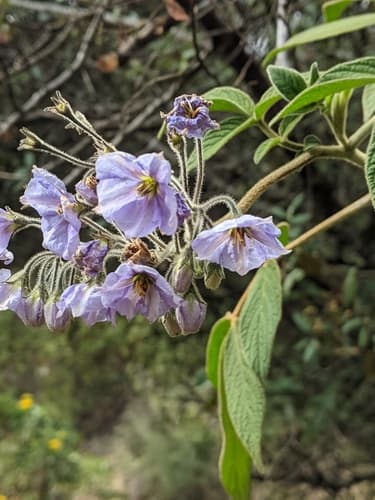
Solanum taeniotrichum is a shrub or small tree characterized by its densely pubescent (hairy) stems and leaves. It produces clusters of light purple to lavender, star-shaped flowers with prominent yellow anthers, typical of the Solanum genus.