Uva Ursi
Image: Simone Littledale (cc-by)
NameUva Ursi
Scientific NameArctostaphylos uva-ursi
Common NamesBearberry, Kinnikinnick, Beargrape, Manzanita
Plant FamilyEricaceae
Natural HabitatIt thrives in dry, open, rocky, or sandy soils, often found in coniferous forests, clearings, and tundra regions across northern latitudes of North America, Europe, and Asia.
Parts Usedleaf
Medicinal Actionsantimicrobial, astringent, diuretic, anti-inflammatory
Traditional UsesTraditionally, Uva Ursi leaves have been used to treat urinary tract infections (UTIs), cystitis, and kidney stones due to their antiseptic and diuretic properties. Native American tribes also used it for kidney and bladder ailments, and as a mild diuretic.
Active ConstituentsArbutin, Hydroquinone, Tannins, Gallic acid, Flavonoids
Preparation Methodsinfusion, decoction, tincture, powder
Contraindications & WarningsContraindicated in pregnancy, breastfeeding, children under 12, and individuals with kidney disease. Prolonged use (more than 5 days or 5 times a year) is not recommended due to potential liver toxicity from hydroquinone. May interact with medications that acidify urine, reducing its effectiveness.
Cultivation NotesUva Ursi prefers full sun to partial shade and well-drained, acidic to neutral soil. It is drought-tolerant once established and can be propagated by cuttings or seeds, forming an excellent evergreen groundcover.
Raritycommon
Description
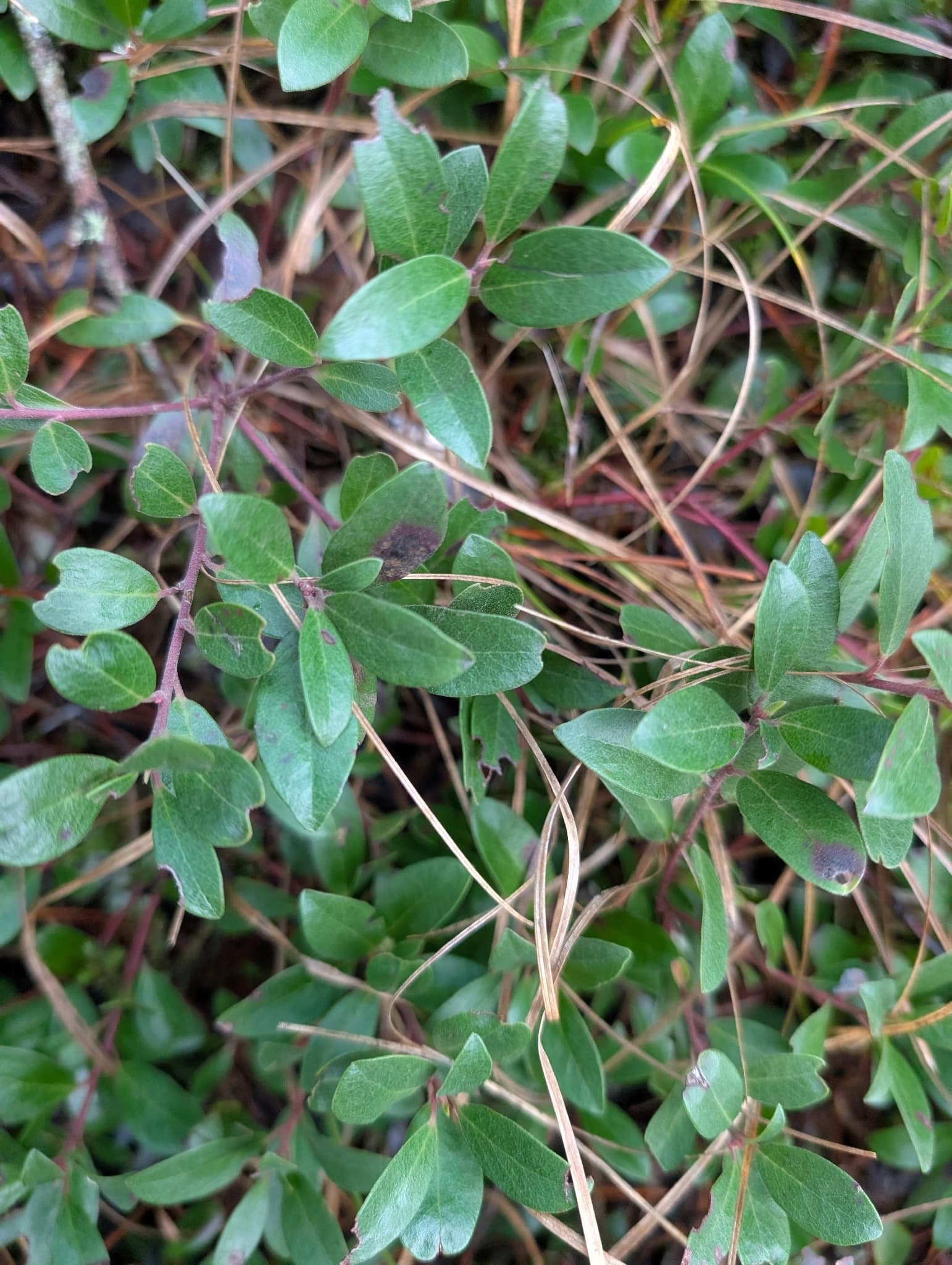
Uva Ursi is a low-growing, evergreen shrub with trailing stems, forming a dense groundcover. It features small, leathery, obovate leaves that are bright green and produces small pinkish-white, urn-shaped flowers followed by bright red berries.