Two-flowered Aniseia
NameTwo-flowered Aniseia
Scientific NameAniseia biflora
Common NamesTwo-flowered Aniseia, White Aniseia, White Morning Glory
Plant FamilyConvolvulaceae
Natural HabitatNative to tropical and subtropical regions of the Americas, *Aniseia biflora* commonly thrives in disturbed areas, roadsides, agricultural fields, and moist, open habitats. It is often found in low-lying areas and along watercourses.
Parts Used
Traditional UsesWhile some members of the Convolvulaceae family are known for various traditional medicinal applications, specific and widely documented traditional uses for *Aniseia biflora* are not readily available in mainstream ethnobotanical literature. Localized traditional uses may exist but are not well-published or extensively studied.
Contraindications & WarningsDue to the lack of documented medicinal uses and comprehensive chemical studies, specific contraindications for *Aniseia biflora* are unknown. As with many plants in the Convolvulaceae family, caution is generally advised, as some species can contain purgative or other active compounds.
Cultivation NotesThis vigorous vine prefers full sun to partial shade and moist, well-drained soils. It can grow rapidly and is often considered a weed in agricultural settings due to its climbing habit and ability to outcompete other vegetation.
Raritycommon
Description
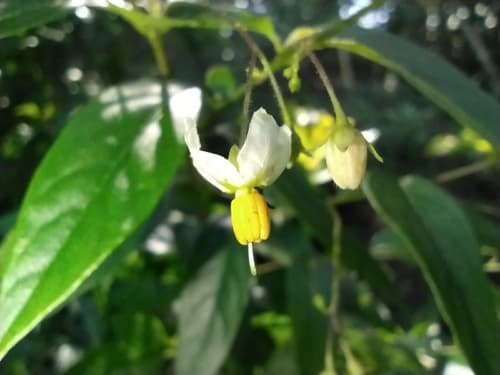
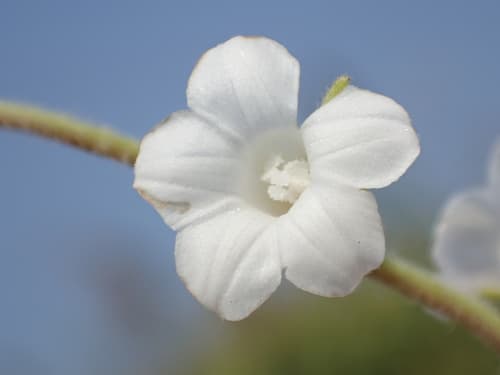
A herbaceous perennial vine characterized by slender, often trailing or climbing stems and simple, ovate to lanceolate leaves. It produces small, delicate white flowers, typically funnel-shaped with five fused petals, often appearing solitary or in pairs from the leaf axils.