trans-Pecos morning-glory
Nametrans-Pecos morning-glory
Scientific NameIpomoea costellata
Common Namestrans-Pecos morning-glory, Star-glory, Small-flower morning-glory
Plant FamilyConvolvulaceae
Natural HabitatThis species is native to arid and semi-arid regions, commonly found in rocky soils, disturbed areas, and open woodlands. It thrives in the Trans-Pecos region of Texas and extends into parts of Arizona, New Mexico, and northern Mexico.
Parts Usedseed
Medicinal Actionsdiuretic
Traditional UsesNo specific traditional medicinal uses are widely documented for *Ipomoea costellata*. However, seeds of some related *Ipomoea* species have been traditionally used as purgatives, which can have a diuretic effect, though this is not a confirmed use for this particular species.
Active Constituentsresin glycosides
Preparation Methodspowder
Contraindications & WarningsDue to the presence of potentially toxic compounds (such as resin glycosides) in many *Ipomoea* species, ingestion is generally not recommended without expert guidance. Specific contraindications for *Ipomoea costellata* are not well-documented due to its lack of established medicinal use, but general caution against internal use applies.
Cultivation NotesThis plant prefers full sun and well-drained, often rocky or sandy soils. It is drought-tolerant once established and can be grown from seed. It is typically an annual, reseeding itself in favorable conditions.
Raritycommon
Description
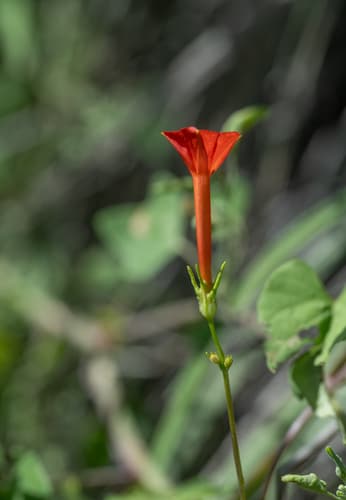
The trans-Pecos morning-glory is a slender, annual vine characterized by its striking reddish-orange, tubular flowers that flare at the mouth. Its delicate stems typically bear small, lobed leaves, though these are not clearly visible in the image. The vibrant flowers are a distinctive feature, often appearing solitary or in small clusters.