Trans-Pecos five-eyes
NameTrans-Pecos five-eyes
Scientific NameChamaesaracha coronopus
Common NamesTrans-Pecos five-eyes, Five-eyes, Coronopus five-eyes
Plant FamilySolanaceae
Natural HabitatNative to arid and semi-arid regions of the southwestern United States and northern Mexico, Trans-Pecos five-eyes is commonly found in rocky soils, disturbed areas, and desert scrublands. It thrives in full sun and well-drained conditions.
Parts Usedwhole_plant
Medicinal Actionsanalgesic, anti-inflammatory
Traditional UsesWhile specific traditional medicinal uses for *Chamaesaracha coronopus* are not widely documented, related species within the *Chamaesaracha* genus have been traditionally used by some indigenous groups for their anti-inflammatory and pain-relieving properties, often applied externally for swellings or internally for various ailments.
Active ConstituentsWithanolides
Preparation Methodsinfusion, poultice
Contraindications & WarningsAs with many plants in the Solanaceae family, *Chamaesaracha coronopus* may contain alkaloids that can be toxic if ingested in large quantities. Caution is advised, especially for pregnant or nursing women, children, and individuals with pre-existing health conditions. Potential for gastrointestinal upset or neurological effects.
Cultivation NotesThis plant is well-adapted to arid environments, preferring full sun exposure and well-drained sandy or rocky soil. It is drought-tolerant once established and can be propagated from seed.
Rarityuncommon
Description
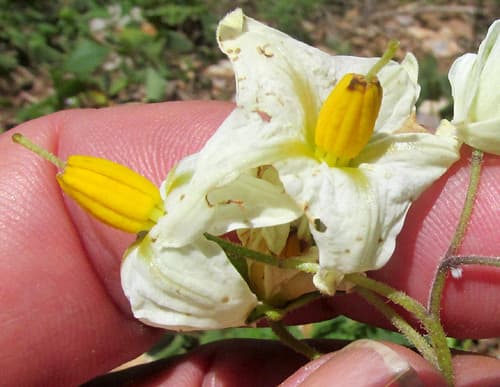
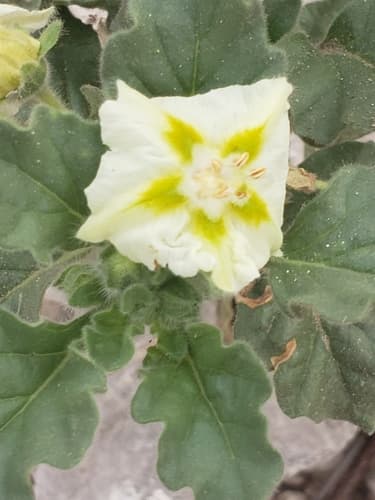
This is a low-growing perennial herb characterized by its deeply lobed, hairy leaves and a sprawling growth habit. It produces solitary, star-shaped flowers that are typically white or cream, featuring a distinctive green or yellowish-green star-like pattern at the base of the petals.