Tea
NameTea
Scientific NameCamellia sinensis
Common NamesTea Plant, Tea Shrub, Chinese Tea, Assam Tea
Plant FamilyTheaceae
Natural HabitatNative to East Asia, thriving in tropical and subtropical climates with high rainfall, acidic soil, and good drainage, often found in mountainous regions.
Parts Usedleaf
Medicinal Actionsantioxidant, anti-inflammatory, nervine
Traditional UsesTraditionally used for its stimulating properties to enhance alertness, reduce fatigue, and improve cognitive function. It has also been employed to aid digestion, promote urination, and for its general health-promoting effects due to its rich antioxidant content, particularly in traditional Chinese and Ayurvedic medicine.
Active ConstituentsCaffeine, L-theanine, Catechins, Flavonoids, Theaflavins, Thearubigins
Preparation Methodsinfusion, powder
Contraindications & WarningsHigh caffeine intake can lead to insomnia, nervousness, increased heart rate, and digestive upset. May interact with blood thinners, certain antibiotics, and stimulant medications. Pregnant and breastfeeding women should limit intake.
Cultivation NotesPrefers well-drained, acidic soil (pH 4.5-6.0) and partial to full sun. Requires consistent moisture and thrives in humid, subtropical to tropical climates. Can be grown from seed or cuttings and is often pruned to maintain a manageable size for harvesting.
Raritycommon
Description
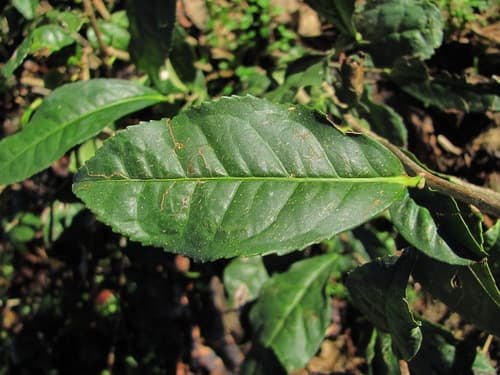
Camellia sinensis is an evergreen shrub or small tree, typically cultivated as a bush for harvesting its leaves. Its dark green, glossy, elliptical leaves have serrated margins and are the source of the popular beverage tea.