Tarragon
Image: No machine-readable author provided. Ies assumed (based on copyright claims). (Public domain)
NameTarragon
Scientific NameArtemisia dracunculus
Common NamesTarragon, French Tarragon, Russian Tarragon, Estragon
Plant FamilyAsteraceae
Natural HabitatNative to a wide range of temperate regions across the Northern Hemisphere, including much of Eurasia and North America. It typically grows in dry, sunny areas, often in grasslands, steppes, and rocky slopes.
Parts Usedleaf,flower
Medicinal Actionsanalgesic, anti-inflammatory, antimicrobial, antioxidant, carminative, diuretic, sedative
Traditional UsesTraditionally, tarragon has been used to aid digestion, stimulate appetite, and relieve flatulence due to its carminative properties. It has also been employed to alleviate toothache, menstrual pain, and as a mild sedative for insomnia, as well as a diuretic.
Active ConstituentsEstragole (methyl chavicol), Anethole, Ocimene, Limonene, Camphene, Sabinene, Flavonoids, Coumarins
Preparation Methodsinfusion, tincture, essential oil, powder, salve
Contraindications & WarningsHigh doses of tarragon, particularly its essential oil, should be avoided due to the presence of estragole, which can be hepatotoxic with prolonged use. It is contraindicated in pregnancy and lactation. May interact with blood thinners or sedatives.
Cultivation NotesTarragon prefers full sun and well-drained soil. French tarragon is typically propagated by division or cuttings, as it rarely produces viable seeds. It requires moderate watering and protection from harsh winter conditions in colder climates.
Raritycommon
Description
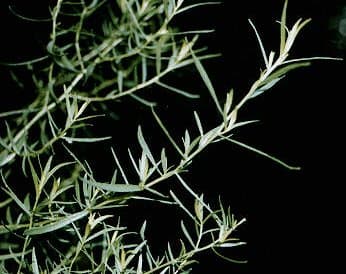
Tarragon is a perennial herb growing up to 1 meter tall, characterized by slender, branched stems and narrow, lanceolate, glossy green leaves. It produces small, inconspicuous greenish-yellow flowers in loose panicles, though the culinary French variety rarely flowers or sets seed.