Cestrum fraternum
Image: Conveyor Belt (cc0)
NameCestrum fraternum
Scientific NameCestrum fraternum C.V.Morton
Common NamesNone widely recognized for this specific species
Plant FamilySolanaceae
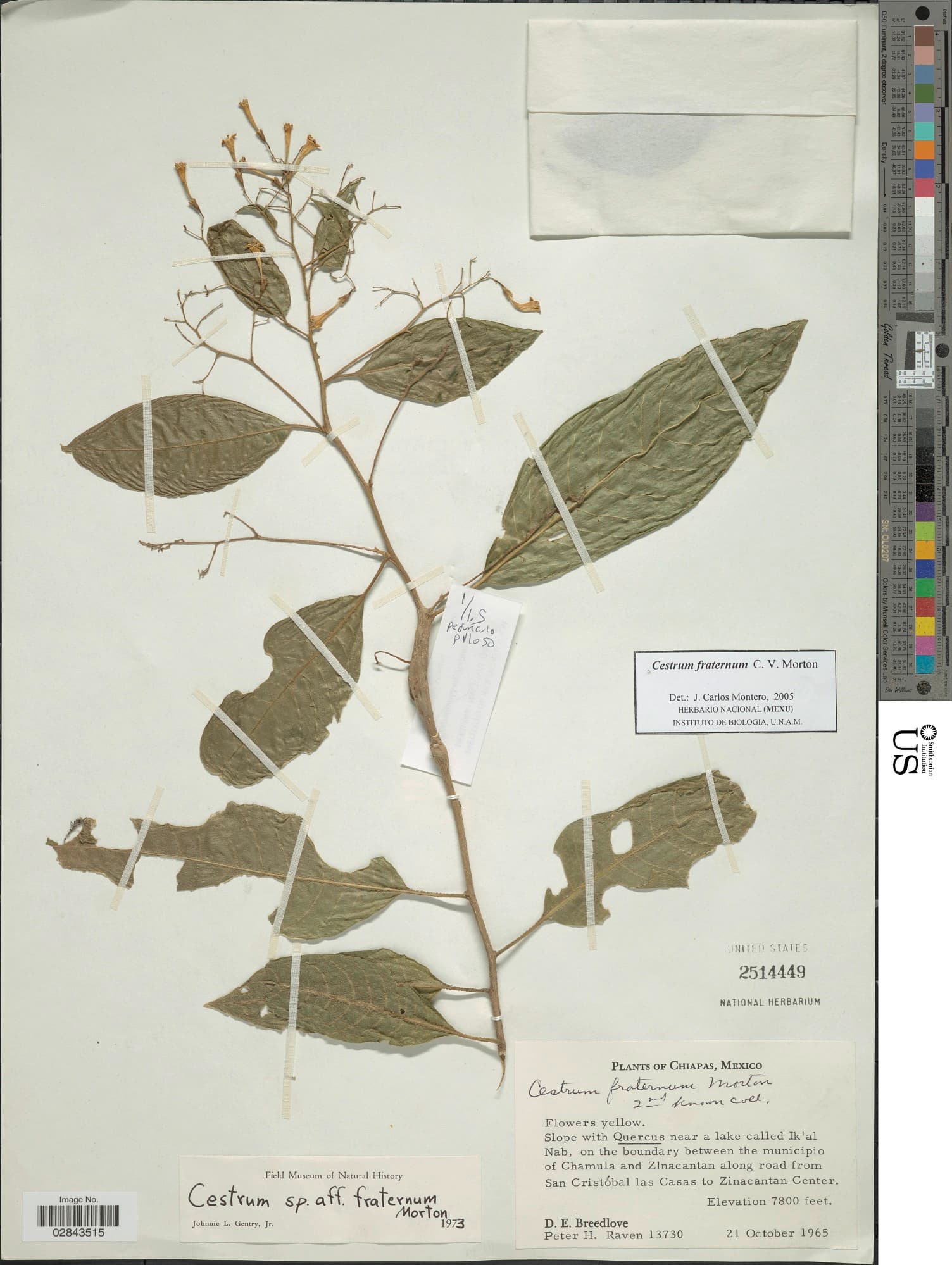
Natural HabitatThis species is found on slopes with Quercus (oak) trees near a lake called Ik'al Nab, on the boundary between the municipalities of Chamula and Zinacantan, along the road from San Cristóbal las Casas to Zinacantan Center, Chiapas, Mexico, at an elevation of 7800 feet.
Parts Used
Traditional UsesNo specific traditional medicinal uses are widely documented for Cestrum fraternum. The genus Cestrum is generally known for its toxicity, and ingestion of various species has been linked to poisoning in livestock and humans.
Active ConstituentsWhile specific constituents for Cestrum fraternum are not widely documented, other Cestrum species are known to contain steroidal saponins, cardiac glycosides, and various alkaloids (e.g., solasodine, solamargine), which contribute to their toxicity.
Contraindications & WarningsAll parts of Cestrum species are generally considered toxic due to the presence of steroidal glycosides and alkaloids. Ingestion can cause severe gastrointestinal distress, neurological symptoms, and cardiac effects. This plant is not recommended for internal or external medicinal use.
Cultivation NotesAs a member of the Cestrum genus, it likely prefers subtropical to tropical climates. It would require well-drained soil and potentially full sun to partial shade, similar to other Cestrum species. Specific cultivation requirements for Cestrum fraternum are not widely documented.
Rarityuncommon
Description
Cestrum fraternum is a woody shrub or small tree characterized by alternate, simple leaves and terminal or axillary clusters of tubular, yellow flowers. The specimen shows typical leaf morphology and inflorescence structure of the genus Cestrum.