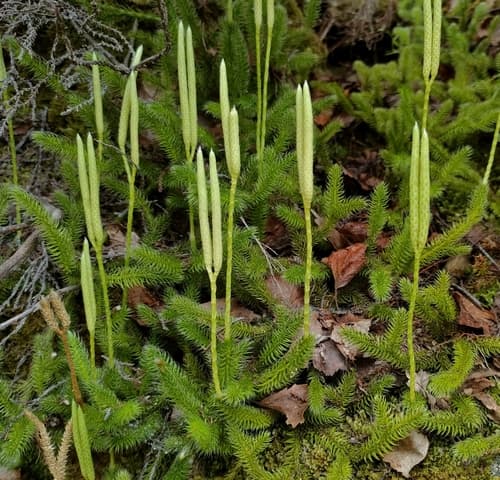
Club Moss
NameClub Moss
Scientific NameLycopodium clavatum
Common NamesStag's-horn Clubmoss, Running Pine, Ground Pine, Wolf's-foot Clubmoss
Plant FamilyLycopodiaceae
Natural HabitatThis plant thrives in acidic, nutrient-poor soils found in woodlands, heaths, moors, and open forests, often preferring damp or boggy conditions. It is typically found in cool, temperate regions across the Northern Hemisphere.
Parts Usedwhole_plant
Medicinal Actionsdiuretic, anti-inflammatory, astringent, nervine
Traditional UsesTraditionally, Club Moss has been used as a diuretic to support urinary tract health, addressing issues like kidney stones and bladder inflammation. Its spores were widely employed externally as a dusting powder for skin irritations, wounds, and diaper rash due to their absorbent and protective qualities. Internally, the herb was also used for digestive complaints, rheumatism, and as a mild nervine for nervous disorders.
Active ConstituentsLycopodine, Clavatine, Clavatoxin, Triterpenes, Flavonoids, Fatty acids
Preparation Methodsinfusion, powder, tincture
Contraindications & WarningsClub Moss should be used with caution due to the presence of alkaloids; it is not recommended for pregnant or breastfeeding women, or individuals with severe heart conditions. High doses can potentially cause gastrointestinal upset.
Cultivation NotesCultivation from spores is challenging and slow, as Club Moss typically requires specific acidic, moist, and shaded woodland environments to thrive. It is often collected from the wild, which has led to concerns about sustainability and local rarity in some areas.
Rarityuncommon
Description
Lycopodium clavatum is a perennial, evergreen vascular plant characterized by its creeping stems that root at intervals, producing erect, branched stems covered in small, spirally arranged, needle-like leaves. It bears distinctive yellowish-green, club-shaped strobili (spore cones) on long stalks, giving it its common 'stag's-horn' appearance.