Solanum trifolium
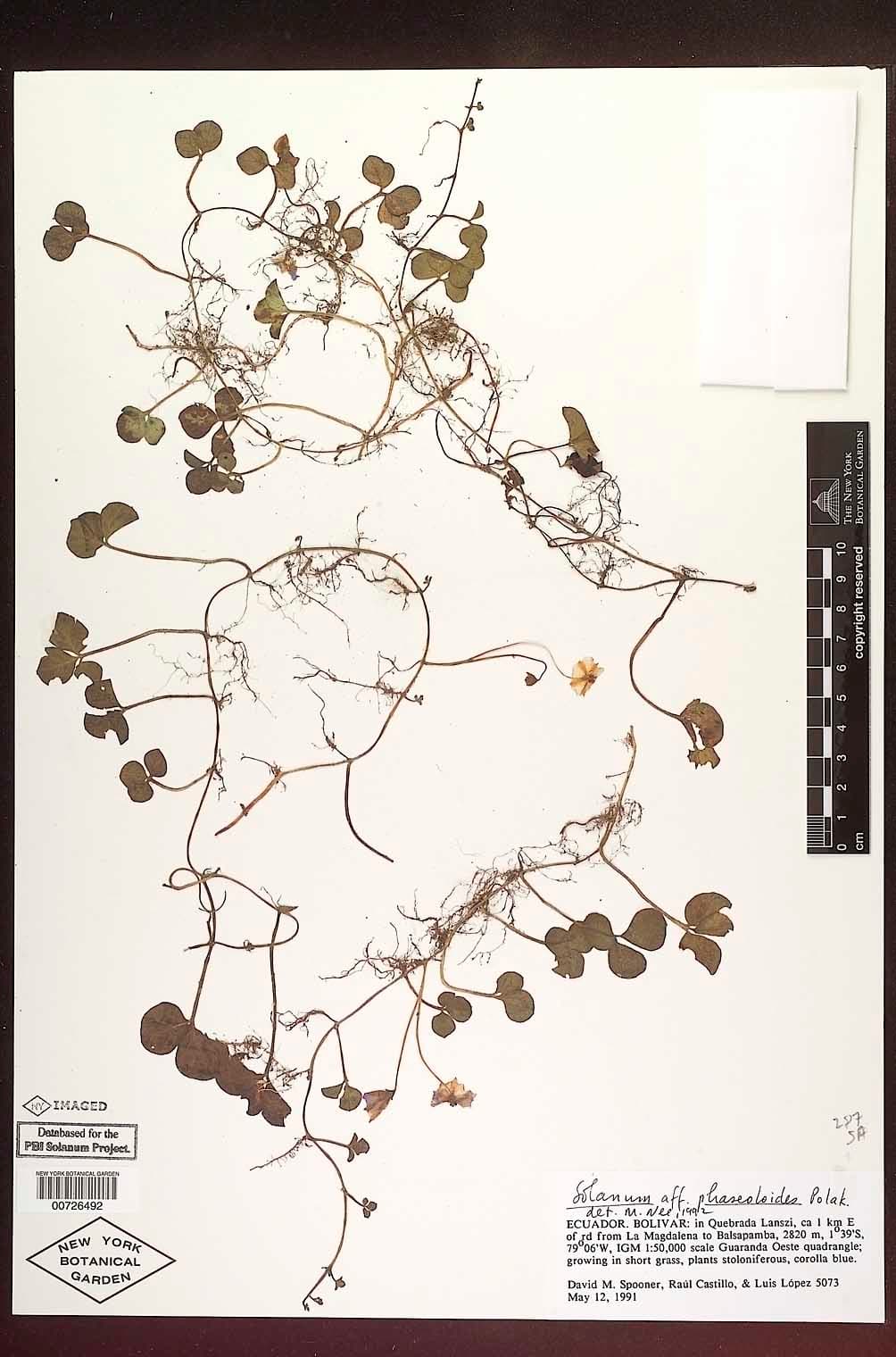
Image: The New York Botanical Garden (cc-by)
NameSolanum trifolium
Scientific NameSolanum trifolium Dunal
Common NamesThree-leaved Nightshade
Plant FamilySolanaceae
Natural HabitatNative to high-altitude regions of Ecuador, specifically found growing in short grass in areas like Quebrada Lanszi, Bolivar province, at elevations around 2820 meters.
Parts Usedwhole_plant
Medicinal Actionsanti-inflammatory, antimicrobial
Traditional UsesSpecific traditional medicinal uses for Solanum trifolium are poorly documented and not widely recognized. However, other species within the Solanum genus have been historically used in various folk medicines, often with extreme caution due to their toxic compounds, for conditions such as skin ailments or as purgatives.
Active ConstituentsSteroidal glycoalkaloids
Preparation Methodspoultice, infusion
Contraindications & WarningsContains toxic steroidal glycoalkaloids; internal consumption is highly discouraged and potentially fatal. External use should be approached with extreme caution due to potential skin irritation or systemic absorption. Consult a qualified expert before any use.
Cultivation NotesPrefers high-altitude, temperate climates with well-drained soil. Propagates via stolons. Requires specific environmental conditions to thrive outside its native range.
Rarityuncommon
Description
A herbaceous perennial plant characterized by its stoloniferous growth habit and trifoliate leaves, typically with rounded leaflets. It produces small flowers, which are described as blue on the specimen label, though they appear faded to yellowish in the pressed specimen.