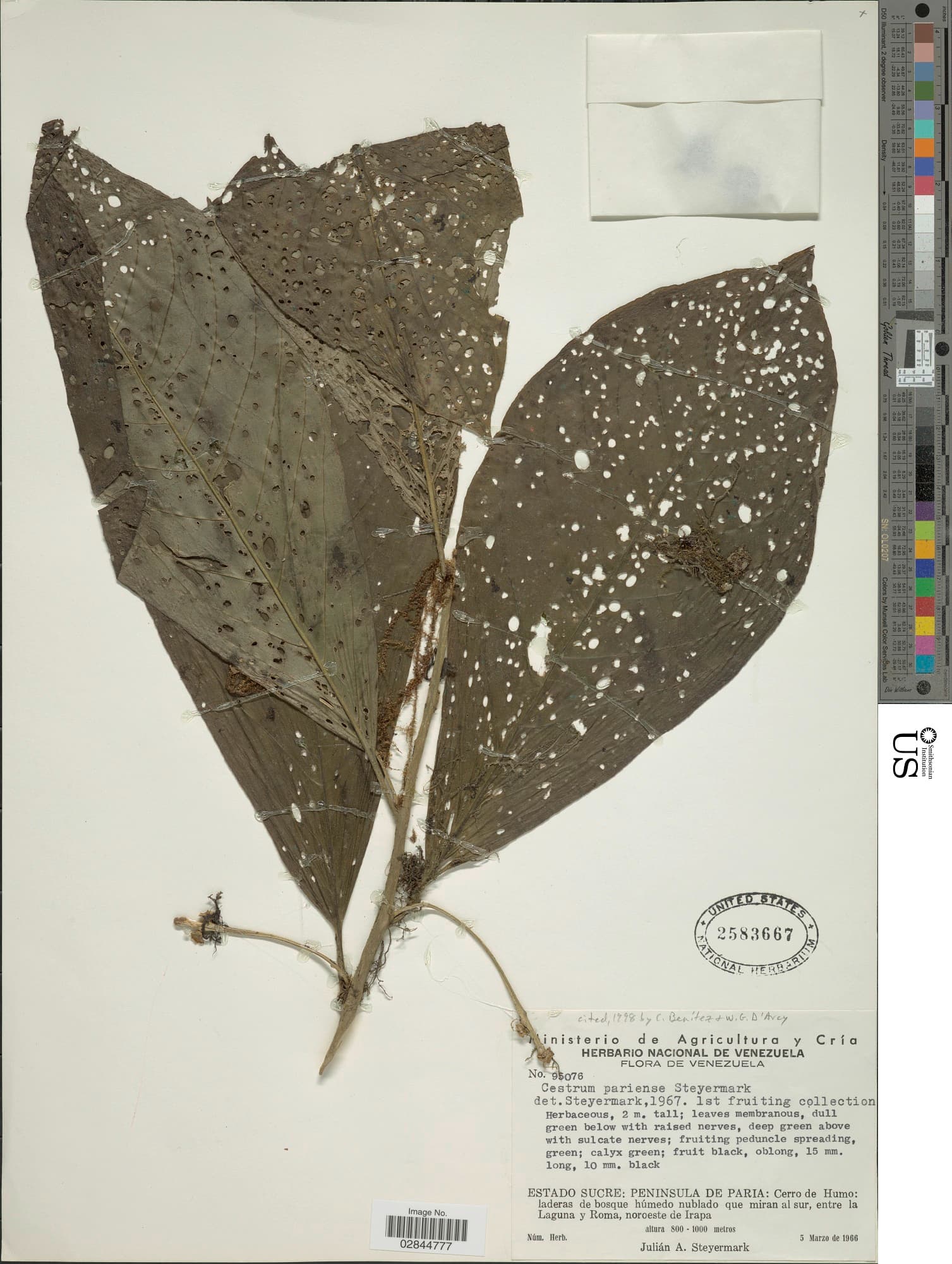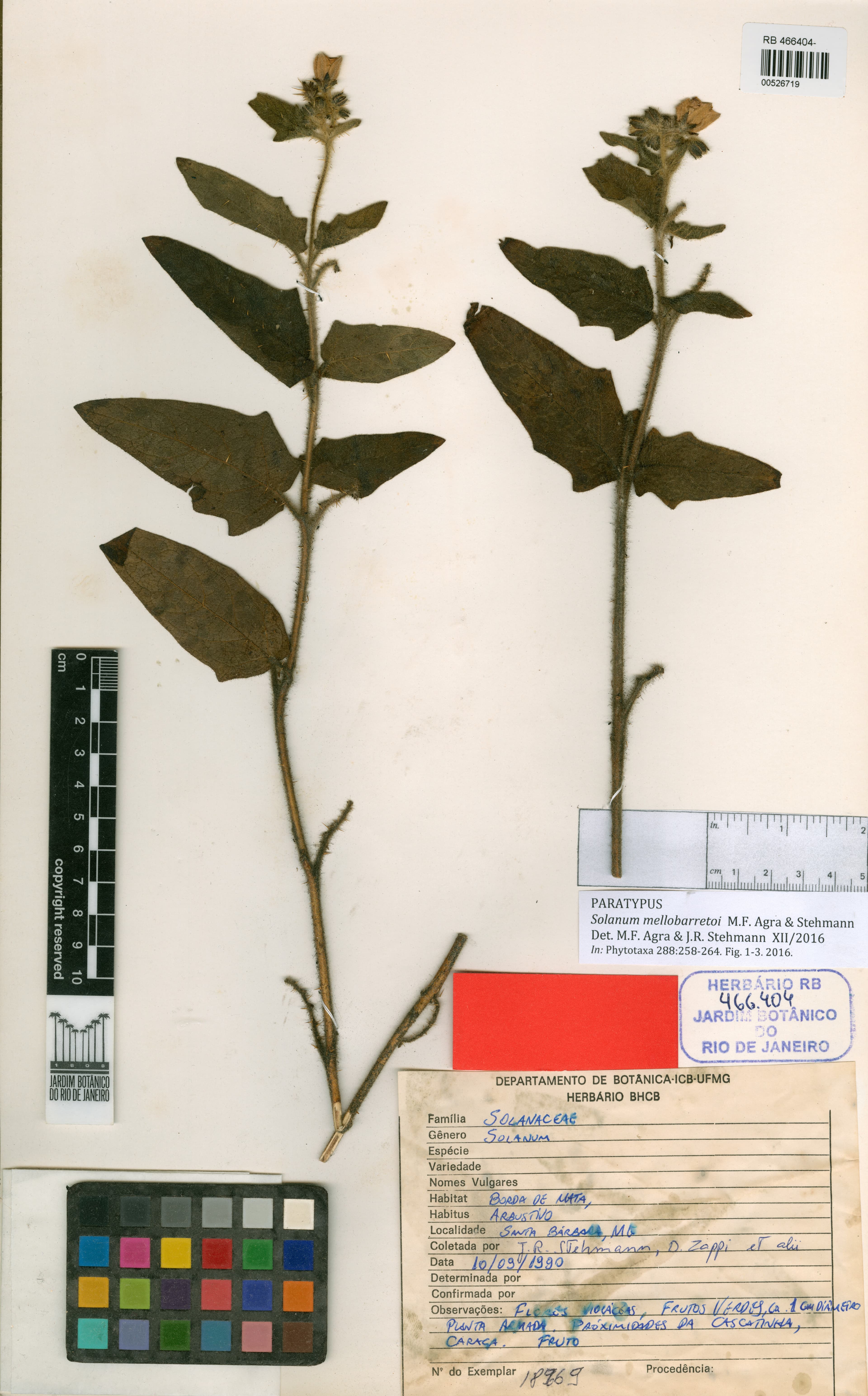
Cestrum palmeri
Image: Palmer, E. (cc-by)
NameCestrum palmeri
Scientific NameCestrum palmeri Francey
Plant FamilySolanaceae
Natural HabitatNative to tropical and subtropical regions of Mexico, specifically collected in the Acapulco vicinity, suggesting a preference for warm climates and possibly coastal or lowland areas.
Parts Usedleaf,flower
Medicinal Actionsanti-inflammatory, analgesic
Traditional UsesWhile specific traditional uses for Cestrum palmeri are not well-documented, other Cestrum species have been traditionally used externally for skin ailments, and internally (with extreme caution and in highly diluted forms) for fevers, pain, or as a purgative. Due to its general toxicity, internal use of Cestrum species is generally discouraged.
Active Constituentssteroidal saponins, alkaloids, flavonoids
Preparation Methodsinfusion, decoction, poultice, powder
Contraindications & WarningsAll parts of Cestrum palmeri, especially the fruits, are considered toxic. Ingestion can cause gastrointestinal upset, neurological symptoms, and cardiac issues. It is contraindicated in pregnancy, lactation, children, and individuals with liver or kidney conditions. Use should be strictly avoided without expert guidance.
Cultivation NotesCestrum palmeri likely thrives in full sun to partial shade, requiring well-drained soil and a warm, frost-free climate typical of its native Mexican habitat.
Rarityuncommon
Description
Cestrum palmeri is a woody shrub or small tree, characterized by alternate, simple, entire leaves. It bears small, tubular flowers, likely arranged in axillary or terminal clusters, which develop into small, dark, berry-like fruits.