Solanum pycnanthemum
NameSolanum pycnanthemum
Scientific NameSolanum pycnanthemum
Common NamesBitter Garden Egg, African Nightshade
Plant FamilySolanaceae
Natural HabitatNative to tropical and subtropical Africa, it thrives in disturbed areas, forest margins, grasslands, and as a weed in cultivated fields, preferring warm climates and well-drained soils.
Parts Usedleaf,fruit
Medicinal Actionsanti-inflammatory, antimicrobial, antioxidant, analgesic
Traditional UsesTraditionally used in African medicine for treating various ailments including fevers, stomach aches, skin infections, and as a general tonic. The fruits are consumed as a bitter vegetable, believed to have medicinal properties.
Active Constituentssteroidal glycoalkaloids, solasodine, solamargine, solasonine, phenolic compounds, flavonoids
Preparation Methodsinfusion, decoction, poultice, powder
Contraindications & WarningsDue to the presence of steroidal glycoalkaloids, especially in unripe fruits and leaves, consumption in large quantities can be toxic. Not recommended for pregnant or breastfeeding women, young children, or individuals with gastrointestinal sensitivities. May interact with certain medications.
Cultivation NotesPrefers full sun to partial shade and well-drained, fertile soil. It is a hardy plant that can tolerate some drought once established and is often found growing wild or semi-cultivated in its native range.
Raritycommon
Description
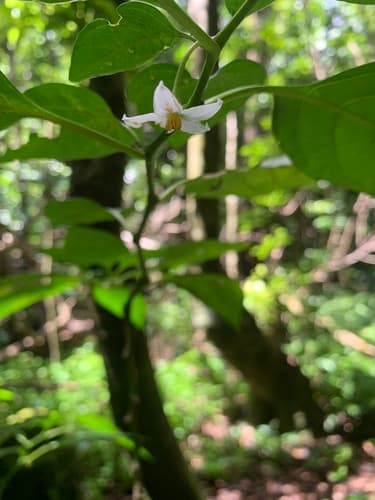
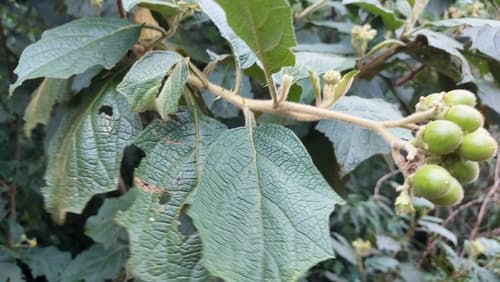
Solanum pycnanthemum is a robust, often prickly shrub or subshrub, characterized by its large, ovate to elliptic leaves with prominent venation and a rough, often hairy texture. It produces clusters of small, round, green fruits that are typically hairy when unripe, maturing to yellow or orange.