Solanum pseudoamericanum
NameSolanum pseudoamericanum
Scientific NameSolanum pseudoamericanum
Common NamesFalse American Nightshade, American Black Nightshade
Plant FamilySolanaceae
Natural HabitatCommonly found in disturbed areas, agricultural fields, gardens, roadsides, and open woodlands across tropical to temperate regions.
Parts Usedleaf,fruit,whole_plant
Medicinal Actionsanti-inflammatory, analgesic, antimicrobial
Traditional UsesTraditionally, the leaves and ripe fruits (with extreme caution) have been used externally as poultices for skin inflammations, boils, and wounds. In some folk medicine, very diluted preparations were used internally for pain relief or as a mild sedative, but this is highly risky due to toxicity.
Active ConstituentsGlycoalkaloids (solanine, solamargine, solasonine), Saponins, Flavonoids, Phenolic compounds
Preparation Methodspoultice, infusion, decoction
Contraindications & WarningsHighly toxic when ingested, especially unripe berries and large quantities of leaves, due to glycoalkaloids. Symptoms of poisoning include nausea, vomiting, diarrhea, abdominal pain, drowsiness, confusion, and in severe cases, paralysis and death. Avoid internal use. Not safe for pregnant or lactating women, or children. May interact with medications affecting the central nervous system.
Cultivation NotesOften considered a weed, it readily self-seeds and thrives in disturbed soils, full sun to partial shade, and a wide range of climates. It requires minimal care.
Raritycommon
Description
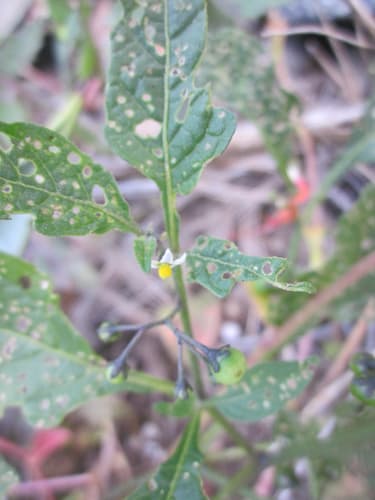
An herbaceous annual or short-lived perennial, this plant typically grows erect or sprawling. It features ovate to lanceolate leaves, small white flowers with prominent yellow anthers, and small green berries that ripen to black.