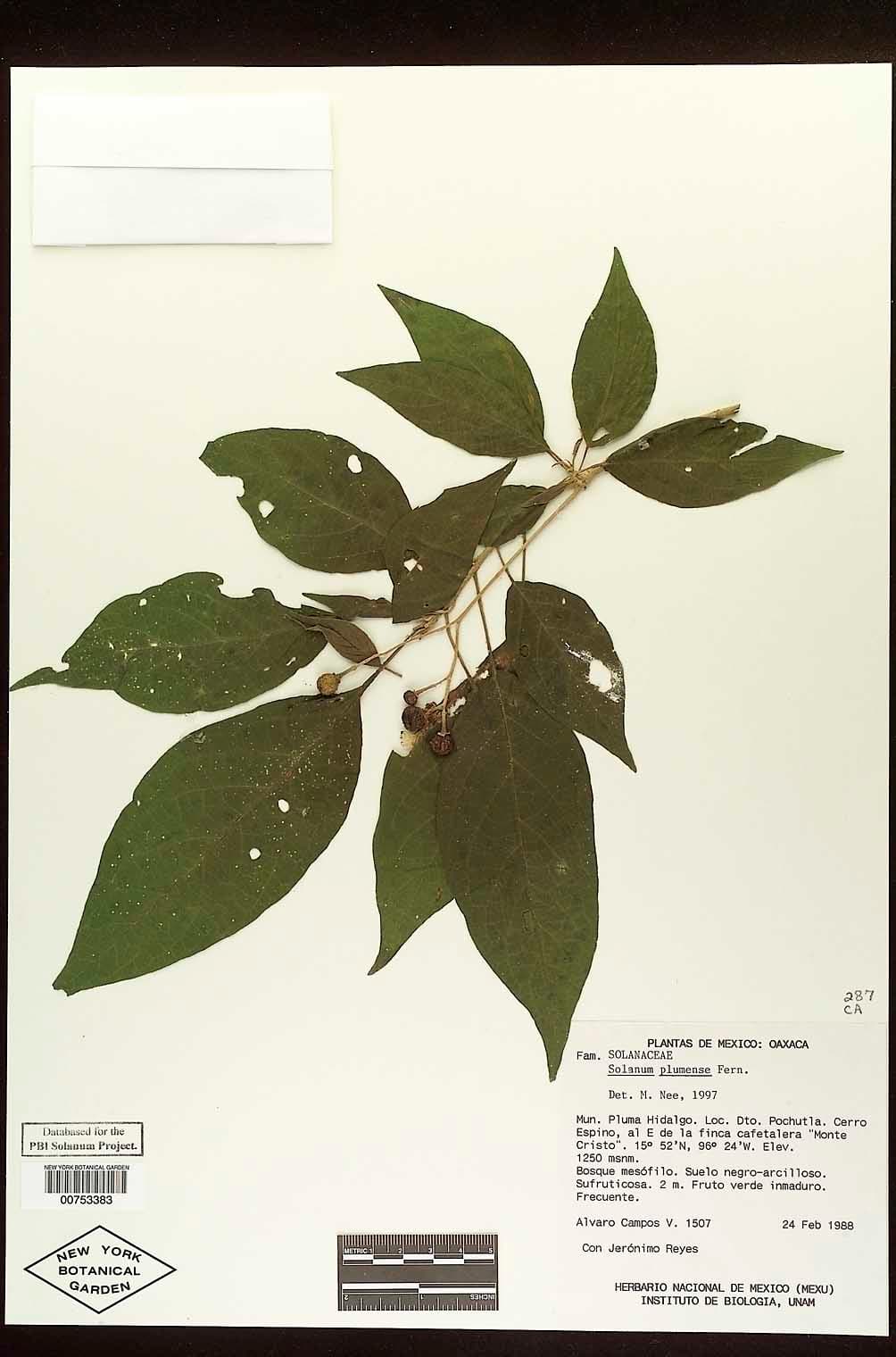
Solanum plumense
Image: The New York Botanical Garden (cc-by)
NameSolanum plumense
Scientific NameSolanum plumense Fern.
Plant FamilySolanaceae
Natural HabitatFound in mesophytic forests on black-clay soil at elevations around 1250 meters above sea level, specifically documented in the Pluma Hidalgo region of Oaxaca, Mexico.
Parts Usedleaf,fruit
Medicinal Actionsanti-inflammatory, analgesic
Traditional UsesSpecific traditional medicinal uses for Solanum plumense are not widely documented in ethnobotanical literature. However, many species within the Solanum genus have been traditionally used for various ailments, often with careful preparation due to potential toxicity.
Active Constituentssteroidal glycoalkaloids, solanine, solasodine
Preparation Methodsinfusion, decoction
Contraindications & WarningsAs with many species in the Solanum genus, Solanum plumense is likely to contain steroidal glycoalkaloids which can be toxic. Ingestion of plant parts, especially fruits, without proper knowledge and preparation is strongly contraindicated due to potential poisoning. Specific safety data for this species is lacking.
Cultivation NotesPrefers moist, rich, black-clay soils typical of mesophytic forest environments. Thrives in subtropical or montane regions at elevations around 1250 meters, requiring conditions similar to its native habitat in Oaxaca, Mexico.
Raritycommon
Description
A subshrub reaching up to 2 meters in height, characterized by simple, ovate leaves. It produces small, berry-like fruits that are green and immature in the specimen, typically clustered along the stem.