Calycobolus campanulatus
Image: Ehoarn Bidault (cc-by-nc)
NameCalycobolus campanulatus
Scientific NameCalycobolus campanulatus (Baker) Heine
Common NamesBell-flowered Calycobolus
Plant FamilyConvolvulaceae
Natural HabitatNative to tropical rainforests of West and Central Africa, where it thrives in humid, shaded understory or climbing up larger trees.
Parts Usedleaf,bark
Medicinal Actionsanti-inflammatory, antimicrobial, analgesic
Traditional UsesTraditionally, the plant is used in African folk medicine to treat a range of ailments including fevers, pain, skin infections, and gastrointestinal complaints. Preparations from the leaves and bark are often employed.
Active ConstituentsAlkaloids, Flavonoids, Tannins
Preparation Methodsinfusion, decoction, poultice
Contraindications & WarningsSpecific contraindications are not widely documented for this particular species. However, as with many potent plants, caution is advised for pregnant or nursing women and young children.
Cultivation NotesRequires a warm, humid tropical climate with consistent moisture and well-draining, rich soil. As a liana, it needs strong support for climbing and can tolerate partial shade to full sun.
Rarityuncommon
Description
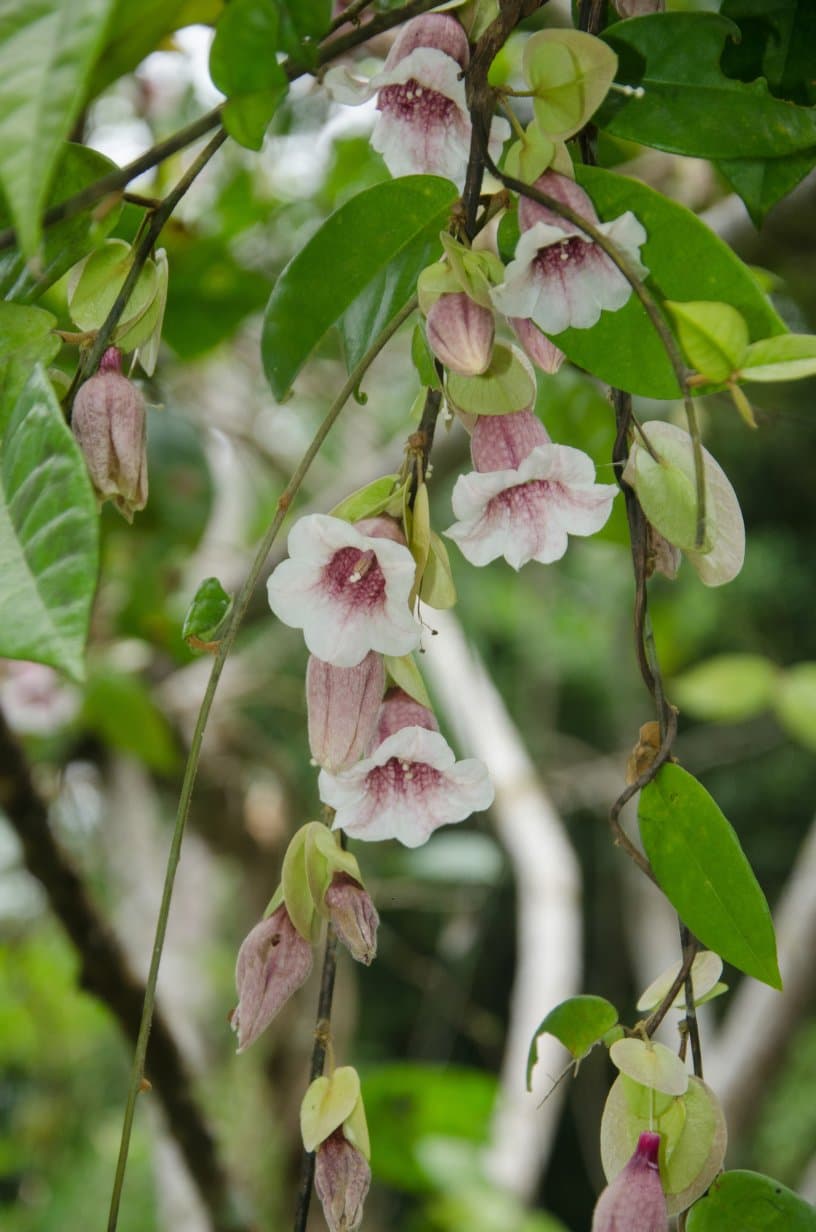
A woody climbing liana characterized by its alternate, simple green leaves and distinctive pendulous, bell-shaped flowers. The flowers typically feature a white or pale pink corolla with a striking reddish-purple throat, often appearing in clusters.