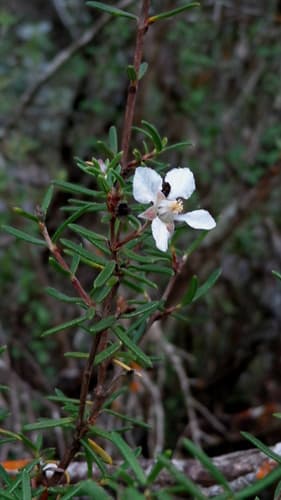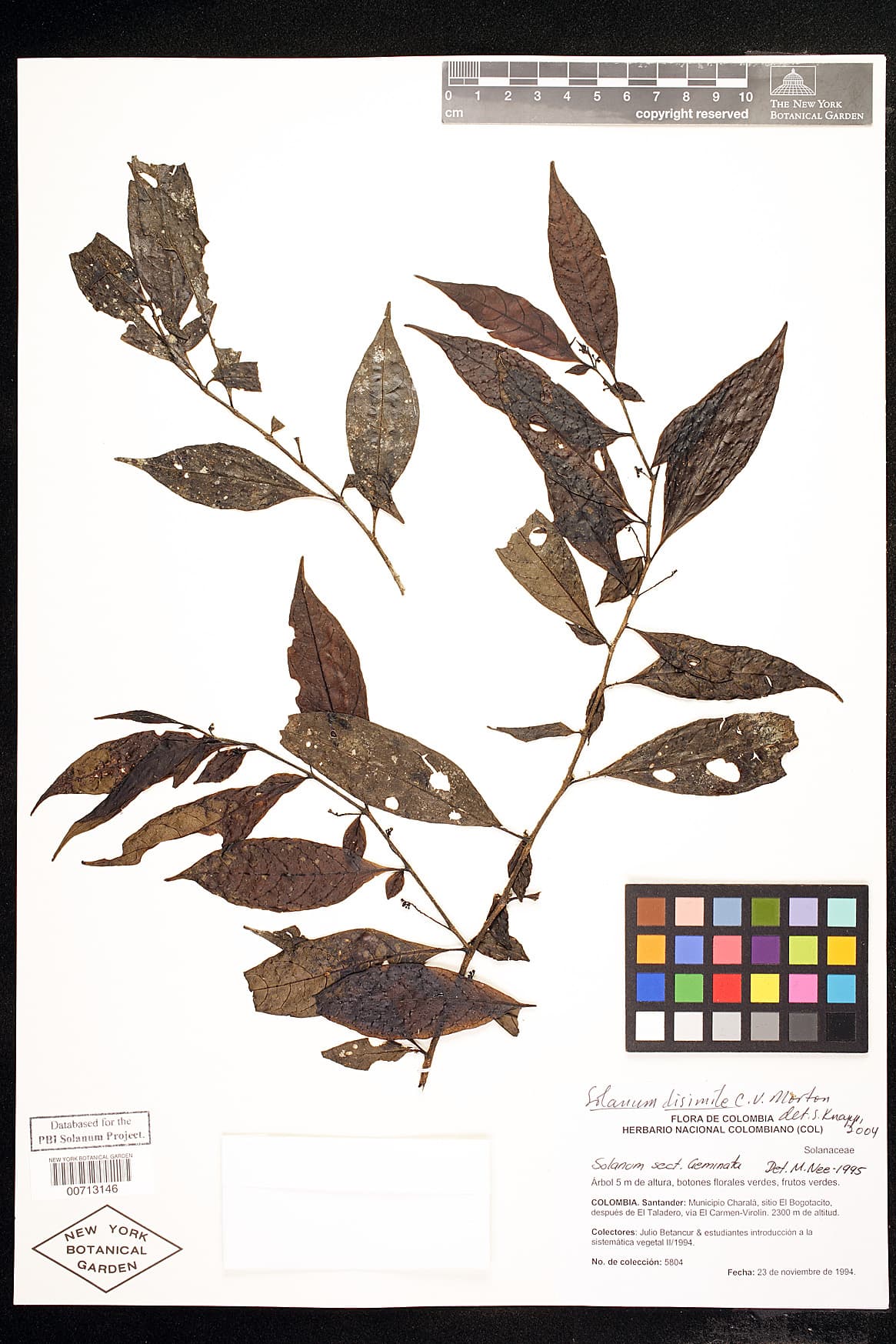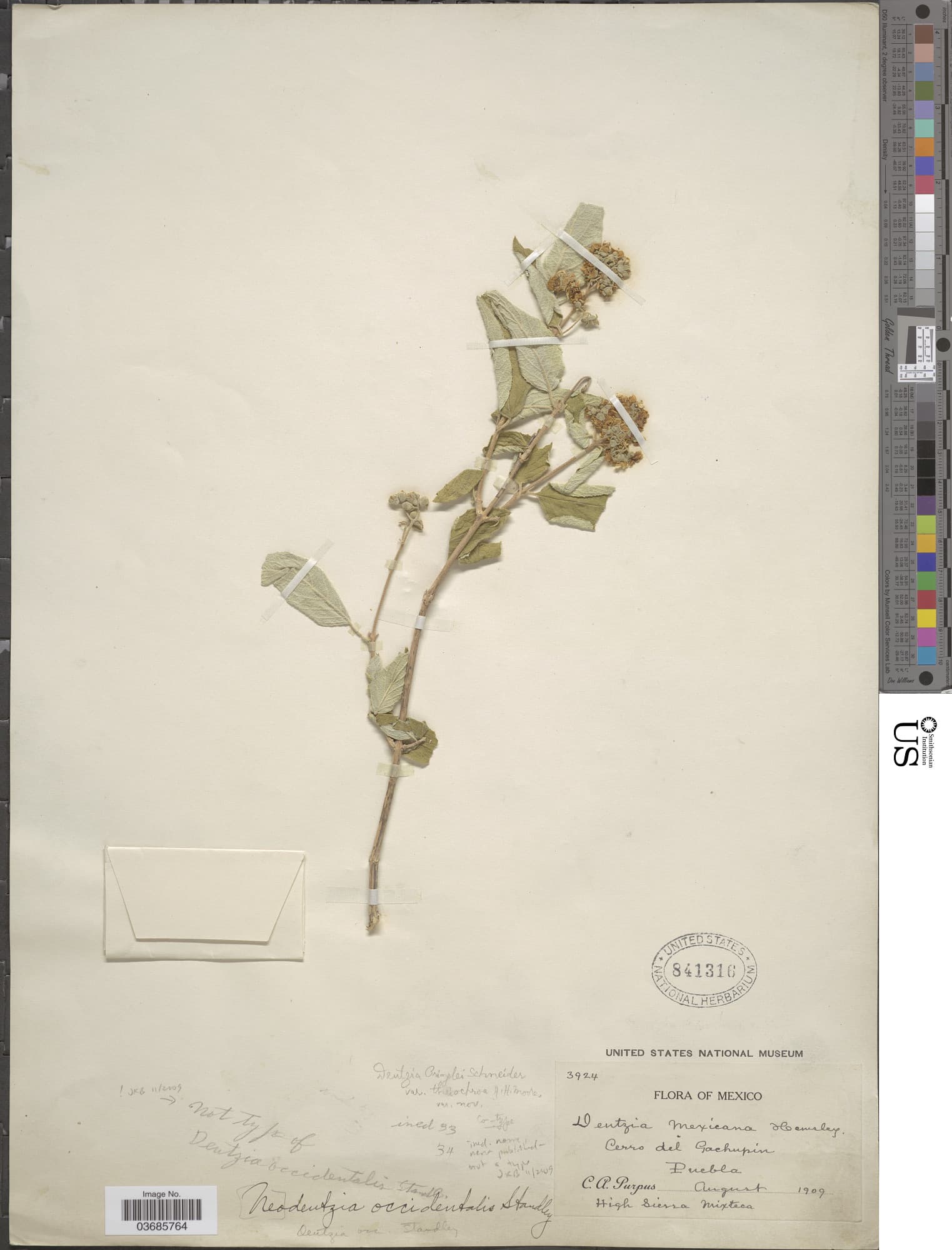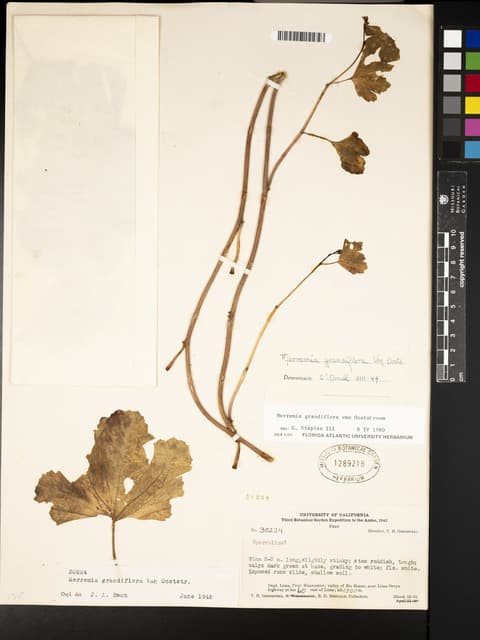
Solanum pachyneurum
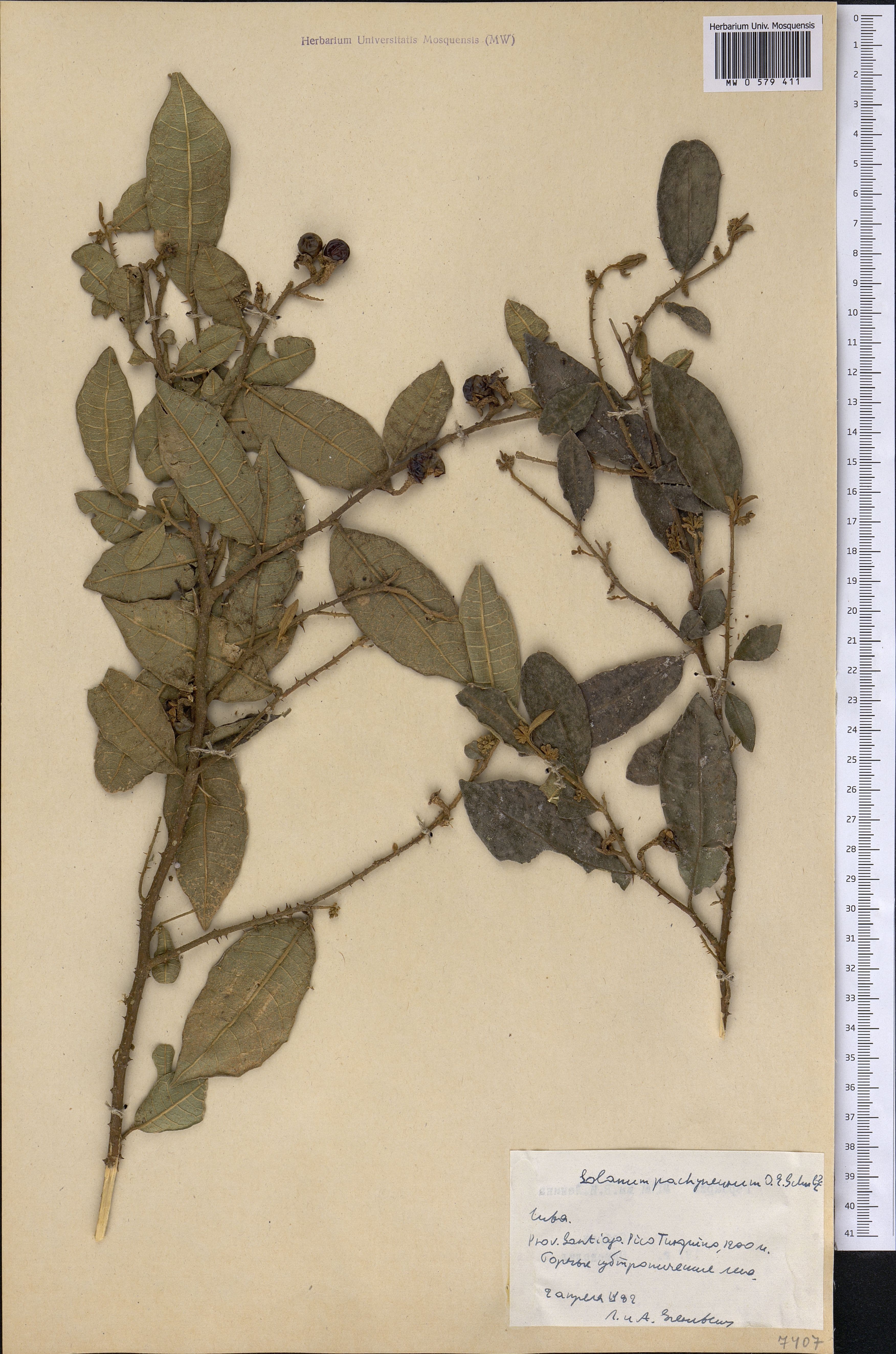
Image: ELAR corporation (Moscow, Russia) (cc-by)
NameSolanum pachyneurum
Scientific NameSolanum pachyneurum O.E.Schulz
Plant FamilySolanaceae
Natural HabitatNative to subtropical montane forests, specifically documented from mountainous regions such as Pico Turquino in Cuba, typically found at elevations around 1200 meters.
Parts Used
Traditional UsesNo widely documented traditional medicinal uses are readily available for Solanum pachyneurum in general ethnobotanical literature. Many species within the Solanum genus have diverse traditional uses, often requiring careful preparation due to potential toxicity.
Active Constituentssteroidal glycoalkaloids
Contraindications & WarningsAs with many species in the Solanum genus, Solanum pachyneurum should be approached with extreme caution. Many Solanum species contain toxic steroidal glycoalkaloids, particularly in unripe fruits and leaves, which can cause gastrointestinal upset, neurological symptoms, and even be fatal if ingested in sufficient quantities. Use by pregnant or lactating individuals, children, or those with liver/kidney conditions is generally contraindicated for unknown Solanum species.
Cultivation NotesThis species is likely adapted to the specific conditions of subtropical montane forests, requiring high humidity, moderate temperatures, and well-drained, fertile soil. Cultivation outside its native range would likely require mimicking these specific environmental conditions.
Rarityuncommon
Description
A thorny shrub or small tree, characterized by woody stems bearing sharp prickles. It features alternate, simple, ovate to elliptic leaves with prominent venation, and produces small, dark, spherical fruits, likely berries, in axillary clusters.