Solanum pachyneuroides
Image: Conveyor Belt (cc0)
NameSolanum pachyneuroides
Scientific NameSolanum pachyneuroides Amshoff
Plant FamilySolanaceae
Natural HabitatNative to tropical or subtropical regions, specifically documented from mountainous or hilly areas in Cuba (Montes de La Breña, Moa, Oriente).
Parts Usedleaf,fruit
Medicinal Actionsanti-inflammatory, analgesic
Traditional UsesSpecific traditional medicinal uses for *Solanum pachyneuroides* are not well-documented in available ethnobotanical literature. Many species within the *Solanum* genus are known for containing potentially toxic steroidal glycoalkaloids, and any traditional use would typically involve careful preparation and dosage, often for conditions like pain or inflammation, but this is not confirmed for *S. pachyneuroides*.
Active Constituentssteroidal glycoalkaloids
Preparation Methodsinfusion, decoction
Contraindications & WarningsDue to the potential presence of toxic steroidal glycoalkaloids common in the *Solanum* genus, *Solanum pachyneuroides* should be considered potentially toxic. Contraindications would include pregnancy, lactation, children, and individuals with liver or kidney conditions. Internal use is strongly discouraged without extensive toxicological studies and expert guidance.
Cultivation NotesLikely thrives in tropical to subtropical climates with well-drained soil. May prefer partial shade or full sun depending on specific microhabitat. Propagation methods are unknown but likely from seed or cuttings.
Rarityrare
Description
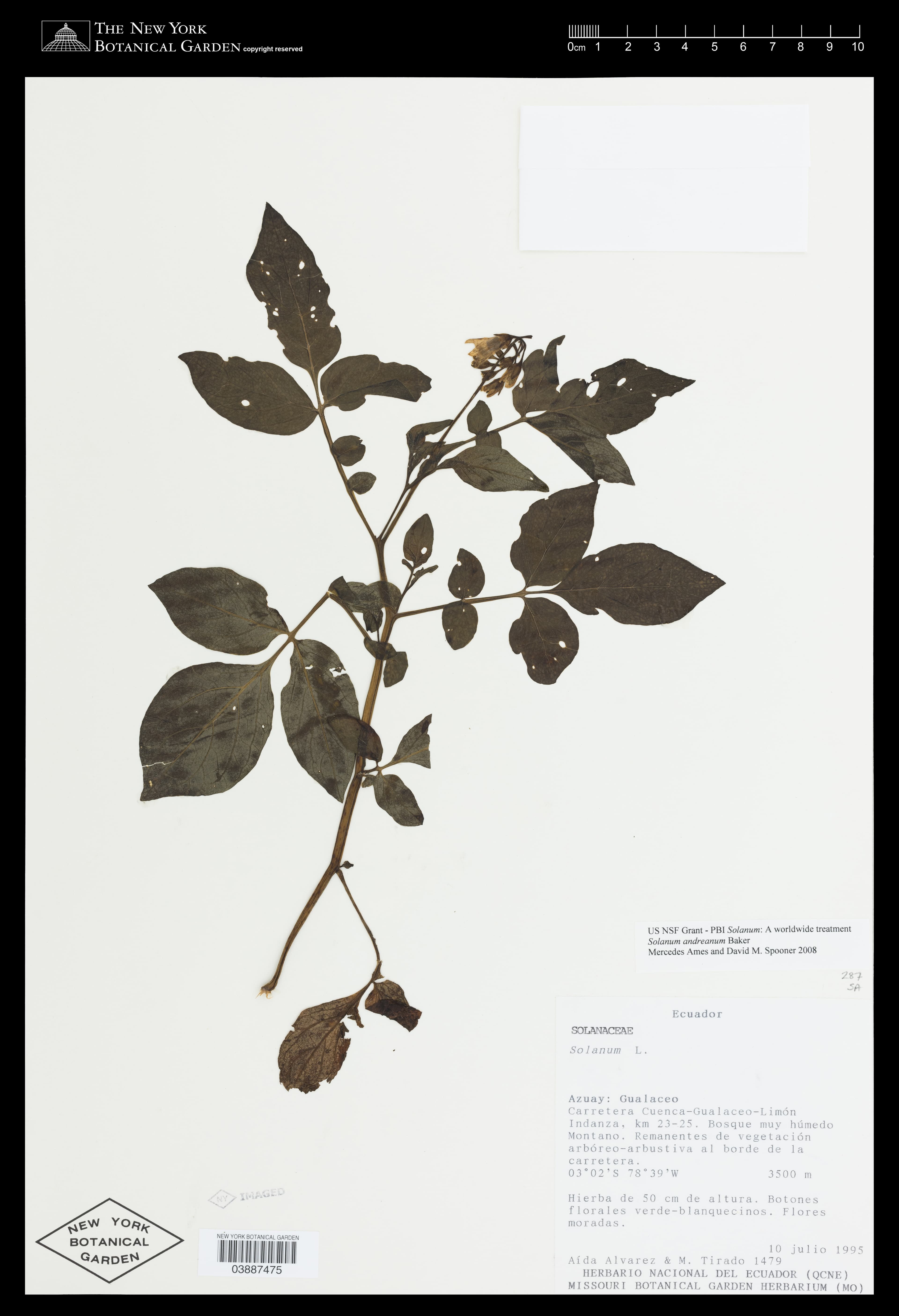
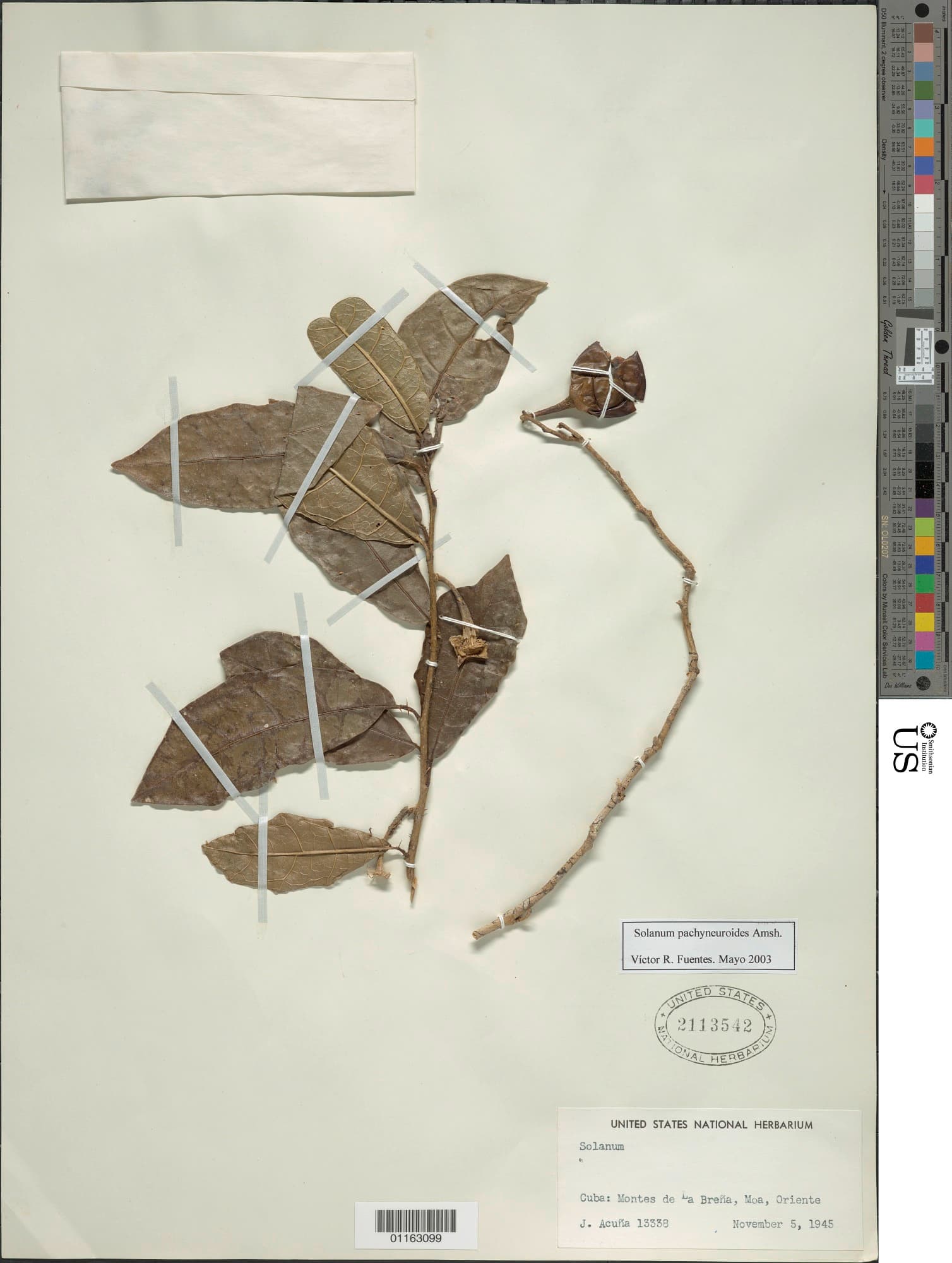
A woody plant specimen characterized by large, ovate, entire leaves with prominent venation, and a stem that appears to have small prickles. A single, dried, somewhat spherical fruit is also present on the specimen.