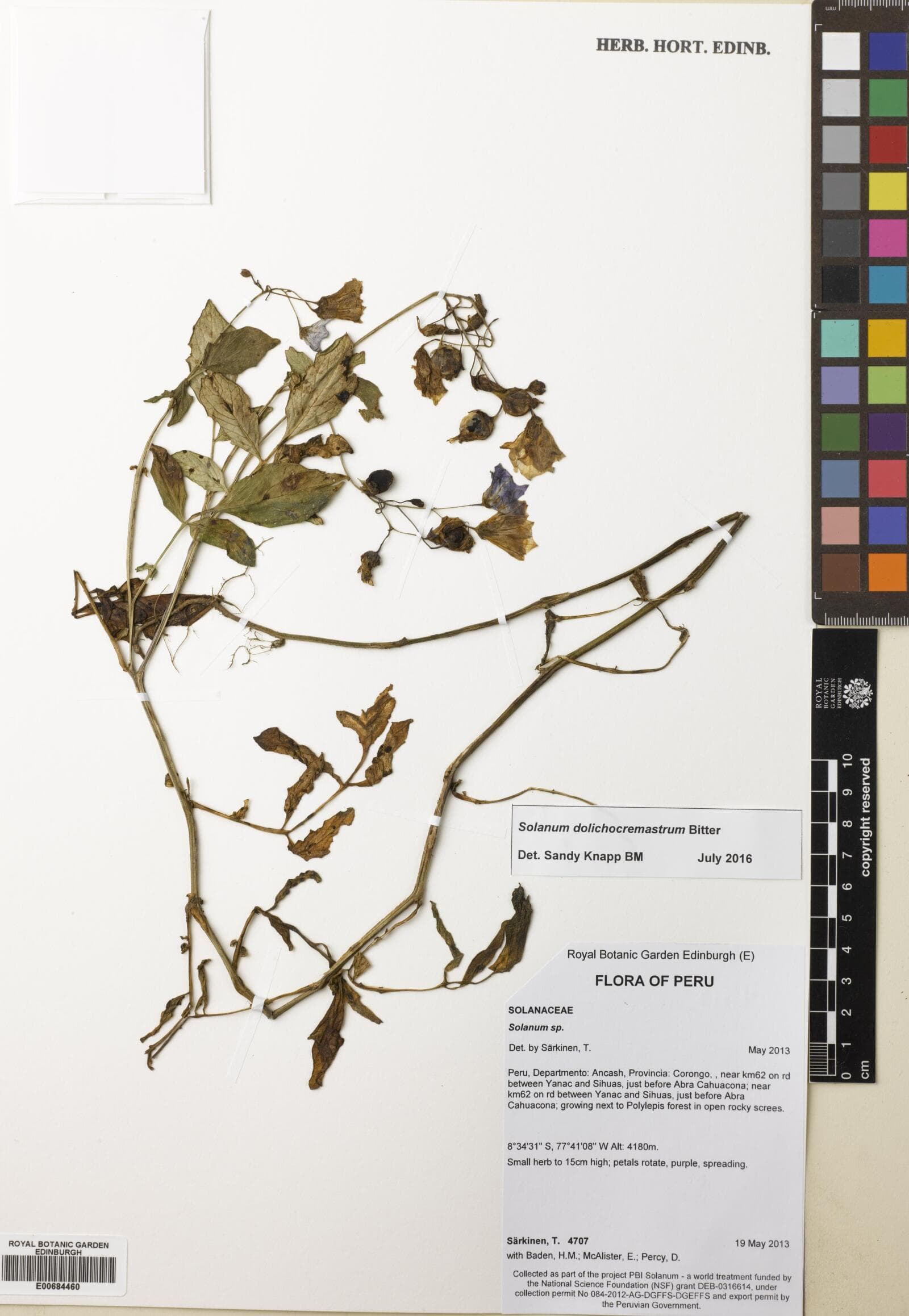
Solanum ochranthum
NameSolanum ochranthum
Scientific NameSolanum ochranthum
Common NamesPapa cimarrona, Papa de monte
Plant FamilySolanaceae
Natural HabitatNative to the Andean region of South America, including Peru, Bolivia, and Ecuador, typically found in montane forests, disturbed areas, and agricultural fields at moderate to high altitudes.
Parts Usedroot
Medicinal Actionsanti-inflammatory, analgesic
Traditional UsesTraditionally, the tubers (roots) have been consumed as a wild food source by indigenous communities after careful preparation to reduce toxicity. Some traditional practices may have used parts of the plant externally for pain relief or to reduce inflammation, similar to other species within the Solanum genus.
Active ConstituentsSteroidal glycoalkaloids
Preparation Methodsdecoction, poultice
Contraindications & WarningsAll parts of Solanum ochranthum, especially leaves, stems, and unripe fruits, contain toxic steroidal glycoalkaloids. Internal use is generally not recommended due to high toxicity and potential for severe gastrointestinal and neurological effects. Tubers require extensive processing (e.g., boiling, leaching) to reduce toxicity before consumption. Avoid during pregnancy, lactation, and in children.
Cultivation NotesThis plant prefers well-drained soil and full sun to partial shade. It thrives in conditions similar to its native Andean montane habitat. Propagation can be achieved from seeds or by planting its tuberous roots.
Raritycommon
Description
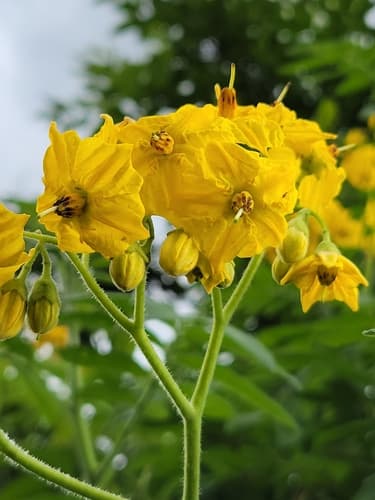
Solanum ochranthum is a perennial herb or subshrub characterized by hairy stems and clusters of bright yellow, star-shaped flowers with prominent yellow anthers. It produces small, green to yellowish fruits and is known for its tuberous roots, which are a wild relative of the cultivated potato.