Solanum multiglochidiatum
Image: Clarkson, J.R. (cc-by)
NameSolanum multiglochidiatum
Scientific NameSolanum multiglochidiatum Domin
Plant FamilySolanaceae
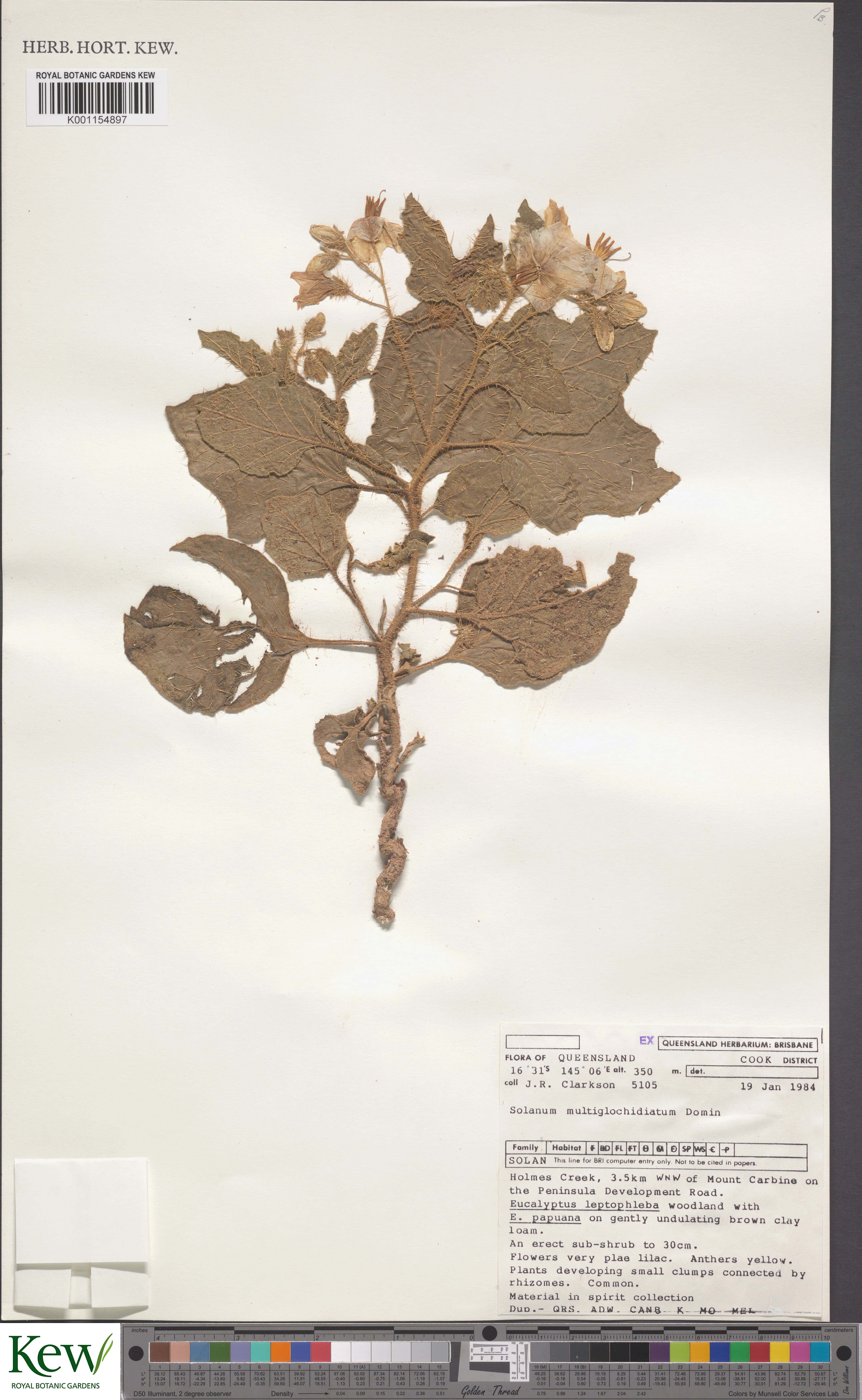
Natural HabitatFound in Eucalyptus leptophleba and E. papuana woodland on gently undulating brown clay loam, specifically documented near Holmes Creek, 3.5km WNW of Mount Carbine on the Peninsula Development Road in Queensland, Australia.
Parts Used
Traditional UsesNo specific traditional medicinal uses are documented for Solanum multiglochidiatum on the herbarium label or in readily available general ethnobotanical sources. Many species within the Solanum genus are known to contain toxic compounds.
Contraindications & WarningsSpecific contraindications for Solanum multiglochidiatum are not documented. However, many species in the Solanum genus contain steroidal glycoalkaloids (e.g., solanine), which can be toxic if ingested. Therefore, this plant should be handled with extreme caution and is not recommended for internal use without specific, verified medicinal information.
Cultivation NotesThis species is an erect sub-shrub, thriving in woodland environments with gently undulating brown clay loam. It propagates via rhizomes, forming clumps. Cultivation would likely require conditions mimicking its native Queensland habitat, including specific soil types and light exposure typical of Eucalyptus woodlands.
Raritycommon
Description
An erect sub-shrub growing up to 30cm tall, characterized by spiny stems and leaves. It produces very pale lilac flowers with distinctive yellow anthers. This plant typically forms small clumps, connected by underground rhizomes.