Apple of Sodom
NameApple of Sodom
Scientific NameSolanum sodomaeodes
Common NamesApple of Sodom, Dead Sea Apple, Sodom Apple, Bitter Apple, Poison Apple
Plant FamilySolanaceae
Natural HabitatNative to Africa and the Middle East, it thrives in disturbed areas, roadsides, pastures, and coastal regions, often in arid to semi-arid climates. It has naturalized and become invasive in many parts of the world, tolerating poor soils and drought.
Parts Usedfruit,leaf,root
Medicinal Actionsanti-inflammatory, antimicrobial, analgesic
Traditional UsesTraditionally, the plant has been used externally for various skin conditions, wounds, boils, and to relieve pain. In some cultures, preparations from the fruit or leaves have been applied as poultices or salves for their anti-inflammatory and antimicrobial properties, though internal use is extremely dangerous due to its toxicity.
Active Constituentssolasodine, solamargine, solasonine, steroidal glycoalkaloids
Preparation Methodspoultice, salve, decoction
Contraindications & WarningsHighly toxic, especially the unripe fruit, due to steroidal glycoalkaloids. Internal consumption can cause severe gastrointestinal distress, neurological symptoms, and can be fatal. External use can cause skin irritation in sensitive individuals; avoid contact with eyes and mucous membranes. Not recommended for pregnant or breastfeeding women, or children.
Cultivation NotesThis plant is a hardy, fast-growing, and often invasive weed. It prefers full sun, well-drained, poor to moderately fertile soils, and is highly drought-tolerant. It can spread aggressively by seed and root fragments.
Raritycommon
Description
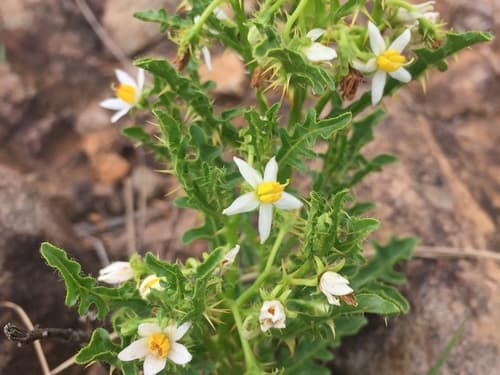
This thorny, perennial shrub features deeply lobed, spiny leaves and white to pale purple, star-shaped flowers with prominent yellow anthers. It produces round, yellow-orange fruits that are highly toxic when unripe. The plant is characterized by its numerous sharp spines on stems and leaf veins.