Solanum macbridei
NameSolanum macbridei
Scientific NameSolanum macbridei
Plant FamilySolanaceae
Natural HabitatEndemic to the high-altitude Andes of Peru and Bolivia, typically found in paramo and puna environments, rocky slopes, and grasslands at elevations between 3000-4500 meters.
Parts Used
Traditional UsesSpecific traditional medicinal uses for Solanum macbridei are not widely documented in available literature. Many species within the Solanum genus have local ethnobotanical uses, often requiring careful preparation due to the presence of toxic compounds.
Active Constituentssteroidal glycoalkaloids
Contraindications & WarningsAll parts of Solanum macbridei, like many Solanum species, are presumed to contain steroidal glycoalkaloids which can be toxic if ingested. Symptoms of poisoning may include gastrointestinal upset, nausea, vomiting, diarrhea, and neurological effects. Consumption is strongly discouraged without expert guidance.
Cultivation NotesThis species is adapted to harsh, high-altitude conditions, requiring cool temperatures, well-drained soil, and full sun. It is not commonly cultivated.
Rarityuncommon
Description
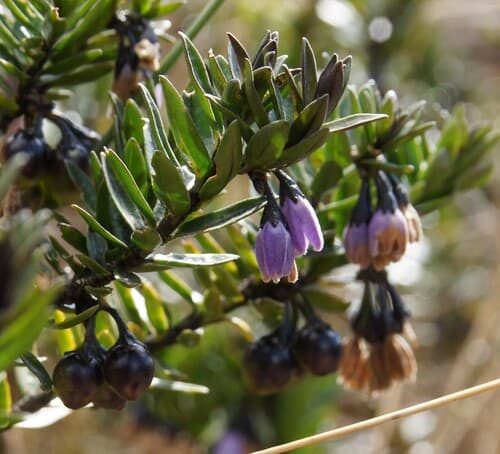
A high-altitude shrub or subshrub characterized by small, somewhat leathery, linear to lanceolate leaves. It produces pendulous, urn-shaped (urceolate) purple flowers in clusters, which develop into small, dark, globose berries.