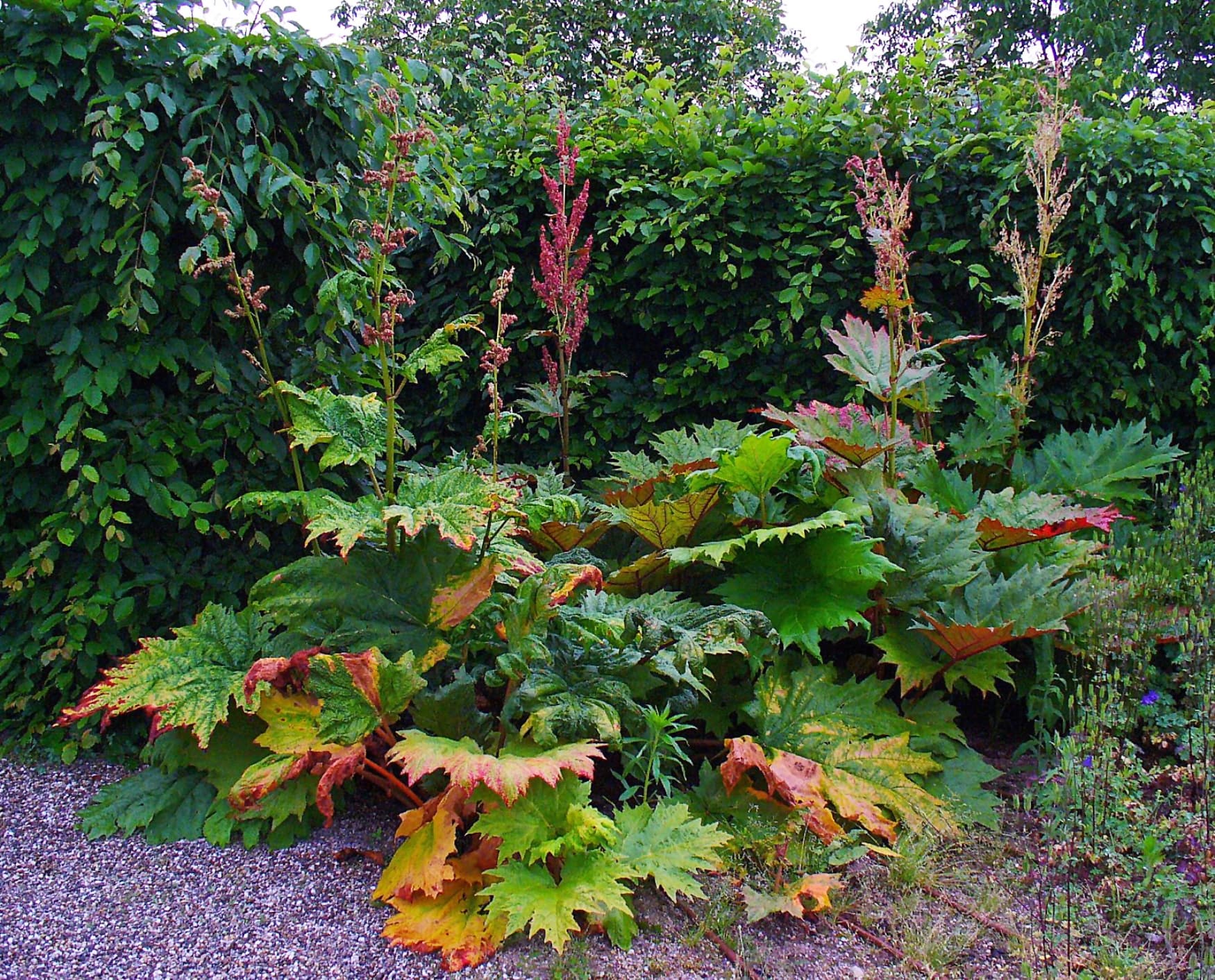
Rhubarb (Turkey)
Image: H. Zell (CC BY-SA 3.0)
NameRhubarb (Turkey)
Scientific NameRheum palmatum
Common NamesChinese Rhubarb, Turkey Rhubarb, Medicinal Rhubarb
Plant FamilyPolygonaceae
Natural HabitatNative to the mountainous and forested regions of western China and the Tibetan plateau, thriving in cool, moist environments. It is often found along stream banks and in damp meadows.
Parts Usedroot
Medicinal Actionsanti-inflammatory, antimicrobial, antioxidant, astringent
Traditional UsesTraditionally used in Chinese medicine as a powerful purgative for constipation and to clear heat and toxins from the body. It is also employed for treating dysentery, jaundice, abdominal pain, and various inflammatory conditions. The root is often used to promote blood circulation and reduce swelling.
Active ConstituentsAnthraquinones, Tannins, Rhein, Emodin, Chrysophanol
Preparation Methodsdecoction, powder, tincture
Contraindications & WarningsContraindicated in pregnancy, breastfeeding, intestinal obstruction, appendicitis, inflammatory bowel disease, and kidney stones. Prolonged use can lead to electrolyte imbalance and dependence. Avoid in children under 12.
Cultivation NotesPrefers full sun to partial shade and deep, fertile, moist, well-drained soil. It is a hardy perennial that benefits from consistent moisture and protection from strong winds. Propagated by seed or division of rhizomes.
Raritycommon
Description
A robust perennial herb characterized by large, deeply lobed, palmate leaves that can be green or tinged with red. It produces tall, erect flower stalks bearing numerous small, reddish-pink to cream flowers in dense panicles. The plant forms a substantial clump, often reaching significant height and width.