Solanum juvenale
NameSolanum juvenale
Scientific NameSolanum juvenale
Common NamesJuvenile Nightshade, Thorn Apple (generic)
Plant FamilySolanaceae
Natural HabitatNative to South Africa, found in dry, sandy, or stony areas, often in disturbed ground, grasslands, and open woodlands.
Parts Usedleaf
Medicinal Actionsanti-inflammatory, antimicrobial
Traditional UsesDue to its high toxicity, *Solanum juvenale* is not widely recognized for safe traditional medicinal uses. While some *Solanum* species containing similar compounds have been explored for external applications (e.g., poultices for skin inflammation) or internal uses in highly controlled traditional systems, the specific safe applications for *S. juvenale* are poorly documented and carry significant risks of poisoning. Extreme caution is advised.
Active ConstituentsSteroidal glycoalkaloids (e.g., solasodine, solamargine, solanine)
Preparation Methodspoultice
Contraindications & WarningsAll parts of *Solanum juvenale* are considered highly toxic due to the presence of steroidal glycoalkaloids. Ingestion can cause severe gastrointestinal upset, neurological symptoms, and can be fatal. Not for internal use. Avoid skin contact with sap, and handle with gloves due to spines. Contraindicated for pregnant or nursing individuals, children, and anyone with liver, kidney, or neurological conditions. Seek immediate medical attention if ingested.
Cultivation NotesPrefers full sun and well-drained, sandy or stony soils. Drought-tolerant once established. Can be invasive in suitable climates. Handle with gloves due to sharp spines on leaves and stems.
Raritycommon
Description
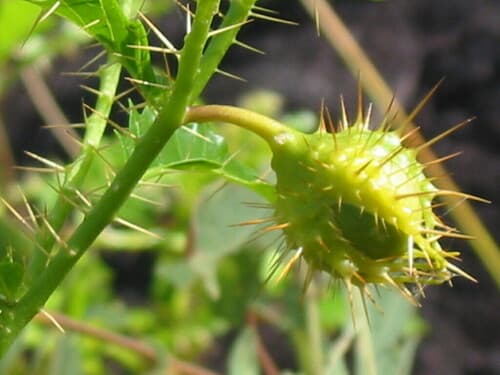
A thorny perennial herb or subshrub, typically low-growing, with deeply lobed, green leaves often armed with sharp spines on both surfaces and margins. It produces star-shaped, pale white to lilac flowers with prominent yellow anthers, followed by berry-like fruits.