Solanum ionidium
NameSolanum ionidium
Scientific NameSolanum ionidium
Plant FamilySolanaceae
Natural HabitatNative to South America, particularly Brazil, Solanum ionidium typically thrives in disturbed areas, forest edges, and along waterways. It often grows by climbing on other vegetation or fences, adapting to various light conditions from full sun to partial shade.
Parts Usedwhole_plant
Medicinal Actionsanalgesic, anti-inflammatory
Traditional UsesSpecific traditional medicinal uses for Solanum ionidium are not well-documented in readily accessible sources. However, other species within the Solanum genus have been historically used with extreme caution for conditions such as pain relief and inflammation, often in external applications. Due to the presence of potentially toxic glycoalkaloids, internal use is generally discouraged or requires expert supervision, and this plant is not recommended for self-medication.
Active Constituentssteroidal glycoalkaloids, solanine, solamargine, solasonine
Preparation Methodspoultice, tincture
Contraindications & WarningsAll parts of Solanum ionidium are considered potentially toxic due to the presence of steroidal glycoalkaloids. Ingestion can cause severe gastrointestinal upset, neurological symptoms, and in severe cases, can be fatal. It should not be used internally without expert guidance and is generally not recommended for self-medication. Pregnant or breastfeeding women, children, and individuals with liver or kidney conditions should strictly avoid this plant.
Cultivation NotesSolanum ionidium is a relatively vigorous climber that prefers full sun to partial shade and well-drained soils. It can be propagated from seeds or stem cuttings and is generally hardy in its native subtropical to tropical environments. Due to its potential toxicity, it should be handled with care, especially around children and pets.
Raritycommon
Description
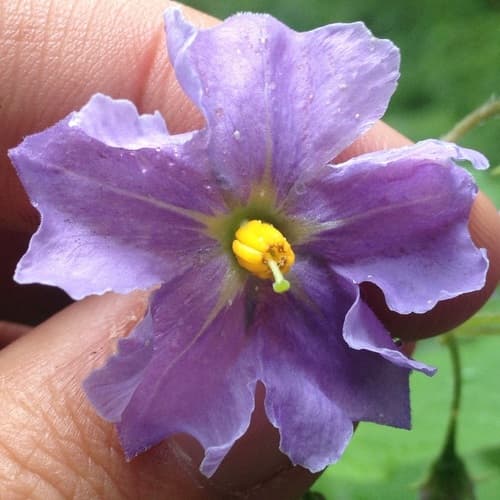
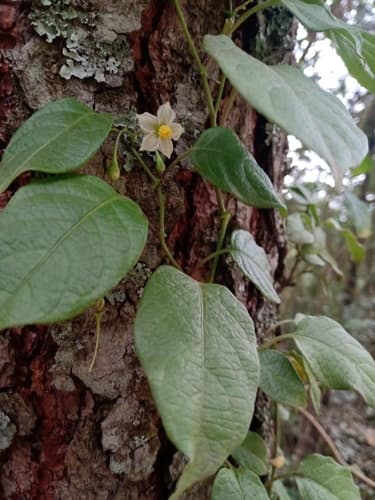
Solanum ionidium is a climbing or sprawling perennial vine characterized by its simple, ovate to lanceolate leaves arranged alternately along its stems. It produces small, star-shaped flowers, typically with five pale petals (often white or light purple) and a prominent cone of yellow anthers in the center. These flowers are followed by berries, though they are not visible in the provided image.