Solanum contumazaense
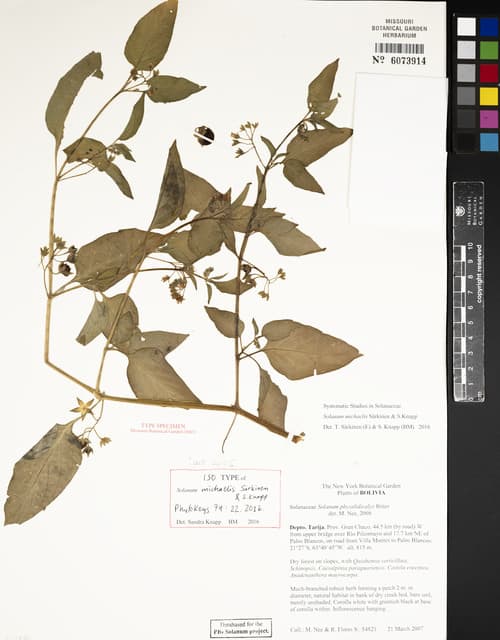
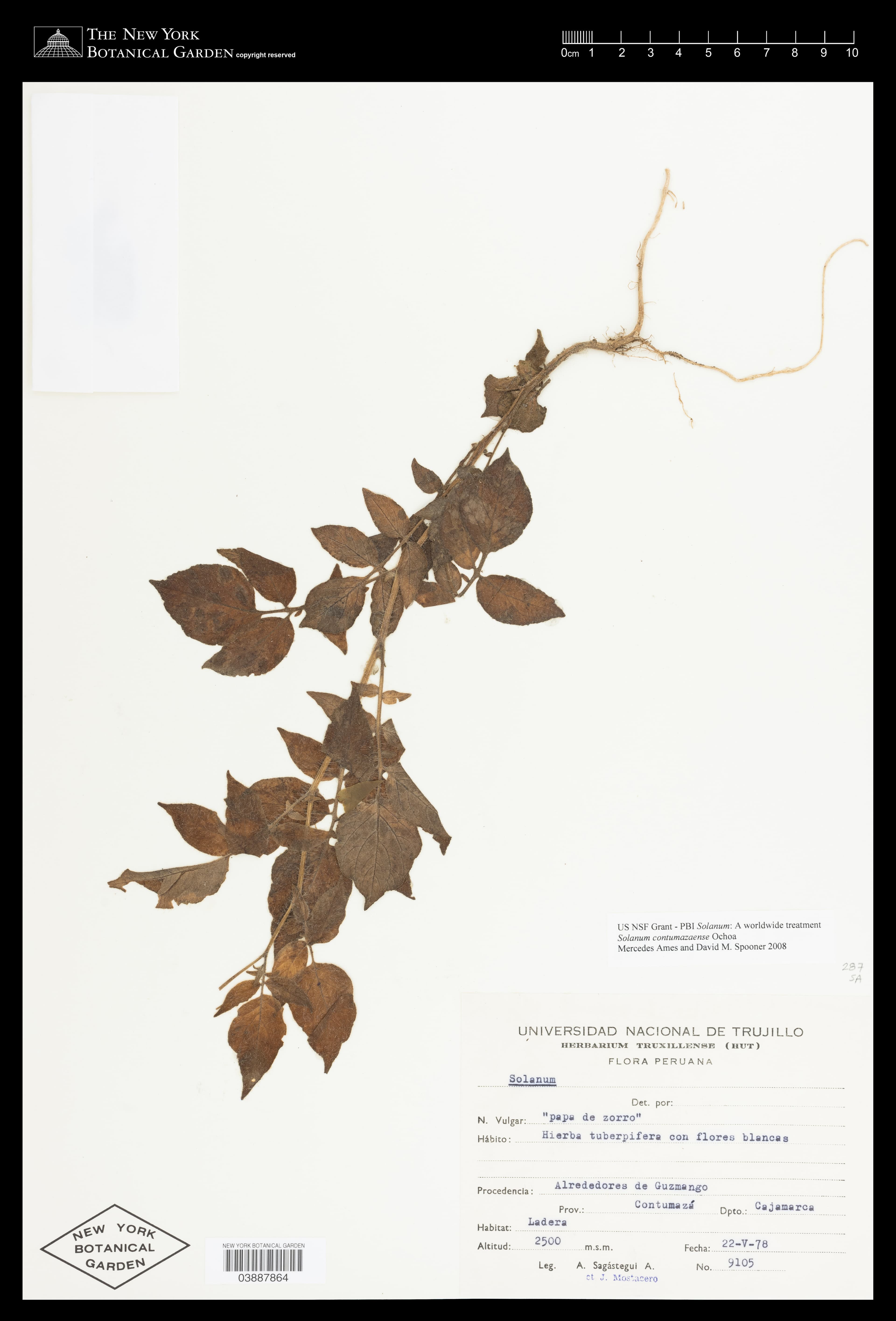
Image: The New York Botanical Garden (cc-by)
NameSolanum contumazaense
Scientific NameSolanum contumazaense Ochoa
Common NamesPapa de zorro
Plant FamilySolanaceae
Natural HabitatFound on mountain slopes ('Ladera') at an altitude of 2500 meters above sea level. It originates from the surroundings of Guzmango, Contumazá, in the Department of Cajamarca, Peru.
Parts Usedroot,whole_plant
Medicinal Actionsanti-inflammatory, antimicrobial
Traditional UsesSpecific traditional uses for Solanum contumazaense are not detailed in the provided context. However, many species within the Solanum genus, particularly wild potatoes, are traditionally utilized as food sources (tubers) or in folk medicine for various ailments, often requiring careful preparation due to the presence of potentially toxic compounds.
Active ConstituentsSteroidal glycoalkaloids, Saponins, Flavonoids
Preparation Methodsdecoction, infusion
Contraindications & WarningsMany Solanum species contain toxic steroidal glycoalkaloids, which can cause gastrointestinal distress, neurological symptoms, or be fatal if consumed in sufficient quantities, especially from unripe fruits or green parts. Consumption of any part of this plant should be approached with extreme caution and under expert guidance.
Cultivation NotesThis species is adapted to high-altitude, mountainous environments, likely preferring well-drained soils on slopes. It would require conditions mimicking its native Peruvian Andes habitat, including cool temperatures and specific light exposure.
Rarityuncommon
Description
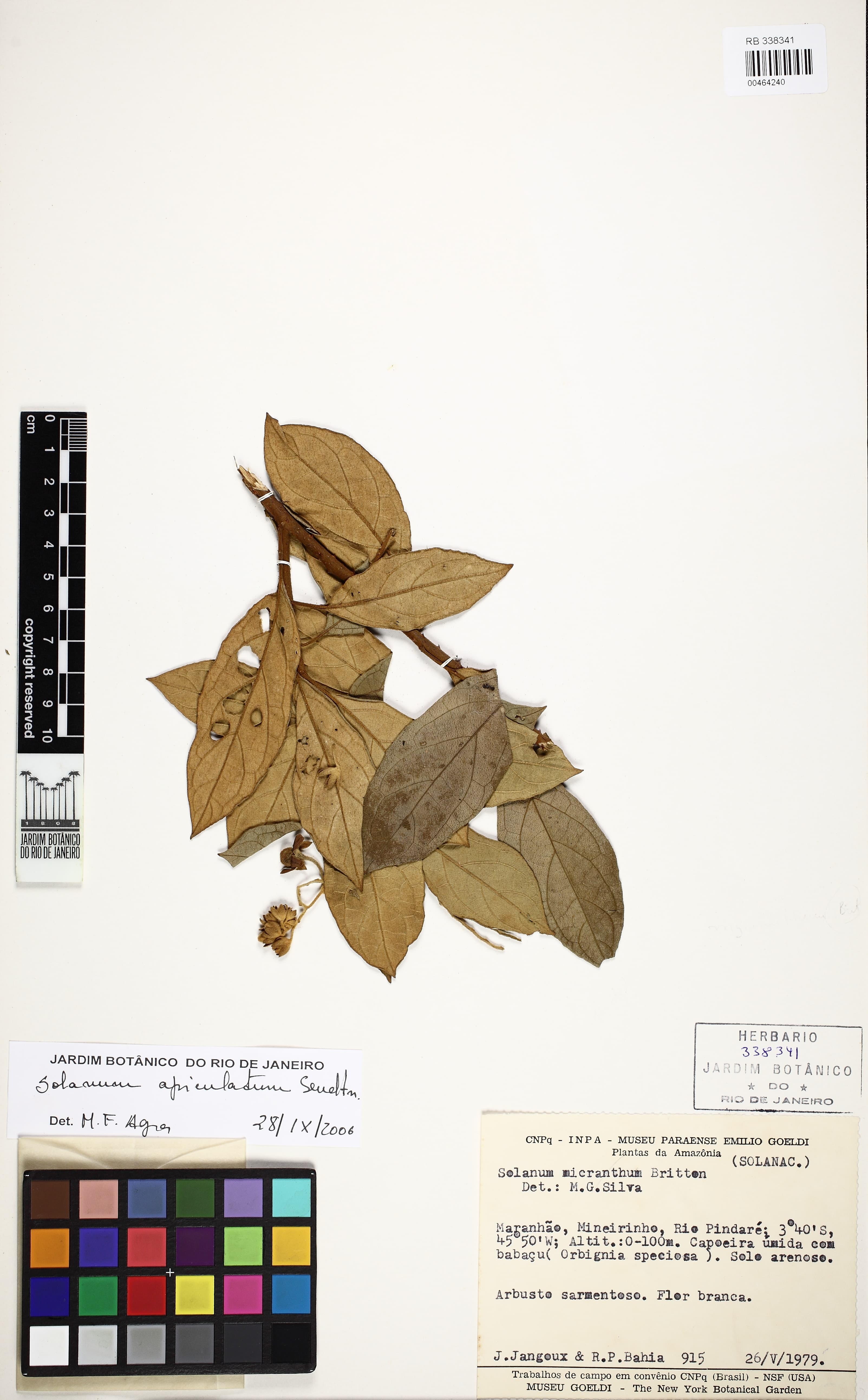
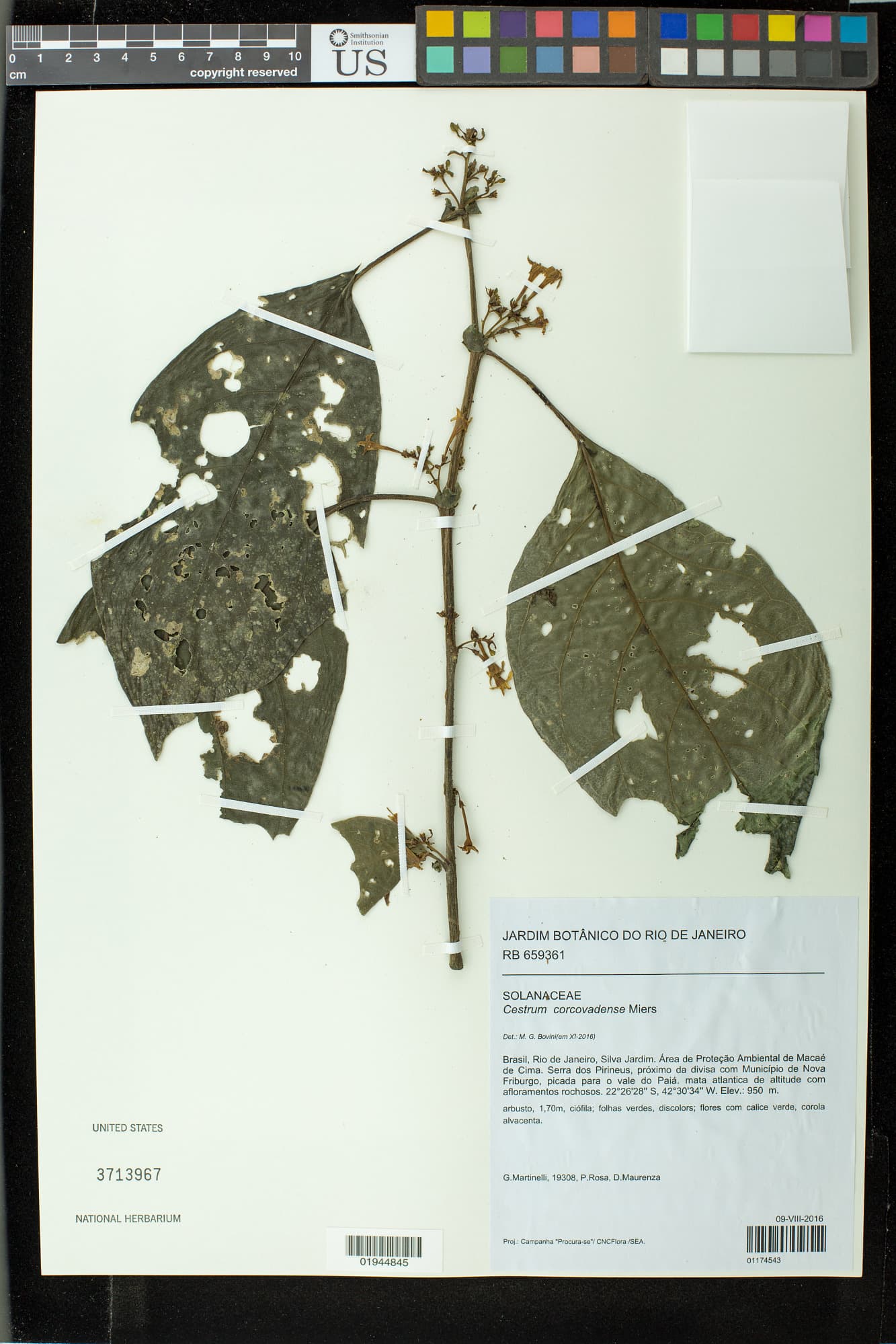
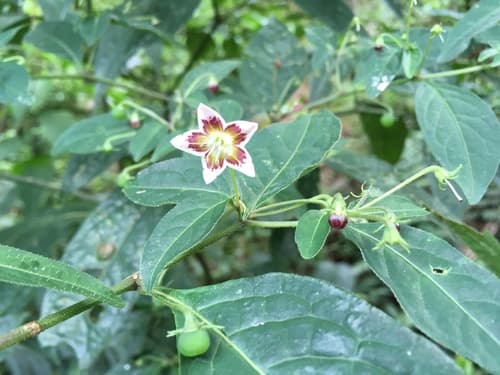
This herbaceous plant is characterized by its tuber-bearing nature, as indicated by 'Hierba tuberpifera', and is noted to have white flowers. The specimen shows a stem with alternate leaves and a fibrous root system, typical of a wild potato relative. It is a member of the diverse Solanum genus.