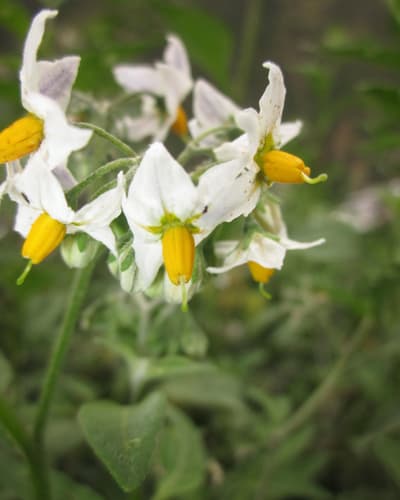
Solanum cochabambense
NameSolanum cochabambense
Scientific NameSolanum cochabambense
Common NamesWild potato, Papa silvestre
Plant FamilySolanaceae
Natural HabitatNative to the high-altitude Andean regions of Bolivia, particularly around Cochabamba. It thrives in disturbed areas, roadsides, and agricultural fields at elevations ranging from approximately 2500 to 3800 meters above sea level.
Parts Usedroot
Traditional UsesWhile primarily valued as a genetic resource for potato breeding due to its resistance to pests and diseases, specific traditional medicinal uses for Solanum cochabambense are not widely documented. Its tubers may be consumed locally after specific detoxification methods to reduce glycoalkaloid content, but this is not a widespread medicinal application.
Active Constituentssteroidal glycoalkaloids
Contraindications & WarningsAll parts of Solanum cochabambense, especially the aerial parts and raw tubers, contain steroidal glycoalkaloids which are toxic. Ingestion can cause gastrointestinal upset, neurological symptoms, and can be dangerous if not properly prepared or consumed in large quantities.
Cultivation NotesThis wild potato species prefers cool temperatures, well-drained soil, and conditions typical of its high-altitude Andean native habitat. It is not commonly cultivated for direct consumption but is important for research and breeding programs due to its genetic diversity and disease resistance.
Rarityuncommon
Description
Solanum cochabambense is a herbaceous wild potato species characterized by its white to pale purple, star-shaped flowers with prominent yellow anthers. It typically produces small tubers and has pubescent leaves. This species is a diploid wild relative of the cultivated potato.