Solanum campanulatum
NameSolanum campanulatum
Scientific NameSolanum campanulatum
Common NamesBell-flowered Nightshade
Plant FamilySolanaceae
Natural HabitatNative to eastern Australia (Queensland, New South Wales), typically found in open forests, woodlands, and disturbed areas. It thrives in well-drained soils.
Parts Used
Traditional UsesNo widely recognized safe traditional medicinal uses are documented for *Solanum campanulatum* due to its potential toxicity from steroidal glycoalkaloids. Many *Solanum* species are considered poisonous and should not be ingested.
Active ConstituentsSteroidal glycoalkaloids (e.g., solanine, solamargine, solasonine)
Contraindications & WarningsIngestion of any part of the plant is generally contraindicated due to the presence of toxic steroidal glycoalkaloids. Symptoms of poisoning can include gastrointestinal upset, neurological symptoms, and in severe cases, death. Exercise extreme caution; this plant is considered poisonous and should not be used medicinally.
Cultivation NotesPrefers full sun to partial shade and well-drained soil. It is drought tolerant once established and can be quite hardy. Can become weedy or invasive in suitable climates.
Raritycommon
Description
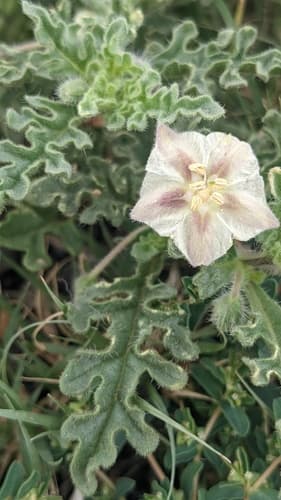
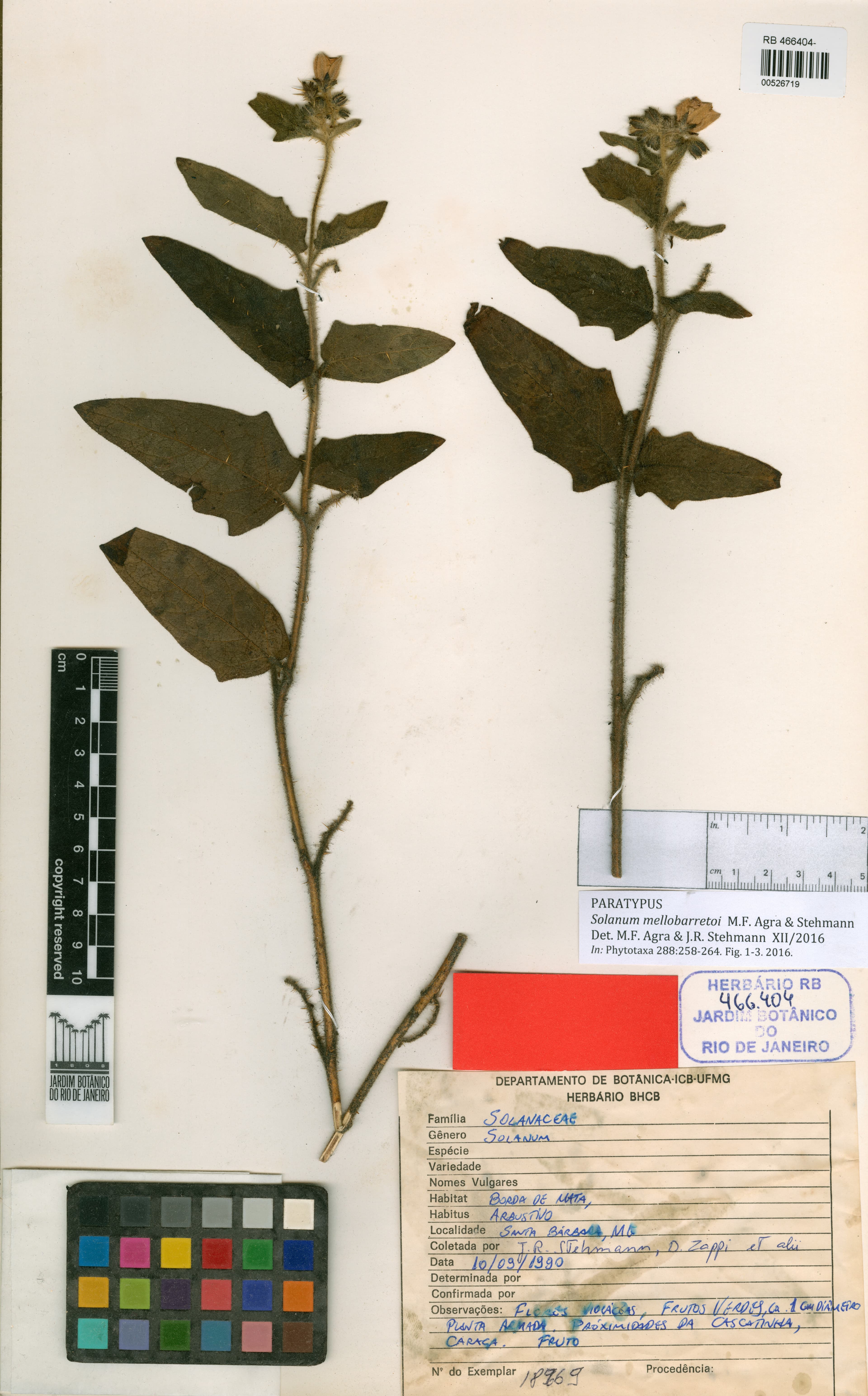
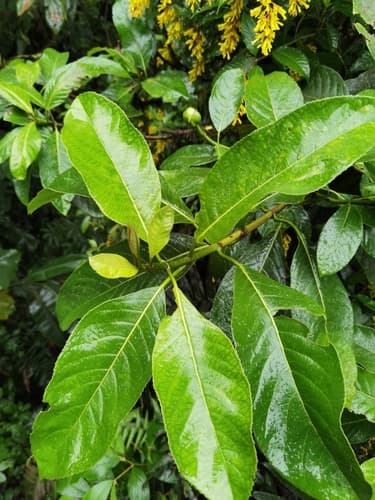
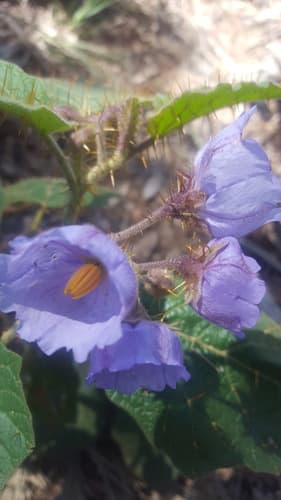
A spiny, herbaceous perennial or subshrub native to eastern Australia. It features deeply lobed, spiny leaves and stems, producing bell-shaped, purple to lavender flowers with prominent yellow anthers. The plant is characterized by its thorny nature.