Solanum buesii
Image: Conveyor Belt (cc0)
NameSolanum buesii
Scientific NameSolanum buesii Vargas
Common NamesWild Potato (Peru)
Plant FamilySolanaceae
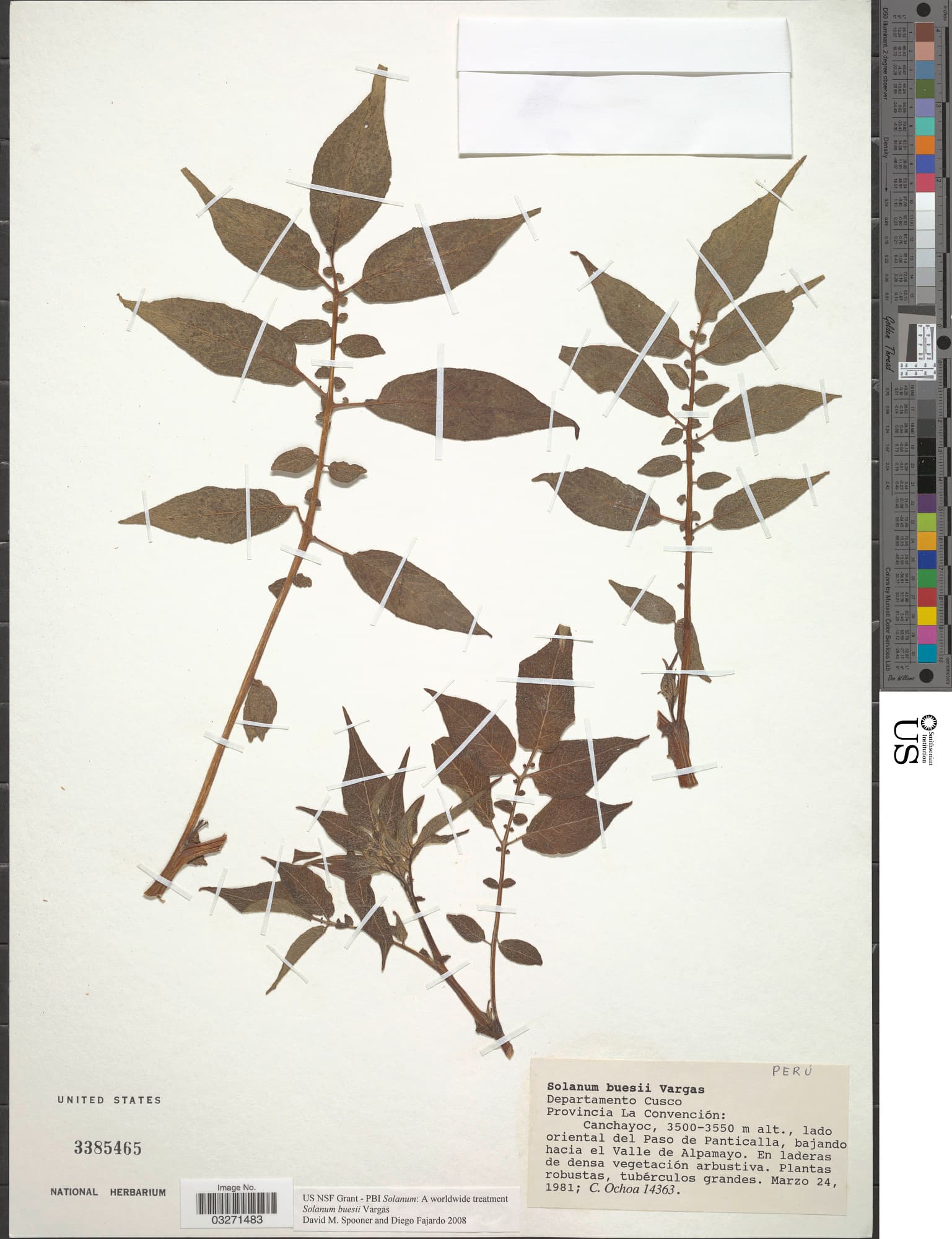
Natural HabitatNative to the high-altitude regions of Cusco, Peru, specifically found on the eastern slopes of Panticalla Pass, descending towards the Alpamayo Valley, at elevations of 3500-3550 meters, growing in dense shrubby vegetation.
Parts Usedroot
Traditional UsesWhile the plant is noted for its 'large tubers,' suggesting potential food use, specific traditional medicinal uses for Solanum buesii are not widely documented. Many wild potato species are consumed after specific processing to reduce natural toxicity.
Active Constituentssteroidal glycoalkaloids
Contraindications & WarningsDue to the presence of steroidal glycoalkaloids common in the Solanum genus, consumption of raw or improperly prepared plant parts, especially tubers, can be toxic and is not recommended.
Cultivation NotesThrives in high-altitude, cool climates (3500-3550m) with dense shrubby vegetation, as found in the Andean regions of Peru. Requires specific environmental conditions mimicking its native habitat.
Rarityuncommon
Description
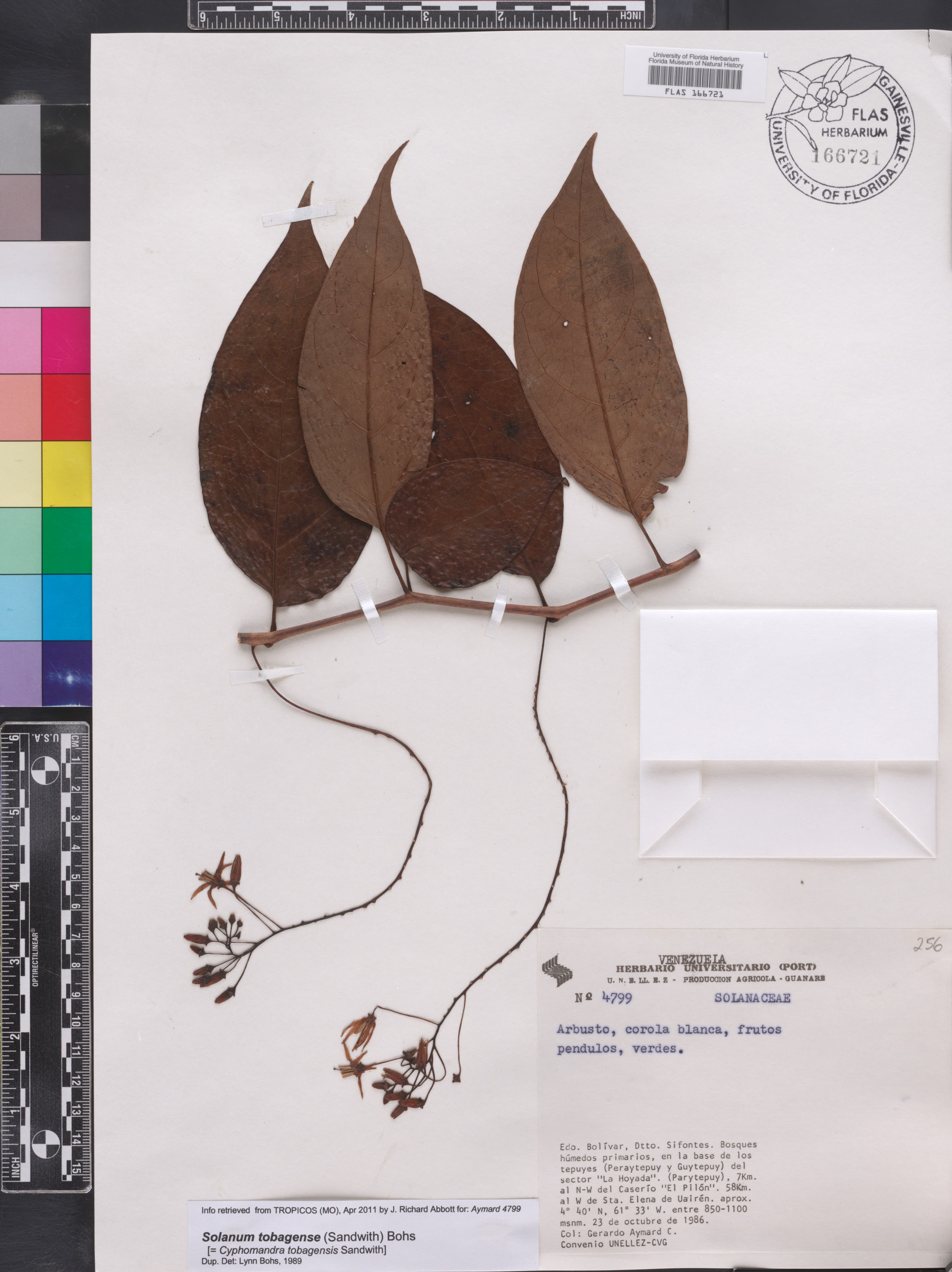
A robust herbaceous plant, characterized by large tubers. The specimen shows stems with alternate, simple leaves, and small structures that appear to be developing fruits or flower buds in the leaf axils.