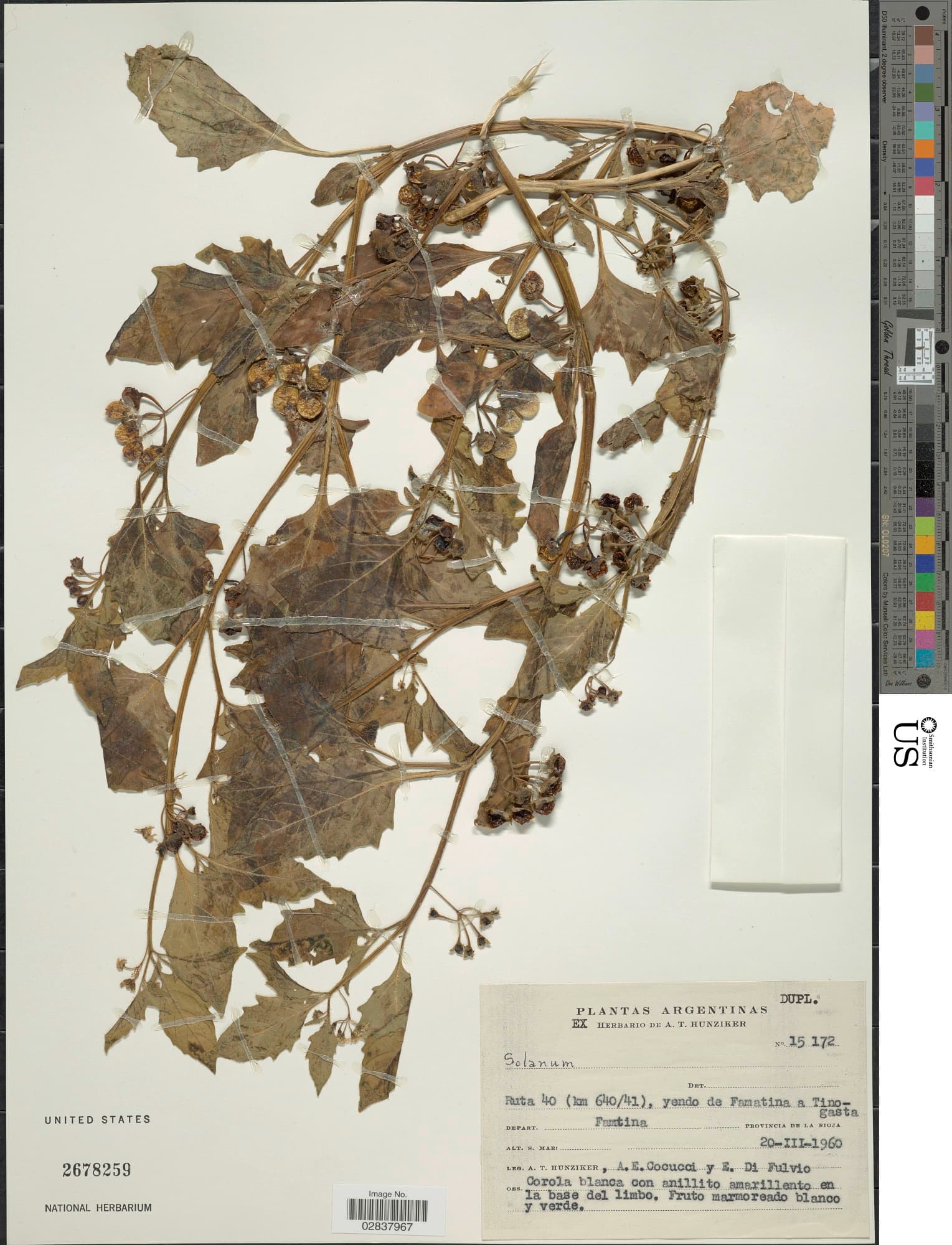
Solanum austropiceum
NameSolanum austropiceum
Scientific NameSolanum austropiceum
Common NamesGrey Potato Bush, Grey Potato-bush
Plant FamilySolanaceae
Natural HabitatNative to arid and semi-arid regions of Western Australia and South Australia, typically found in open woodlands, shrublands, and disturbed areas on sandy or loamy soils.
Parts Usedleaf,fruit
Medicinal Actionsanalgesic, anti-inflammatory
Traditional UsesWhile specific traditional medicinal uses for Solanum austropiceum are not widely documented due to its known toxicity, other species within the Solanum genus have been traditionally used externally for their analgesic and anti-inflammatory properties, often for skin ailments or pain relief, with extreme caution due to the presence of potent glycoalkaloids.
Active Constituentssteroidal glycoalkaloids, solasodine
Preparation Methodspoultice, salve, powder
Contraindications & WarningsAll parts of Solanum austropiceum are considered toxic due to the presence of steroidal glycoalkaloids, particularly when ingested. Internal use is highly discouraged and potentially fatal. External use should be approached with extreme caution, avoiding broken skin and prolonged contact. Not recommended for pregnant or lactating women, children, or individuals with liver or kidney conditions.
Cultivation NotesThis species thrives in full sun and well-drained, sandy or loamy soils. It is highly drought-tolerant once established and prefers arid to semi-arid climates. Propagation is typically from seed.
Raritycommon
Description
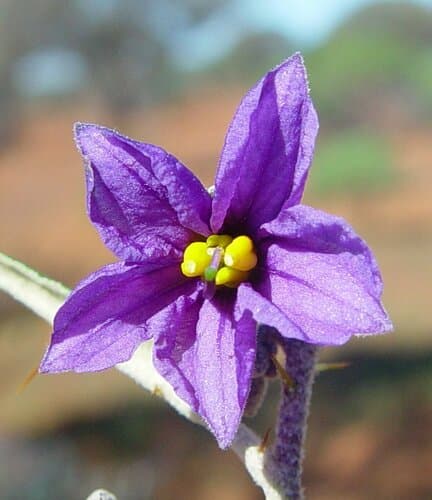
Solanum austropiceum is a thorny, erect shrub characterized by its greyish, stellate-hairy stems and leaves. It produces vibrant purple, star-shaped flowers with prominent yellow anthers, typical of the Solanum genus. The plant is generally considered toxic.