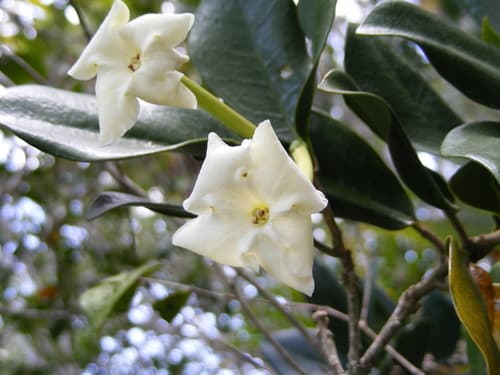
brilliant raintree
Namebrilliant raintree
Scientific NameTabernaemontana divaricata
Common NamesPinwheel Flower, Crape Jasmine, East Indian Rosebay
Plant FamilyApocynaceae
Natural HabitatNative to Southeast Asia, it thrives in tropical and subtropical regions, often found in gardens, parks, and disturbed areas. It prefers moist, well-drained soils and partial shade to full sun.
Parts Usedflower,leaf,root,bark,whole_plant
Medicinal Actionsanti-inflammatory, antimicrobial, analgesic, antioxidant, nervine
Traditional UsesTraditionally, various parts of Tabernaemontana divaricata have been used in folk medicine. The milky sap is applied to wounds and skin ailments, while the roots are used for fever, pain, and as an anti-inflammatory. Leaves and flowers are sometimes used for eye infections, headaches, and as a sedative.
Active ConstituentsIndole alkaloids, flavonoids, triterpenoids, phenolic compounds
Preparation Methodsinfusion, decoction, poultice, powder
Contraindications & WarningsThe plant contains alkaloids, and internal use should be approached with caution due to potential toxicity. Pregnant and breastfeeding women, and individuals with liver or kidney conditions, should avoid use. Consult a healthcare professional before use.
Cultivation NotesThis plant prefers warm, humid climates and well-drained, fertile soil. It can be grown in full sun to partial shade and requires regular watering, especially during dry periods. Propagation is typically by stem cuttings.
Raritycommon
Description
Tabernaemontana divaricata is an evergreen shrub or small tree known for its glossy, dark green leaves and fragrant, pinwheel-shaped white flowers. The flowers typically have five petals and bloom profusely, often year-round in tropical climates.