Solanum ashbyae
NameSolanum ashbyae
Scientific NameSolanum ashbyae
Common NamesAshby's Nightshade
Plant FamilySolanaceae
Natural HabitatEndemic to Western Australia, it thrives in arid and semi-arid regions, typically found on sandy or rocky soils in open woodlands and shrublands. It is drought-tolerant.
Parts Usedleaf,fruit
Medicinal Actionsanti-inflammatory, antimicrobial
Traditional UsesNo specific traditional medicinal uses are widely documented for Solanum ashbyae. However, other species within the Solanum genus have been traditionally used, often externally, for their anti-inflammatory and antimicrobial properties, such as for skin conditions or minor pain relief. Internal use of Solanum species is generally approached with extreme caution due to potential toxicity.
Active ConstituentsSteroidal glycoalkaloids, Solasodine, Solamargine
Preparation Methodspoultice, decoction
Contraindications & WarningsDue to the presence of steroidal glycoalkaloids common in the Solanum genus, Solanum ashbyae is likely toxic if ingested, especially unripe fruits and leaves. Specific contraindications for S. ashbyae are not well-documented, but general warnings for Solanum species include avoiding internal consumption, particularly by pregnant or breastfeeding women, children, and individuals with liver or kidney conditions. May cause gastrointestinal upset, neurological symptoms, or more severe poisoning.
Cultivation NotesThis hardy shrub prefers full sun and well-drained soils, tolerating arid conditions and drought once established. It is suitable for xeriscaping and native gardens in appropriate climates.
Raritycommon
Description
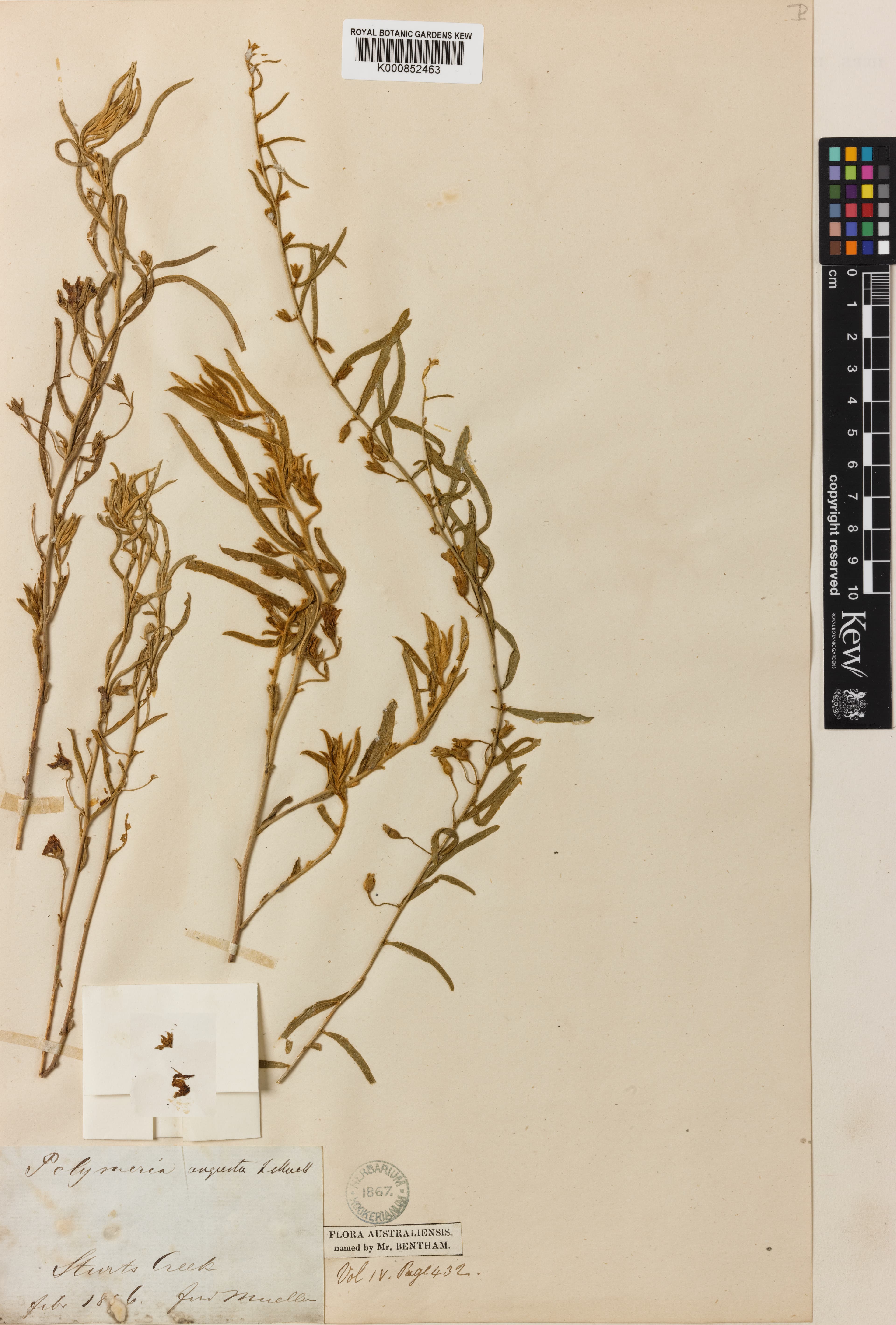
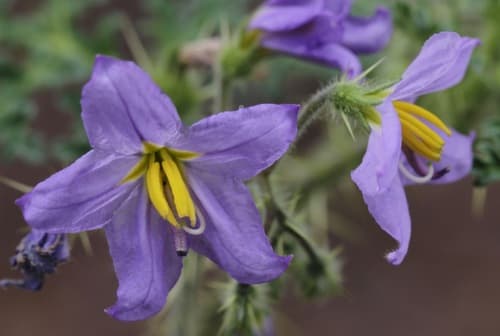
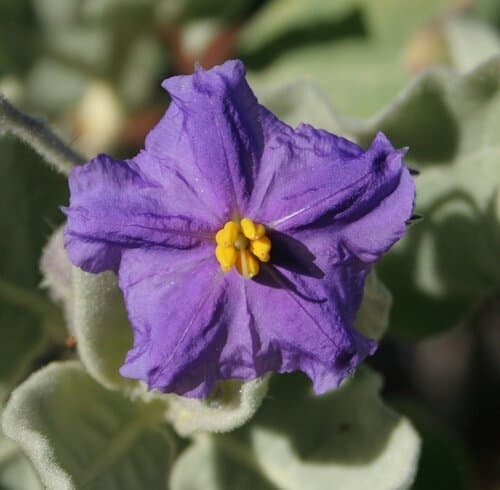
Solanum ashbyae is a small, erect shrub characterized by its distinctive silvery-grey, densely hairy leaves. It produces attractive, star-shaped purple flowers with prominent yellow anthers, typical of the Solanum genus.