Davis horsenettle
NameDavis horsenettle
Scientific NameSolanum davisiorum
Common NamesDavis horsenettle, Davis' nightshade
Plant FamilySolanaceae
Natural HabitatThis species is native to arid and semi-arid regions of the southwestern United States and northern Mexico. It commonly grows in disturbed areas, grasslands, and open woodlands, preferring well-drained soils.
Parts Usedroot,leaf
Medicinal Actionsnervine, sedative
Traditional UsesDue to the plant's high toxicity, traditional medicinal uses are extremely limited and often dangerous. Some related Solanum species have been historically used by Native American tribes in very small, controlled doses as a sedative or for epilepsy, or externally for skin conditions, but these practices are not recommended due to the significant risk of poisoning.
Active Constituentssolanine, solamargine, solasonine
Preparation Methodspoultice, tincture
Contraindications & WarningsAll parts of Davis horsenettle are highly toxic due to steroidal glycoalkaloids; ingestion can cause severe gastrointestinal upset, neurological symptoms, and can be fatal. Avoid use by pregnant or nursing women, children, and individuals with liver or kidney conditions. External use should also be approached with extreme caution.
Cultivation NotesDavis horsenettle prefers full sun and well-drained, sandy or rocky soils. It is drought-tolerant once established and can be invasive in some areas. Propagation is typically by seed.
Raritycommon
Description
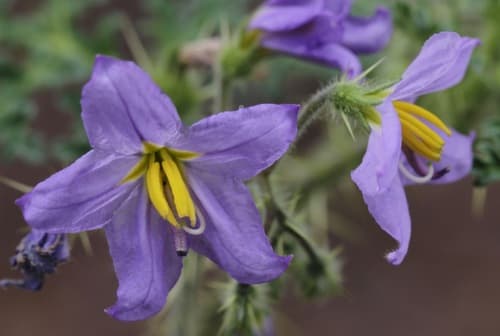
Davis horsenettle is a perennial herbaceous plant characterized by its spiny stems and deeply lobed leaves. It produces star-shaped, lavender to purple flowers with prominent yellow anthers, typical of the Solanum genus, followed by small, round berries.