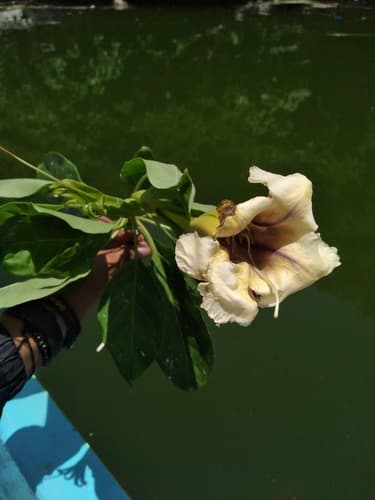
Solandra nizandensis
NameSolandra nizandensis
Scientific NameSolandra nizandensis
Common NamesChalice Vine, Cup of Gold Vine, Trumpet Flower
Plant FamilySolanaceae
Natural HabitatNative to tropical and subtropical regions, specifically found in Oaxaca, Mexico. It thrives in humid forests, often growing as an epiphyte or climbing on trees and rocks.
Parts Usedleaf,flower,bark
Medicinal Actionsanalgesic, sedative
Traditional UsesTraditionally, Solandra species, including S. nizandensis, have been used by indigenous cultures in Mesoamerica for shamanic rituals, divination, and entheogenic purposes due to their potent hallucinogenic and deliriant properties. It was also employed for pain relief and as a sedative in traditional contexts, but always with extreme caution due to its inherent toxicity.
Active Constituentshyoscyamine, scopolamine, atropine, tropane alkaloids
Preparation Methodsinfusion, decoction, powder
Contraindications & WarningsEXTREMELY TOXIC. All parts of Solandra nizandensis are poisonous due to the presence of potent tropane alkaloids. Ingestion can cause severe anticholinergic poisoning, leading to symptoms such as hallucinations, delirium, tachycardia, hyperthermia, dry mouth, dilated pupils, seizures, coma, and potentially death. This plant should never be ingested or used without expert medical supervision. It interacts dangerously with numerous medications, especially those affecting the central nervous system or other anticholinergic drugs. It is contraindicated for pregnant or breastfeeding women, children, and individuals with heart conditions, glaucoma, or prostate enlargement.
Cultivation NotesSolandra nizandensis is a tropical vine that requires warm temperatures, high humidity, and well-draining soil. It prefers full sun to partial shade and needs a strong support structure for its climbing habit. Propagation is typically achieved through cuttings.
Rarityuncommon
Description
Solandra nizandensis is a robust, woody climbing vine or scrambling shrub, characterized by its very large, showy, trumpet-shaped flowers. These flowers are typically creamy white to yellow, often displaying purple or brownish venation within, and emit a strong fragrance, especially at night. Its foliage consists of large, simple, glossy green leaves.