Snake Honeythorn
NameSnake Honeythorn
Scientific NameLycium ferocissimum
Common NamesSnake Honeythorn, African Boxthorn, Boxthorn
Plant FamilySolanaceae
Natural HabitatNative to Southern Africa, it thrives in coastal areas, dunes, disturbed sites, and open woodlands, often in sandy or rocky soils. It is considered an invasive species in many parts of the world.
Parts Usedfruit,leaf
Medicinal Actionsanti-inflammatory, antimicrobial, antioxidant
Traditional UsesTraditionally, indigenous groups in Southern Africa have used the leaves to prepare infusions for treating fevers and stomach complaints. The ripe berries are edible and have been consumed as a food source.
Active ConstituentsFlavonoids, Carotenoids, Alkaloids, Polysaccharides
Preparation Methodsinfusion, powder
Contraindications & WarningsDue to its sharp spines, handling requires caution. While ripe berries are generally considered safe to eat, specific medicinal contraindications for Lycium ferocissimum are not extensively documented. As with any herbal remedy, caution is advised for pregnant or nursing individuals and those on medication.
Cultivation NotesExtremely hardy, drought-tolerant, and adaptable to poor soils and coastal conditions. It is highly invasive in many regions, so cultivation should be managed carefully to prevent its spread into natural ecosystems. Propagates easily from seed or cuttings.
Raritycommon
Description
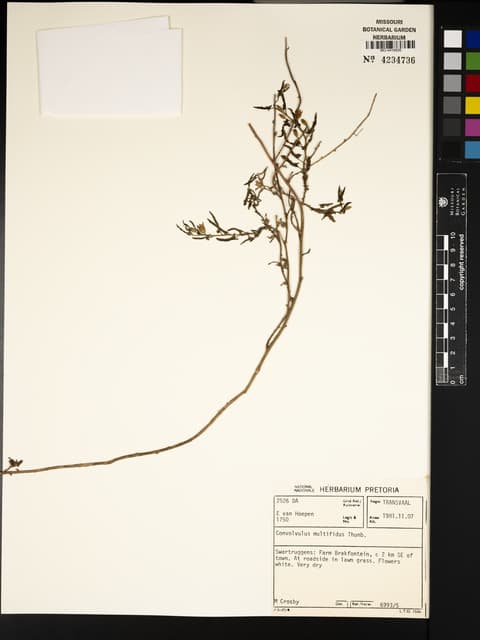
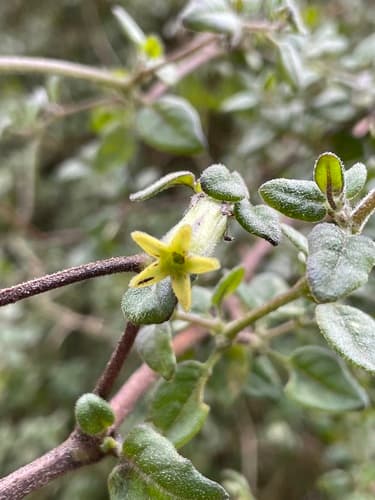
A robust, spiny, woody shrub growing up to 4 meters tall, characterized by small, oval, somewhat succulent leaves. It produces bell-shaped, pale yellow to cream flowers that develop into small, round, orange-red berries.