Saffron
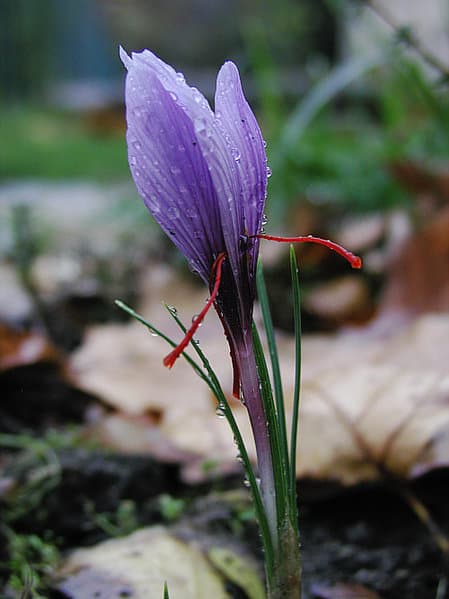
Image: HeiWu (CC BY-SA 3.0)
NameSaffron
Scientific NameCrocus sativus
Common NamesSaffron Crocus, Autumn Crocus
Plant FamilyIridaceae
Natural HabitatBelieved to be native to Greece or Southwest Asia, Crocus sativus is now primarily known as a cultivated plant. It thrives in Mediterranean climates with hot, dry summers and mild, wet winters, preferring well-drained, fertile soil and full sun exposure.
Parts Usedflower
Medicinal Actionsanti-inflammatory, antioxidant, nervine, sedative
Traditional UsesTraditionally, saffron has been used as a spice, a coloring agent, and a medicinal herb. In traditional medicine, it was employed to alleviate symptoms of depression and anxiety, improve mood, enhance memory, and act as an emmenagogue. It was also valued for its anti-inflammatory properties and digestive aid.
Active ConstituentsCrocin, Picrocrocin, Safranal
Preparation Methodsinfusion, powder
Contraindications & WarningsHigh doses of saffron can be toxic and may induce uterine contractions, making it contraindicated during pregnancy. It may also interact with blood-thinning medications, blood pressure medications, and certain antidepressant drugs.
Cultivation NotesSaffron crocus grows from corms planted in late summer in well-drained soil and a sunny location. It requires a distinct dry dormancy period during summer and flowers in autumn. Corms should be planted about 10-15 cm deep and 10-15 cm apart.
Rarityuncommon
Description
Crocus sativus is a perennial cormous geophyte characterized by its vibrant purple, cup-shaped flowers that bloom in autumn. Each flower prominently displays three long, thread-like, crimson stigmas, which are the source of the valuable saffron spice. The plant also features slender, grass-like leaves that emerge before or with the flowers.