quena
Namequena
Scientific NameSolanum elaeagnifolium
Common NamesSilverleaf Nightshade, Silver Nightshade, White Horse Nettle, Trompillo
Plant FamilySolanaceae
Natural HabitatNative to the Americas, thriving in disturbed areas, pastures, roadsides, and cultivated fields in arid to semi-arid environments. It is drought-tolerant and often found in sandy or gravelly soils.
Parts Usedfruit,whole_plant
Medicinal Actionsanalgesic, anti-inflammatory, antimicrobial
Traditional UsesTraditionally, the fruits were used by some indigenous groups as a rennet substitute. Medicinally, poultices from the plant were externally applied for skin conditions, sores, or insect bites. Internal use was extremely rare and cautious due to high toxicity, sometimes for sore throats or as a diuretic.
Active ConstituentsSolasodine, Solamargine, Solanine, Saponins
Preparation Methodspoultice, decoction, powder
Contraindications & WarningsHIGHLY TOXIC. All parts, especially berries, contain toxic glycoalkaloids. Ingestion can cause severe gastrointestinal, neurological, and cardiac symptoms, potentially fatal. Avoid completely during pregnancy, lactation, and for children. Use external applications with extreme caution and avoid broken skin.
Cultivation NotesConsidered a noxious weed in many regions due to aggressive growth, deep root system, and toxicity to livestock. It is drought-tolerant, prefers full sun and well-drained soils. Not typically cultivated for medicinal purposes due to its toxicity and weed status.
Raritycommon
Description
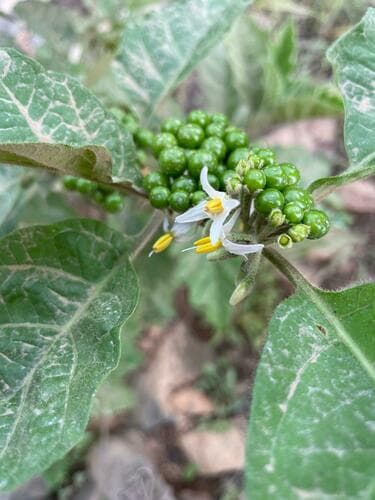
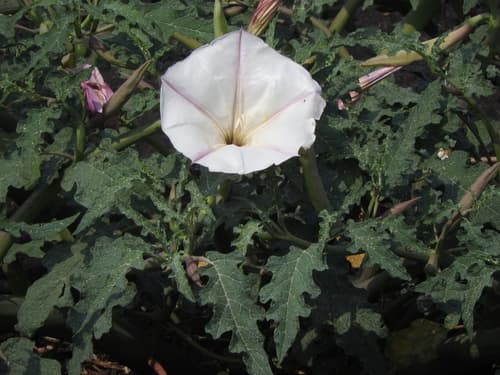
A perennial herbaceous plant, typically 10-100 cm tall, characterized by silvery-green, fuzzy leaves covered in stellate hairs. It produces star-shaped purple (sometimes white) flowers with prominent yellow anthers and small, spherical berries that ripen from green to yellow-orange or black.