Pruinose Thorn-apple
NamePruinose Thorn-apple
Scientific NameDatura pruinosa
Common NamesPruinose Thorn-apple, Jimsonweed, Devil's Trumpet
Plant FamilySolanaceae
Natural HabitatTypically found in disturbed soils, roadsides, waste areas, and arid to semi-arid regions, particularly in the southwestern United States and northern Mexico.
Parts Usedleaf,seed,whole_plant
Medicinal Actionsanalgesic, sedative
Traditional UsesHistorically, various Datura species, including potentially D. pruinosa, were used by indigenous cultures for ritualistic purposes, pain relief, and as an antispasmodic for asthma due to their potent tropane alkaloids. However, all parts of the plant are highly toxic and its use was extremely dangerous, often leading to severe poisoning, delirium, and death. External applications for pain were also reported.
Active Constituentsatropine, scopolamine, hyoscyamine
Preparation Methodsinfusion, poultice, powder
Contraindications & WarningsEXTREMELY TOXIC. All parts of Datura pruinosa are poisonous and can be fatal if ingested. Symptoms of poisoning include severe hallucinations, delirium, tachycardia, dry mouth, blurred vision, hyperthermia, and respiratory depression. It should never be used internally without strict medical supervision due to its narrow therapeutic window and high toxicity. Avoid use by pregnant or nursing women, children, and individuals with glaucoma, heart conditions, or prostate enlargement. Interacts dangerously with other anticholinergic drugs.
Cultivation NotesGrows readily from seed in warm climates, preferring full sun and well-drained soil. It is drought-tolerant once established and can often be found growing as a weed in suitable conditions. Handle with gloves due to toxicity.
Raritycommon
Description
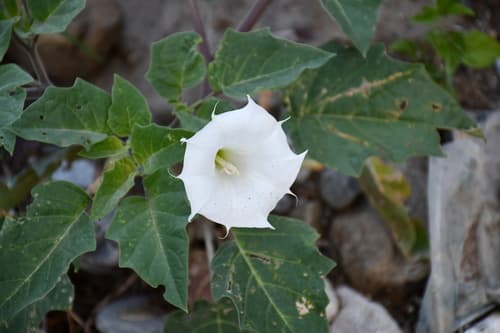
An herbaceous annual plant characterized by large, trumpet-shaped white flowers that open at night, and ovate to irregularly lobed leaves. The plant often has a fine, powdery (pruinose) coating on its stems and leaves, and produces spiny seed pods.