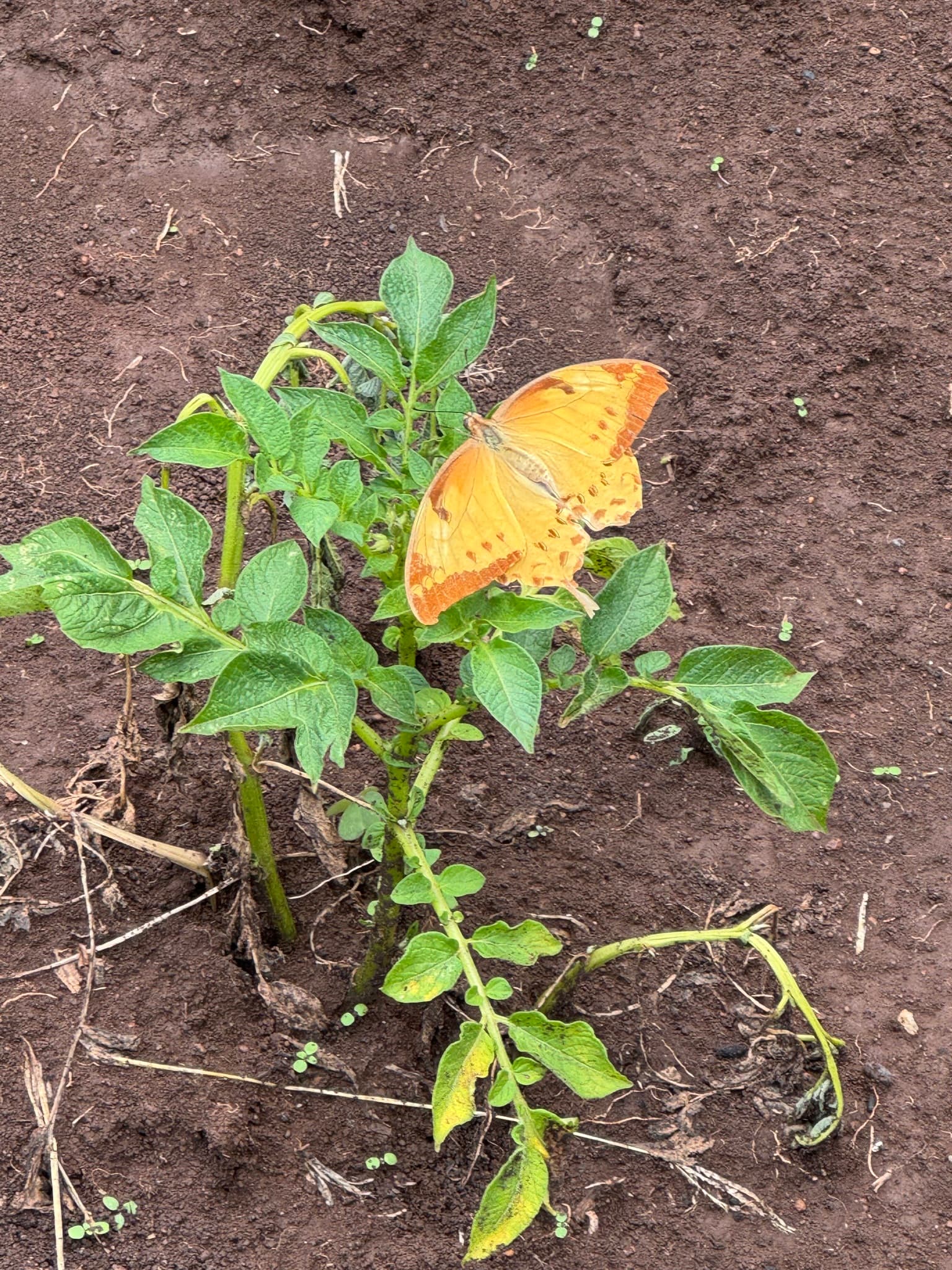
Potato
Image: Dave Shemenski (cc-by-nc)
NamePotato
Scientific NameSolanum tuberosum
Common NamesPotato, Irish Potato, White Potato
Plant FamilySolanaceae
Natural HabitatOriginally native to the Andes mountains in South America, potatoes are now cultivated worldwide in temperate and subtropical regions. They thrive in well-drained, slightly acidic soil and prefer cool, moist growing conditions.
Parts Usedroot
Medicinal Actionsanti-inflammatory, demulcent
Traditional UsesTraditionally, raw potato juice has been used internally as a demulcent to soothe gastric ulcers and indigestion. Externally, grated raw potato or poultices made from it have been applied to reduce inflammation, soothe burns, and alleviate skin irritations.
Active ConstituentsStarch, Glycoalkaloids, Vitamins (C, B6), Minerals (Potassium)
Preparation Methodspoultice, powder
Contraindications & WarningsConsumption of green potatoes, sprouts, or the leaves and stems of the potato plant is toxic due to high levels of glycoalkaloids (e.g., solanine), which can cause nausea, vomiting, diarrhea, headaches, and neurological symptoms. Only properly stored and prepared tubers should be consumed. Individuals with allergies to the nightshade family should exercise caution.
Cultivation NotesPotatoes are typically grown from seed potatoes (pieces of tuber with 'eyes'). They require full sun, consistent moisture, and fertile, well-drained soil. Hilling (mounding soil around the growing plant) is essential to protect developing tubers from sunlight, which prevents greening and the formation of toxic solanine.
Raritycommon
Description
Solanum tuberosum is a herbaceous perennial plant cultivated for its starchy tubers, which are modified underground stems. It features compound leaves, white to purple flowers, and small green fruits resembling tomatoes. The plant is a staple food crop globally.