Philadelphus falconeri
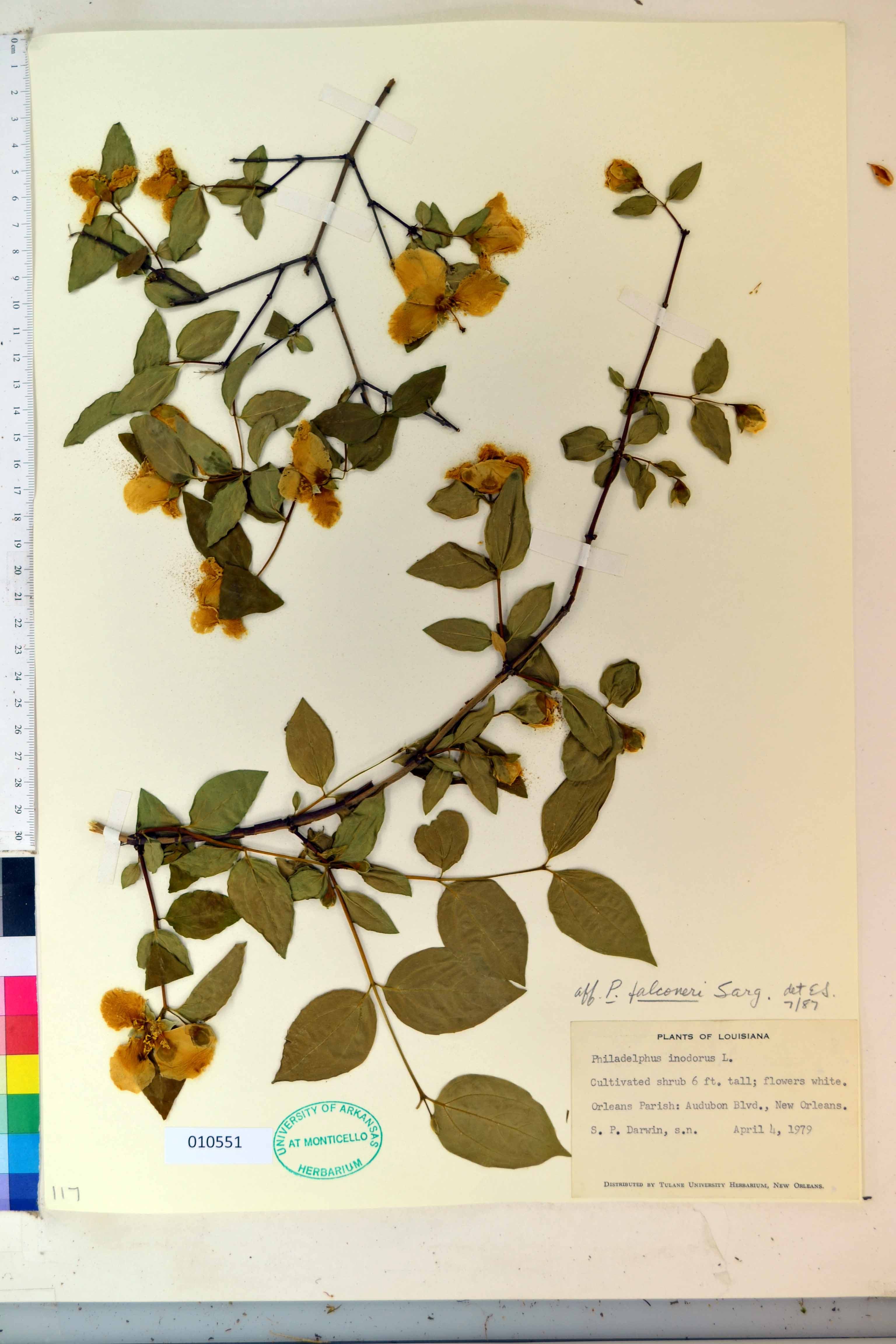
Image: S. P. Darwin (cc0)
NamePhiladelphus falconeri
Scientific NamePhiladelphus falconeri Sarg. ex Rehder
Common NamesFalconer's Mock-orange, Mock-orange
Plant FamilyHydrangeaceae
Natural HabitatNative to Japan, this species thrives in temperate climates and is often found in woodlands or cultivated in gardens and parks. It prefers moist, well-drained soils.
Parts Used
Traditional UsesNo significant traditional medicinal uses are widely documented for Philadelphus falconeri. The genus Philadelphus is primarily cultivated for its ornamental value and fragrant flowers.
Contraindications & WarningsGenerally considered non-toxic, but ingestion of large quantities of leaves or flowers may cause mild gastrointestinal upset. It is not typically used internally for medicinal purposes.
Cultivation NotesPrefers full sun to partial shade and well-drained soil. It is a hardy shrub that can tolerate a range of soil types and is relatively low maintenance, often grown for its fragrant blooms.
Raritycommon
Description
Philadelphus falconeri is a deciduous shrub characterized by its slender, arching branches and small, ovate leaves. It produces an abundance of fragrant, white, four-petaled flowers in late spring to early summer, making it a popular ornamental plant.