Solanum pseudolulo
NameSolanum pseudolulo
Scientific NameSolanum pseudolulo
Common NamesLulo de perro, Naranjilla de castilla, Lulo de monte, False Lulo
Plant FamilySolanaceae
Natural HabitatNative to the Andean regions of South America, particularly Colombia and Ecuador, growing in humid montane forests and disturbed areas at elevations between 1,500 and 3,000 meters.
Parts Usedfruit,leaf
Medicinal Actionsantioxidant, anti-inflammatory
Traditional UsesThe ripe fruits are primarily consumed fresh, in juices, smoothies, and desserts, valued for their tart, refreshing flavor and nutritional content. Traditionally, the fruit pulp has been used to treat digestive issues and as a general tonic. Leaves are sometimes used in poultices for skin conditions or as an infusion for fevers.
Active ConstituentsVitamins (C, A, B-complex), Minerals (calcium, phosphorus, iron), Carotenoids, Phenolic compounds (e.g., chlorogenic acid), Alkaloids (in small amounts)
Preparation Methodsinfusion, powder
Contraindications & WarningsUnripe fruits and other plant parts (leaves, stems) of Solanum species can contain solanine alkaloids, which are toxic if consumed in large quantities. Ripe fruits are generally considered safe for consumption. Pregnant or breastfeeding women and individuals with nightshade allergies should exercise caution.
Cultivation NotesPrefers subtropical to tropical climates, well-drained, fertile soil, and partial shade to full sun. Requires consistent moisture and protection from strong winds. Can be propagated from seeds.
Raritycommon
Description
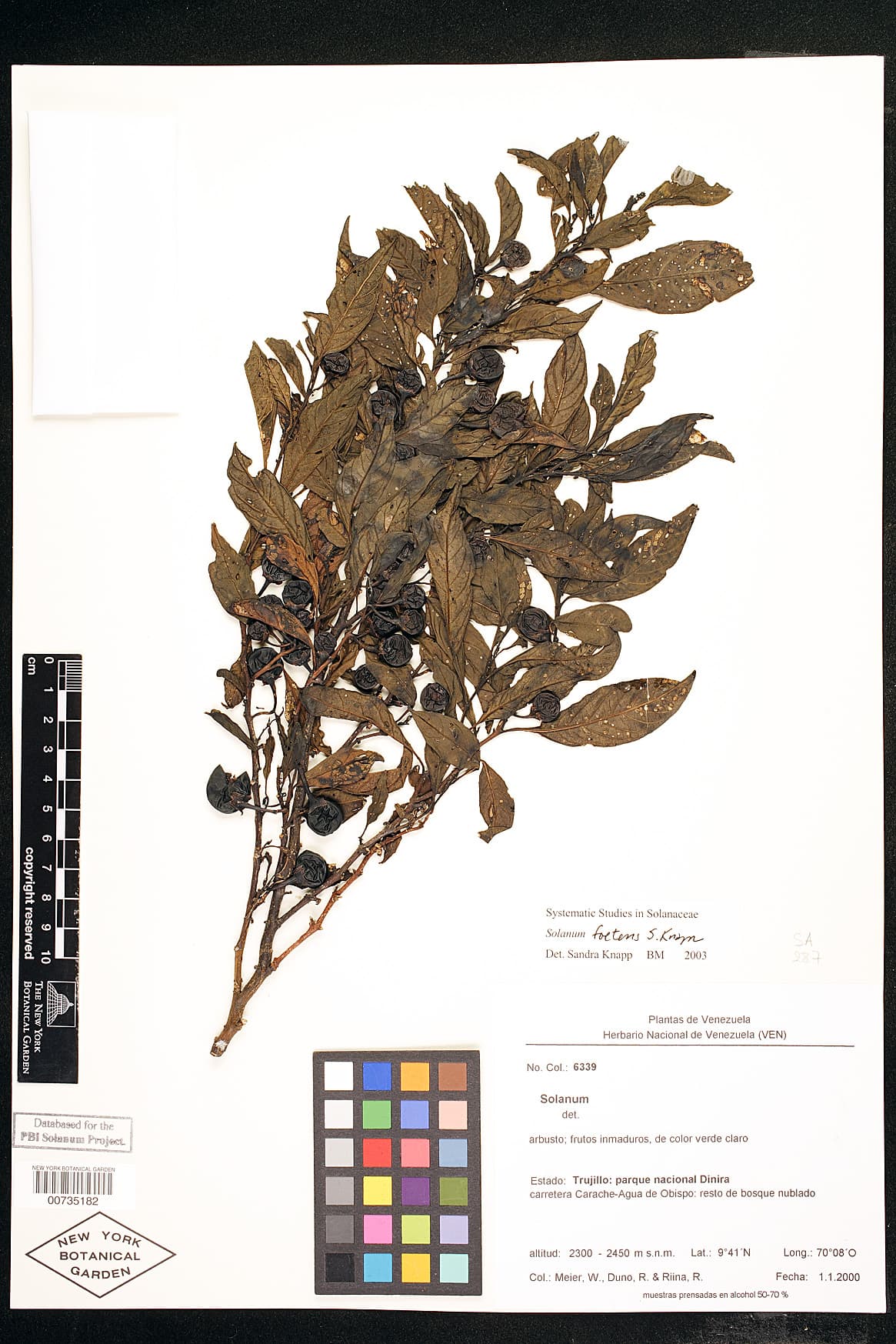
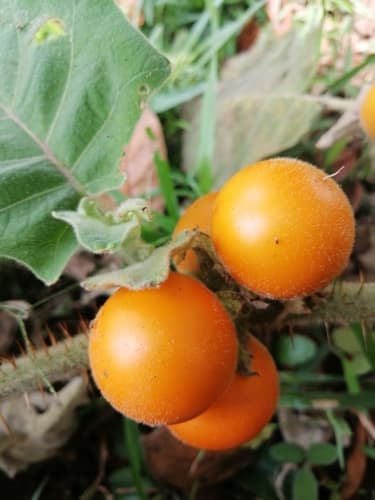
A thorny, herbaceous shrub or small tree, typically growing 1-3 meters tall. It features large, ovate, often lobed leaves covered in fine hairs, and stems armed with sharp prickles. The fruits are globose, orange-yellow when ripe, covered in fine, easily removable hairs, and contain numerous seeds within a juicy, greenish pulp.