Catnip
Image: sourmani (cc-by-nc)
NameCatnip
Scientific NameNepeta cataria
Common NamesCatnip, Catmint, Catswort, Field Balm
Plant FamilyLamiaceae
Natural HabitatNative to Europe, Central Asia, and parts of China, it has naturalized widely across North America. It thrives in disturbed areas, roadsides, waste grounds, fields, and open woodlands, preferring full sun to partial shade and well-drained soil.
Parts Usedleaf,flower,whole_plant
Medicinal Actionsnervine, sedative, carminative, anti-inflammatory, antimicrobial
Traditional UsesTraditionally used as a mild sedative to promote relaxation and sleep, especially for children. It is also employed to relieve digestive issues like gas and bloating, reduce fever, alleviate cold and flu symptoms, and soothe headaches.
Active ConstituentsNepetalactone, Nepetalic acid, Thymol, Carvacrol, Pulegone, Citral, Geraniol
Preparation Methodsinfusion, tincture, powder
Contraindications & WarningsAvoid during pregnancy due to potential uterine stimulant effects. Use with caution if taking sedatives or other medications that cause drowsiness, as it may enhance their effects.
Cultivation NotesEasily grown from seed or cuttings in full sun to partial shade with well-drained soil. It is drought-tolerant once established and can become invasive if not managed.
Raritycommon
Description
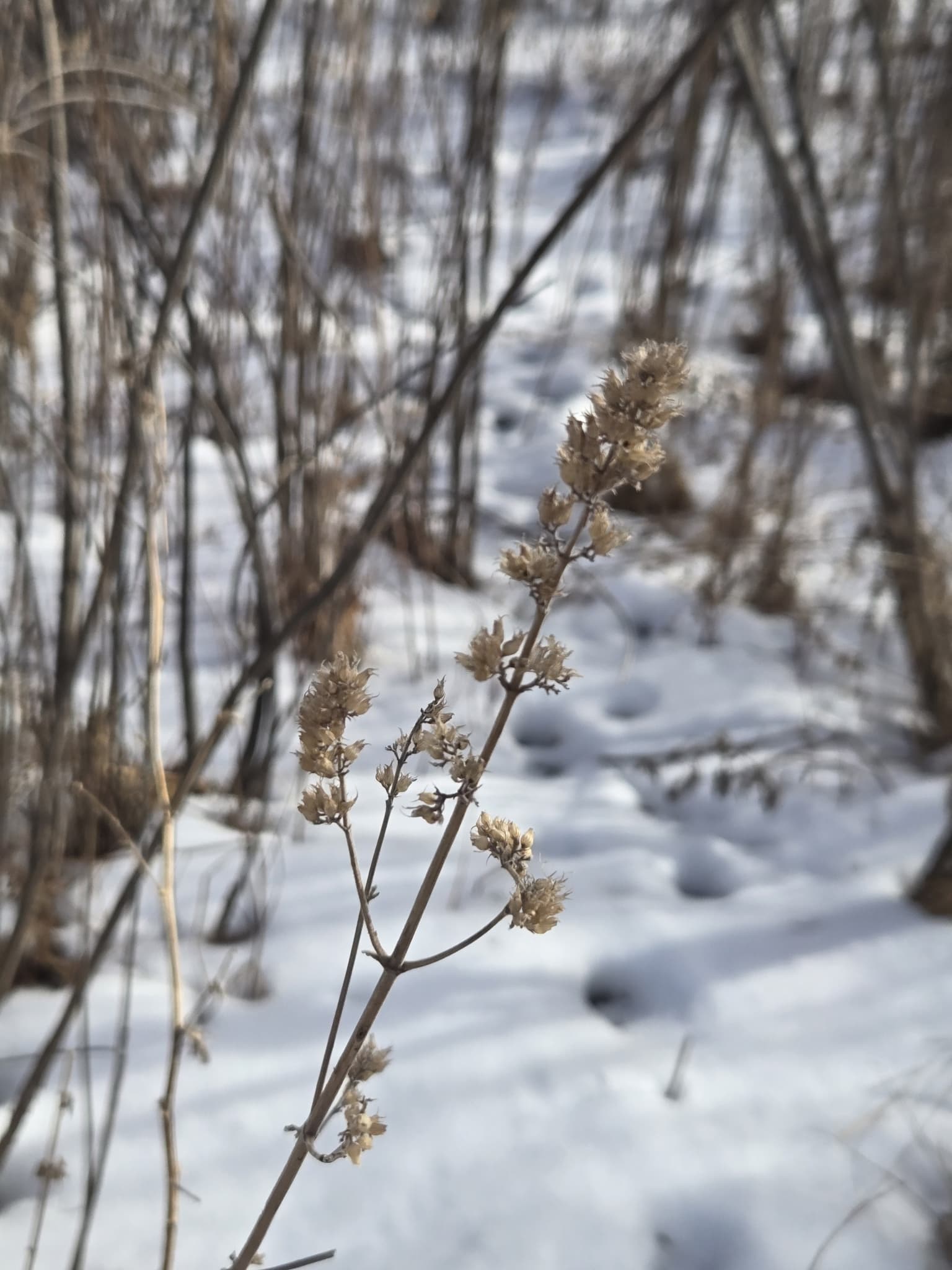
Nepeta cataria is a perennial herbaceous plant characterized by its square stems, heart-shaped, toothed leaves, and small, two-lipped flowers typically arranged in dense terminal spikes. The image shows the dried, dormant plant in winter, with persistent seed heads above the snow.