Perennial Blazingstar
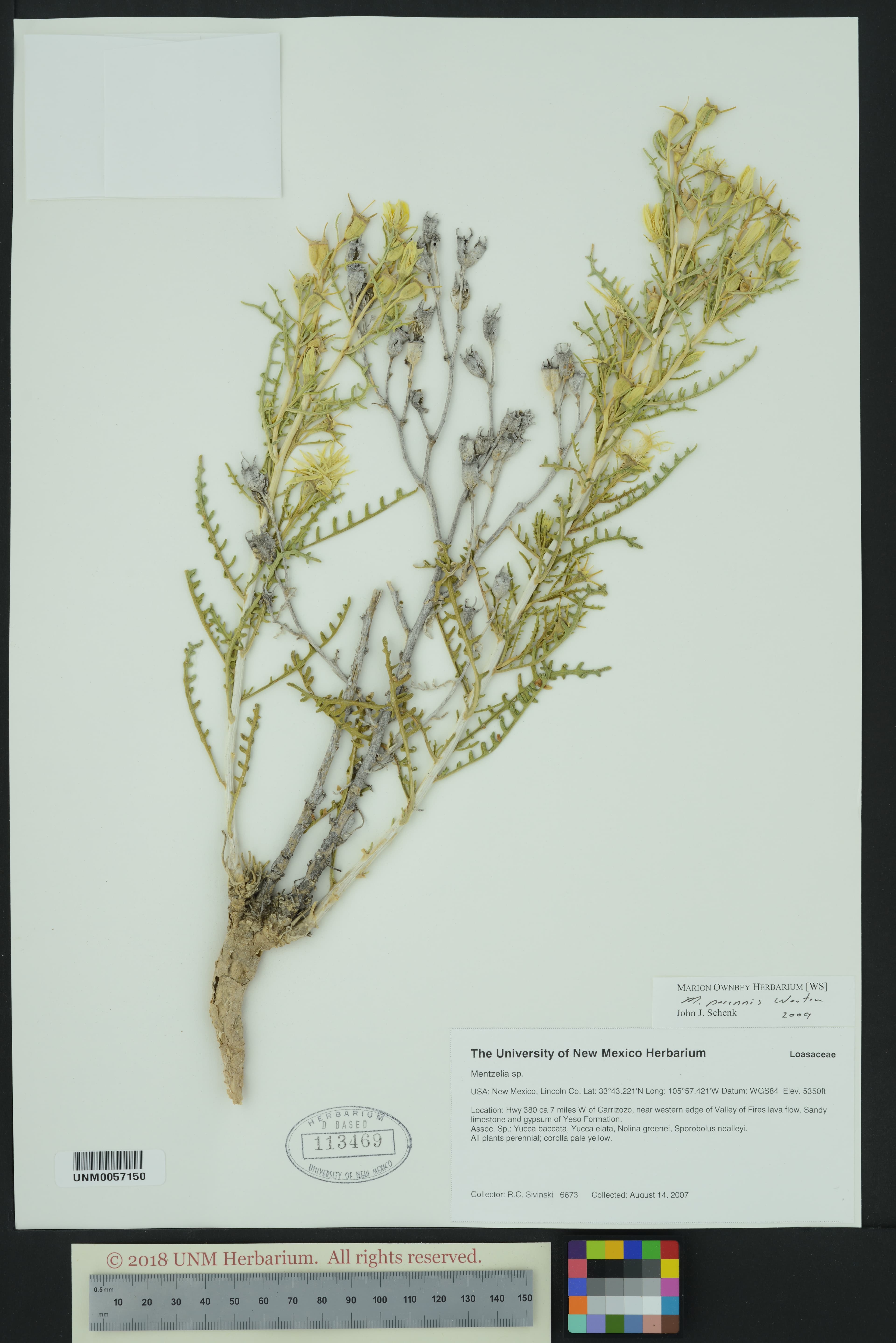
Image: R.C. Sivinski (cc-by-nc)
NamePerennial Blazingstar
Scientific NameMentzelia perennis Wooton
Common NamesPerennial Blazingstar
Plant FamilyLoasaceae
Natural HabitatNative to arid and semi-arid regions, specifically found in sandy limestone and gypsum soils, such as those derived from the Yeso Formation in New Mexico. It thrives in desert scrub and rocky environments, often associated with species like Yucca baccata, Yucca elata, Nolina greenei, and Sporobolus nealleyi.
Parts Usedroot,seed
Medicinal Actionsanalgesic, anti-inflammatory
Traditional UsesBased on related Mentzelia species, particularly M. decapetala, the roots were traditionally used by various Native American tribes (e.g., Navajo, Hopi, Zuni) as a poultice for external applications. These poultices were applied to treat swellings, sprains, bruises, and even broken bones, suggesting a use for pain and inflammation. Seeds of some species were also consumed as food.
Active ConstituentsNot well documented for this species
Preparation Methodspoultice, powder, decoction
Contraindications & WarningsSpecific contraindications for Mentzelia perennis are not widely documented. As with many wild plants, caution is advised, especially for internal use, due to potential unknown compounds or interactions. Skin irritation could occur with external use in sensitive individuals.
Cultivation NotesMentzelia perennis prefers well-drained, sandy, or rocky soils, especially those rich in limestone or gypsum. It requires full sun exposure and is highly drought-tolerant once established, typical of desert plants. Propagation is usually by seed.
Rarityuncommon
Description
Mentzelia perennis is a perennial herbaceous plant characterized by its deeply lobed or pinnatifid leaves, often with a rough, scabrous texture. It produces pale yellow flowers, typically with numerous stamens, and develops distinctive urn-shaped or cylindrical capsule fruits. The plant often grows from a woody taproot.