Globose Dodder
NameGlobose Dodder
Scientific NameCuscuta globulosa
Common NamesDodder, Love Vine, Strangleweed, Globose Dodder
Plant FamilyConvolvulaceae
Natural HabitatThis parasitic plant is found in various habitats, including fields, roadsides, and natural areas, where it attaches to a wide range of herbaceous and woody host plants to absorb nutrients.
Parts Usedwhole_plant,seed
Medicinal Actionsadaptogen, antioxidant, anti-inflammatory, diuretic, astringent
Traditional UsesTraditionally, *Cuscuta* species, particularly their seeds (Semen Cuscutae), are used in Traditional Chinese Medicine to tonify kidney yang and nourish liver yin. It is employed to address conditions such as impotence, premature ejaculation, frequent urination, lower back pain, and blurred vision.
Active ConstituentsFlavonoids, Lignans, Polysaccharides, Saponins, Coumarins
Preparation Methodsinfusion, decoction, tincture, powder
Contraindications & WarningsGenerally considered safe in traditional doses. Caution is advised for individuals with yin deficiency with heat signs or constipation. Pregnant or breastfeeding individuals should consult a healthcare professional before use.
Cultivation NotesAs a parasitic plant, *Cuscuta globulosa* is not typically cultivated directly but grows by attaching to host plants. It is often considered a weed in agricultural settings.
Raritycommon
Description
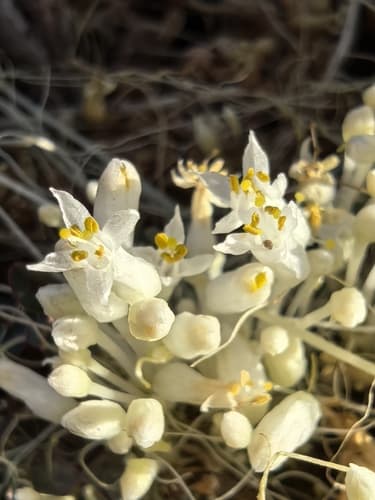
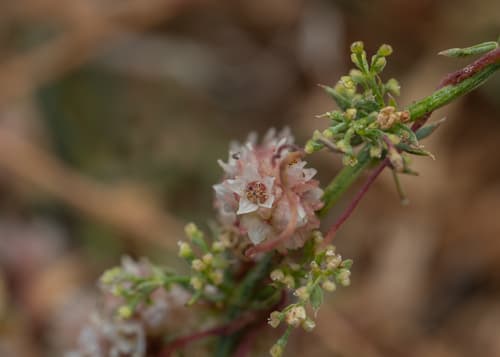
Cuscuta globulosa is a parasitic annual plant characterized by its thread-like, leafless, yellowish-orange stems that twine around host plants. It produces small, clustered, globose (spherical) inflorescences of white to pinkish flowers, as seen in the image.