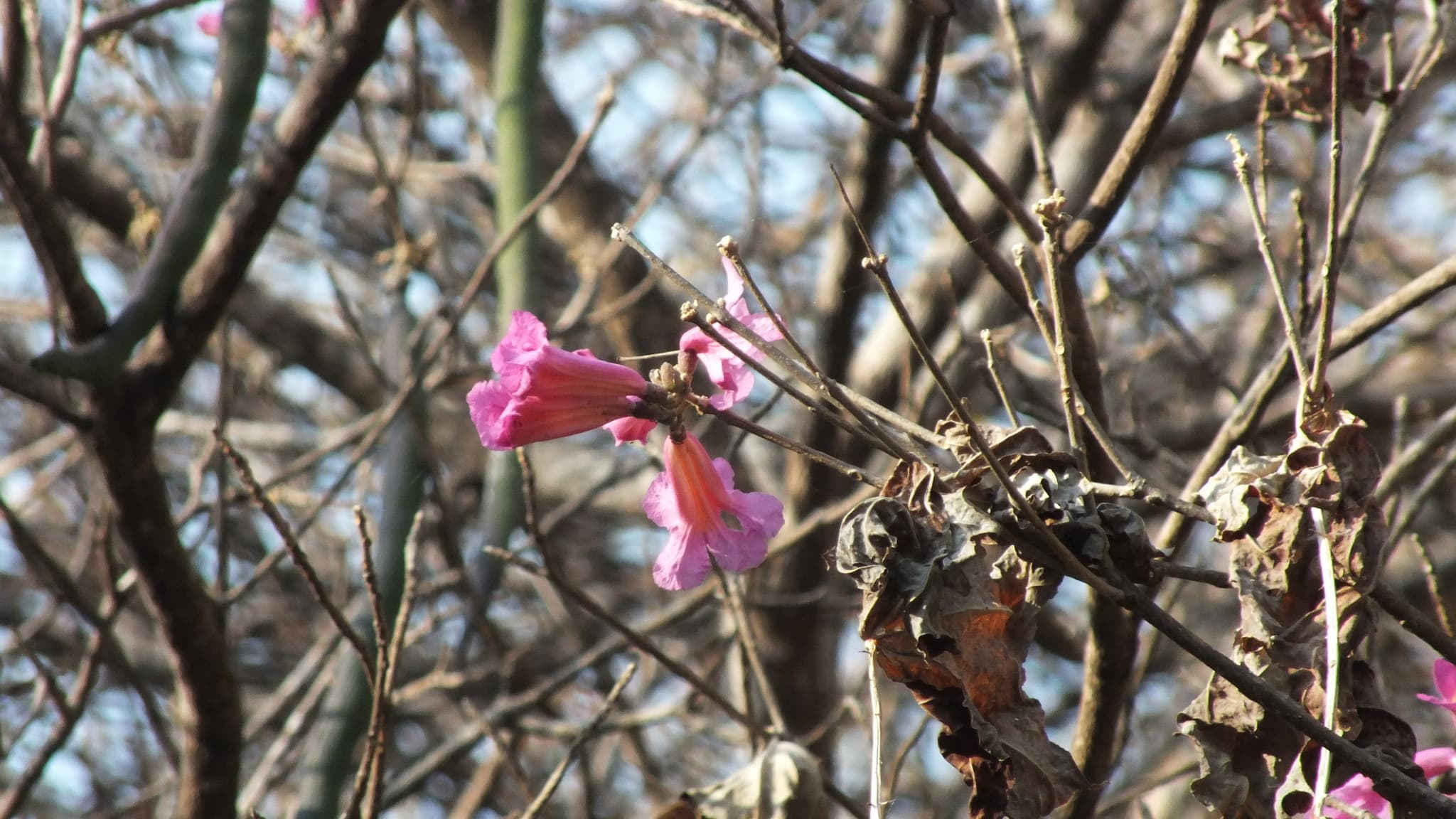
Pau d'Arco
Image: La Rata Mutante (cc-by-nc)
NamePau d'Arco
Scientific NameHandroanthus impetiginosum
Common NamesPau d'Arco, Ipe Roxo, Lapacho, Pink Trumpet Tree
Plant FamilyBignoniaceae
Natural HabitatNative to tropical and subtropical regions of Central and South America, commonly found in the Amazon rainforest and other dry tropical forests.
Parts Usedbark
Medicinal Actionsantimicrobial, anti-inflammatory, antioxidant, analgesic
Traditional UsesTraditionally used by indigenous communities for a wide array of conditions, including various infections (bacterial, fungal, viral), inflammatory conditions, pain relief, fevers, and as a general tonic. It has also been historically applied to treat malaria, syphilis, and certain types of cancer.
Active ConstituentsLapachol, Beta-lapachone, Quercetin, Xyloidone
Preparation Methodsdecoction, tincture, powder
Contraindications & WarningsMay interact with anticoagulant medications due to potential blood-thinning effects. High doses can lead to nausea, vomiting, and dizziness. Not recommended for pregnant or breastfeeding women.
Cultivation NotesPrefers full sun exposure and well-drained soil. It thrives in tropical and subtropical climates, growing rapidly and tolerating a range of soil types once established.
Raritycommon
Description
A large, deciduous tree native to tropical regions, characterized by its striking clusters of pink to purple trumpet-shaped flowers that often bloom profusely on bare branches. The inner bark of this tree is highly valued for its medicinal properties.