Pacific yew
NamePacific yew
Scientific NameTaxus brevifolia
Common NamesPacific yew, Western yew, Oregon yew, California yew
Plant FamilyTaxaceae
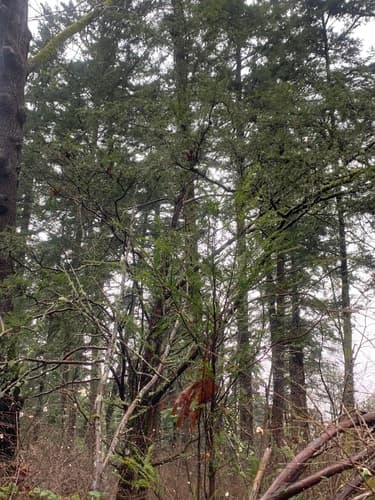
Natural HabitatFound in moist, cool forests of the Pacific Northwest, often as an understory tree in coniferous forests. It prefers shaded areas along streams, ravines, and north-facing slopes, from sea level to moderate elevations.
Parts Usedbark,leaf
Medicinal Actionsantimicrobial, antioxidant
Traditional UsesHistorically, Native American tribes used Pacific yew wood for tools, bows, and paddles. Medicinally, some tribes used bark and leaves for various ailments, though its toxicity was recognized. Modern medicine extensively uses compounds extracted from its bark and needles, primarily paclitaxel (Taxol), as a potent chemotherapy drug for treating various cancers, including ovarian, breast, lung, and Kaposi's sarcoma.
Active Constituentspaclitaxel (Taxol), taxanes, baccatin III
Preparation Methodsdecoction, powder
Contraindications & WarningsAll parts of the Pacific yew, except the fleshy red aril (but not the seed within), are highly toxic due to the presence of taxanes. Ingestion can cause severe cardiac and neurological symptoms, leading to death. It should never be used internally as a traditional herbal remedy due to its extreme toxicity. Pharmaceutical preparations of paclitaxel have numerous severe side effects and contraindications and must only be administered under strict medical supervision.
Cultivation NotesPacific yew is challenging to cultivate from seed, requiring stratification. It prefers moist, well-drained, acidic to neutral soils and partial to full shade. It is slow-growing and can be propagated from cuttings, though success rates vary. It is sensitive to drought and prefers cool, humid conditions.
Rarityuncommon
Description
Pacific yew is a slow-growing, coniferous evergreen tree, typically small to medium-sized, with thin, reddish-brown bark that peels in scales. Its needles are flat, soft, dark green, and arranged spirally on the stem, often appearing two-ranked. It produces small, red, berry-like arils that enclose a single seed.